Wabi-Sabi
What Lanzarote Taught Us About Imperfection
Inspired by Beth Kempton's Wabi Sabi: Japanese Wisdom for a Perfectly Imperfect Life
"In recent years, society has gathered pace, our stress levels have gone through the roof and we have become increasingly obsessed with money, job titles, appearances and the endless accumulation of stuff..."
— Beth Kempton
When I first read these words, I realised they described a world we had slowly chosen to leave behind.
Long before we had ever heard the Japanese expression wabi-sabi, we had already been searching for something remarkably similar. Not in books or philosophy, but in places that felt different.
Eventually, that search brought us to Lanzarote.
For years we came here as visitors.
Like many people, we first fell in love with the volcanoes, the Atlantic Ocean and the extraordinary light.
But landscapes alone never make people return.
People do.
The neighbour who leaves fresh mangoes at your door.
Long lunches in Tele Clubs.
Conversations that never appear in guidebooks.
Silence that somehow never feels empty.
Eventually we sold almost everything we owned, bought an old house in the quiet village of Guatiza and decided to stay.
We thought we had found our Otro Mundo.
Looking back, I think Otro Mundo quietly spent the first few years deciding whether we truly belonged here.
Like many people moving abroad, we arrived carrying invisible luggage.
Not just boxes.
Expectations.
We expected plans to unfold according to schedule.
We believed enough organisation could solve almost every problem.
Instead...
there were appointments that required appointments.
Building materials that took weeks to arrive.
Days without running water.
Contractors who smiled warmly while asking us to wait just a little longer.
Then came the calima.
Fine Saharan dust settled gently across floors we had cleaned only hours before.
The Sahara kept reminding us that it was closer than Europe.
At first, all these things felt like imperfections.
Things that needed fixing.
Problems waiting for solutions.
Until, slowly, another thought appeared.
What if they weren't imperfections at all?
What if they were simply life...
without disguise?
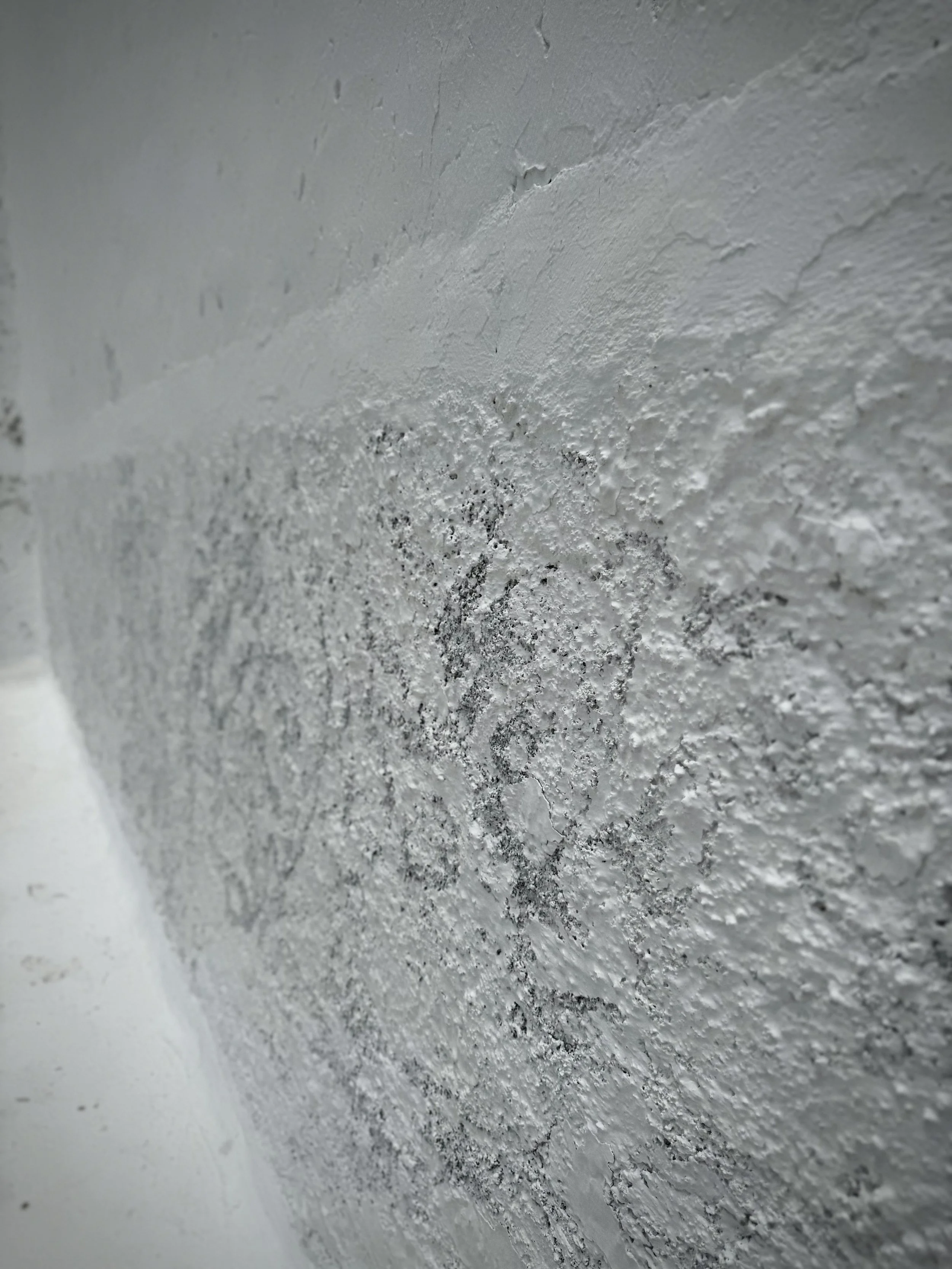
Around the same time I noticed something that made me smile.
Our village church had just completed its renovation.
Back home, walls like these would probably have started endless discussions.
Someone would blame the contractor.
Someone else would complain that the work hadn't been done properly.
Here in Guatiza...
the renovation was finished.
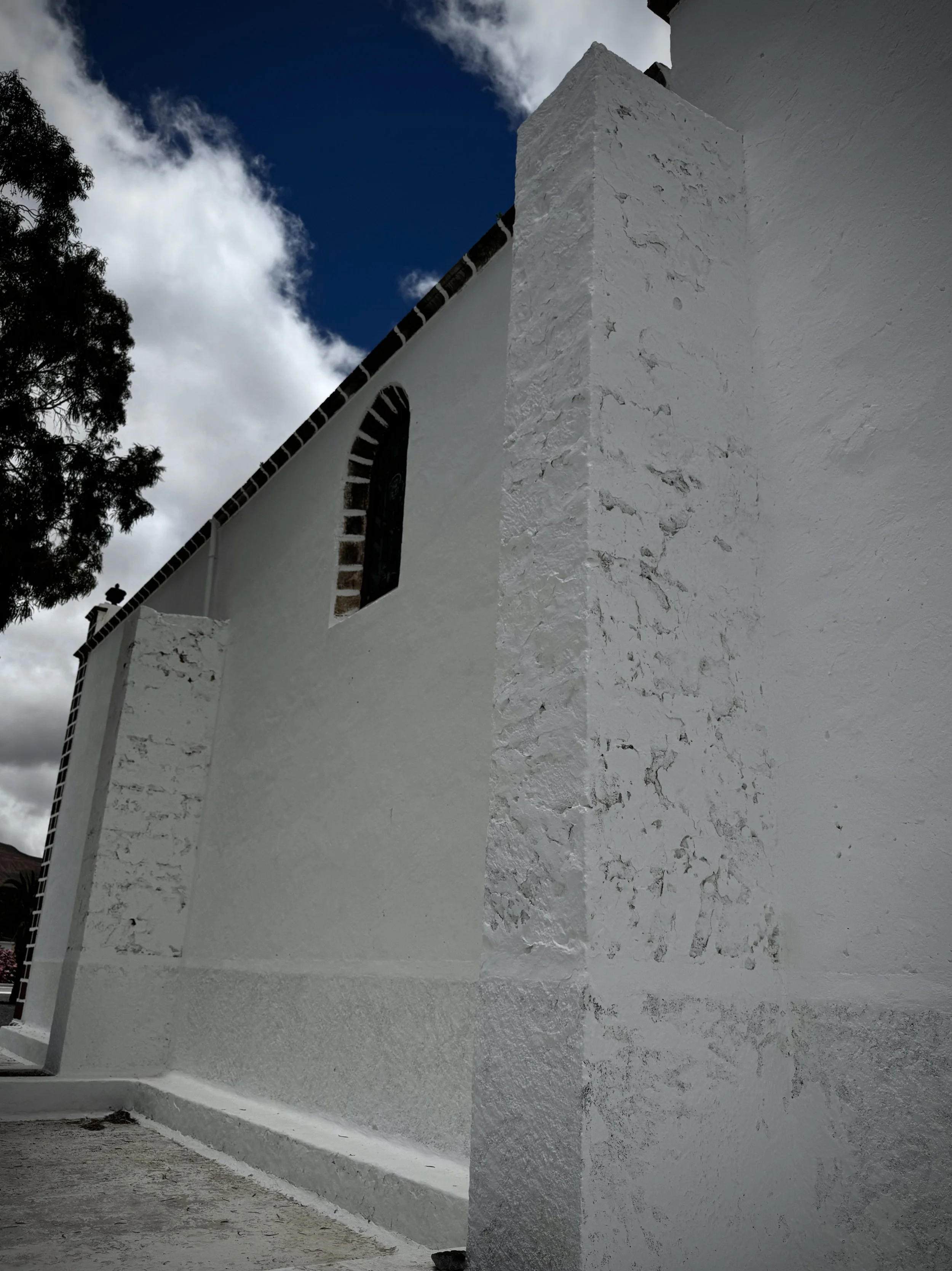
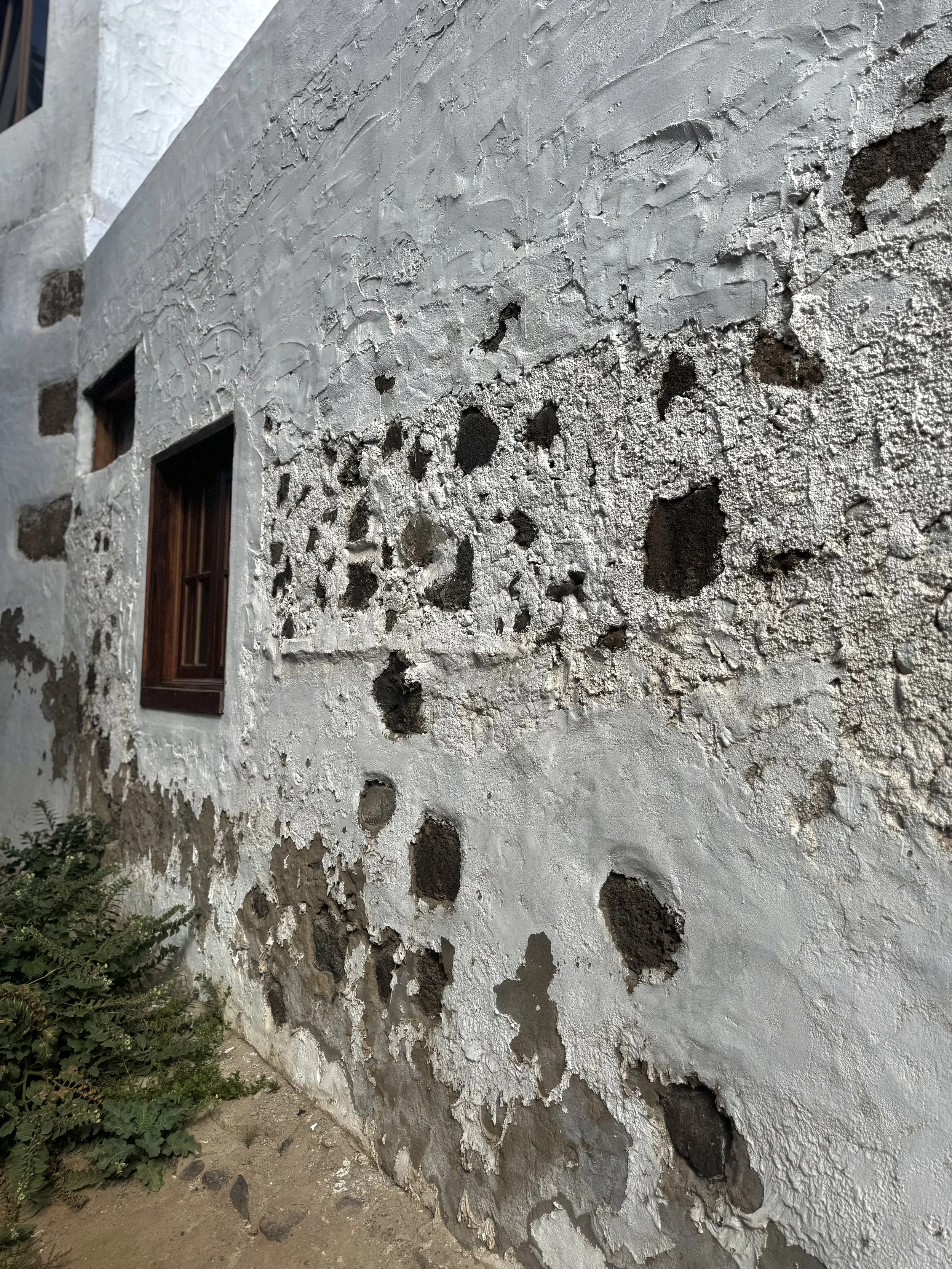
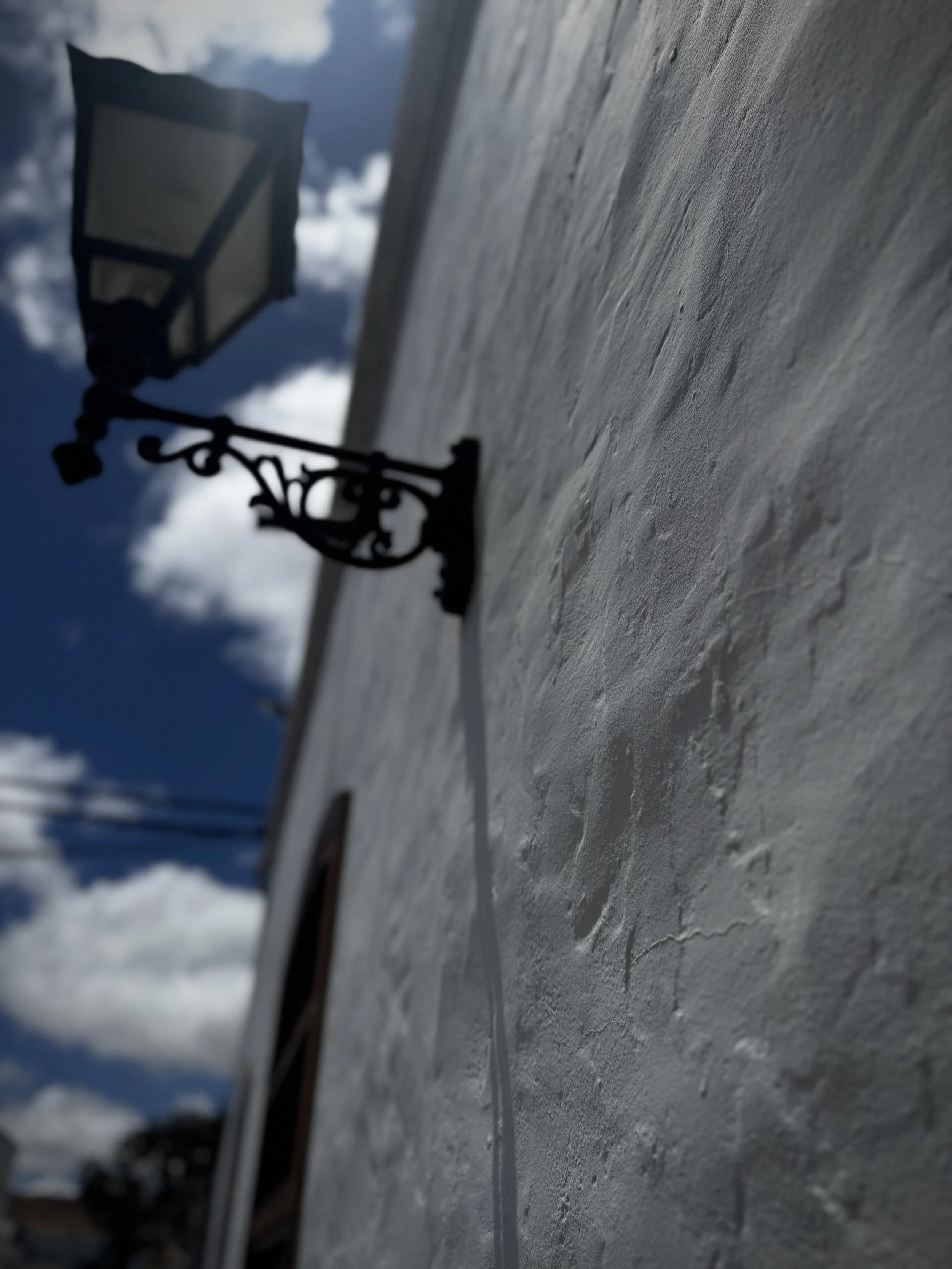
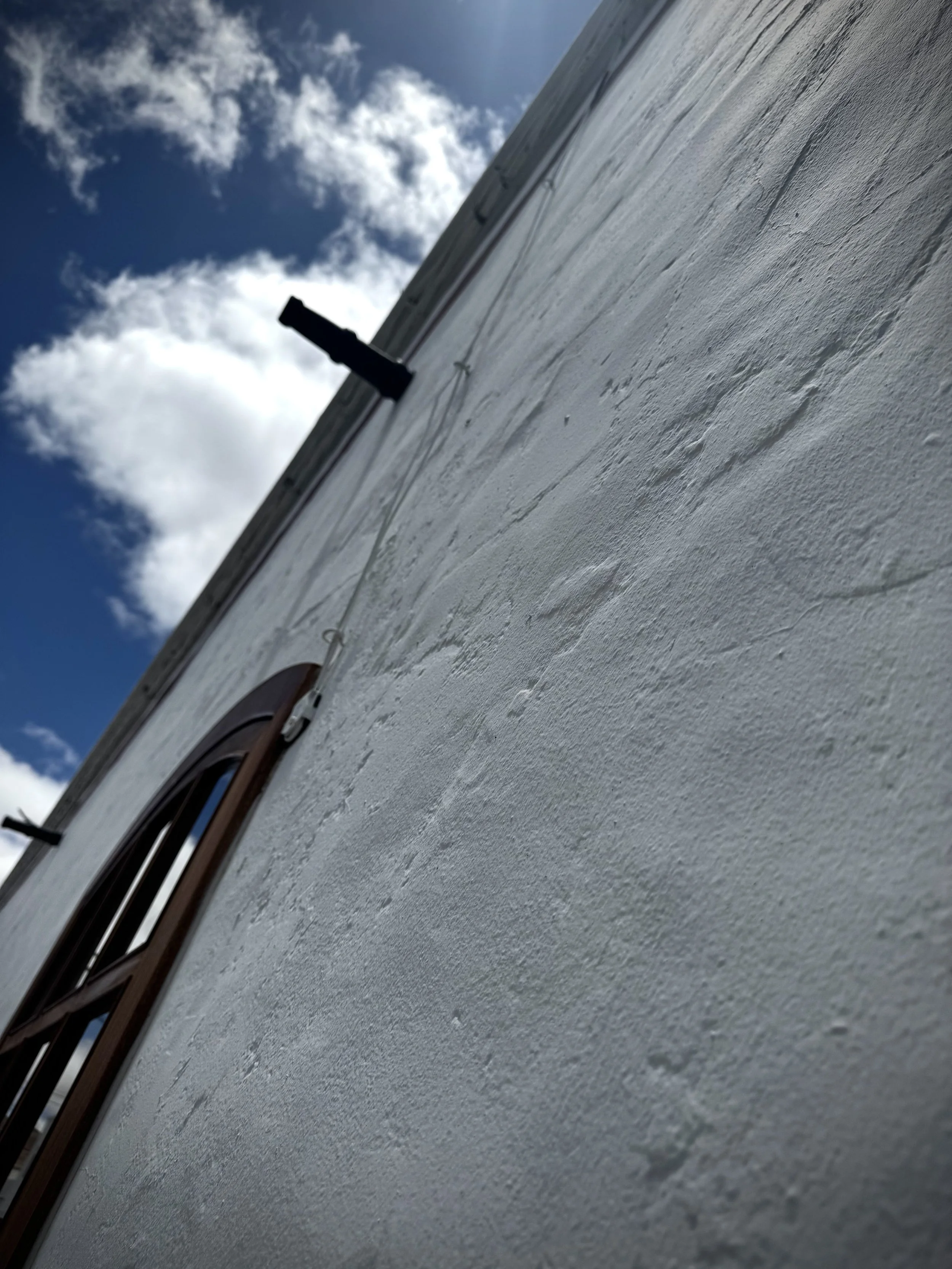
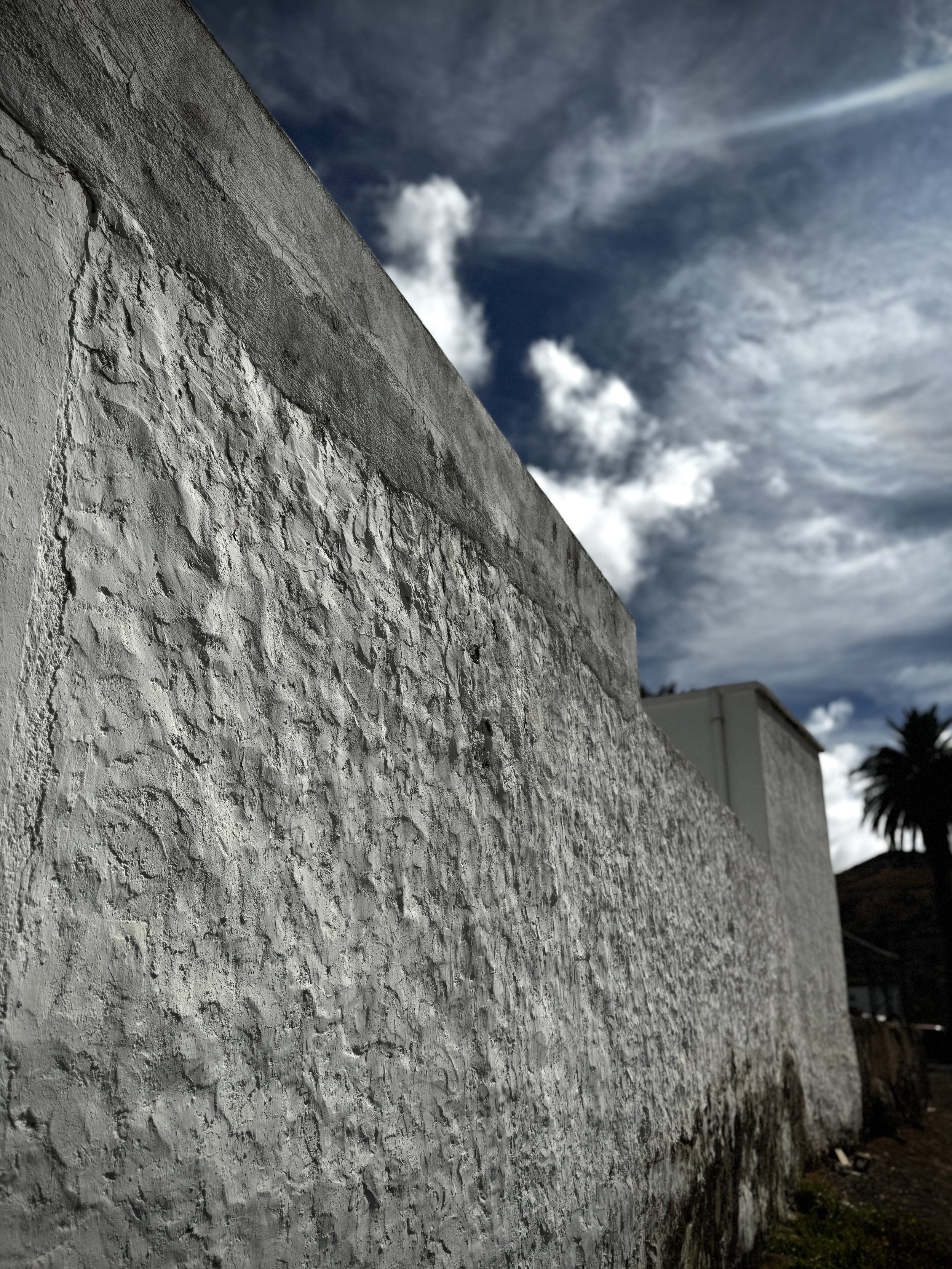
The walls still carried uneven plaster, tiny cracks and marks left by time.
Nobody seemed disappointed.
By the evening people were probably already meeting at the Tele Club for bingo.
Life simply carried on.
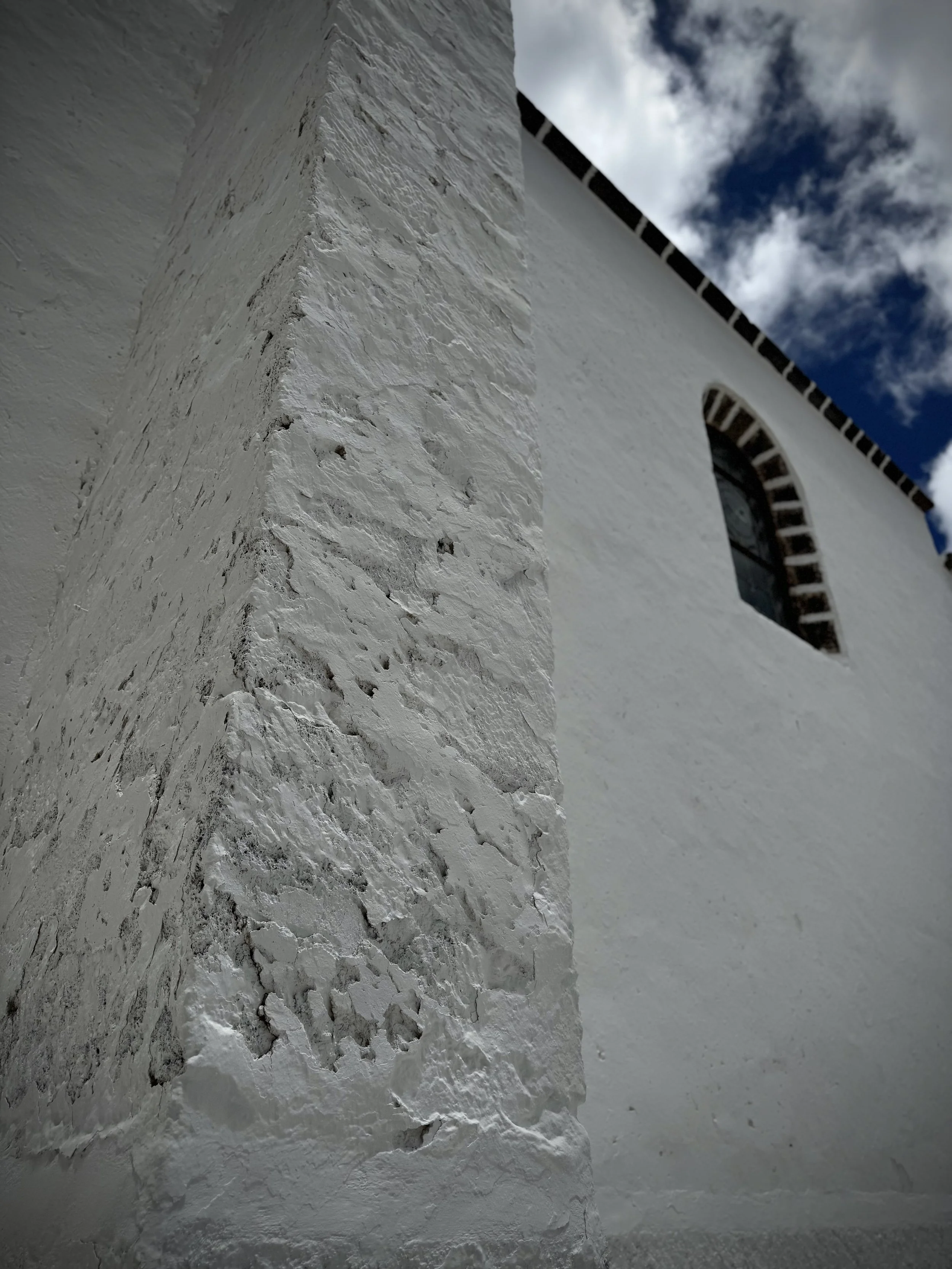
Something similar was happening inside our own house.
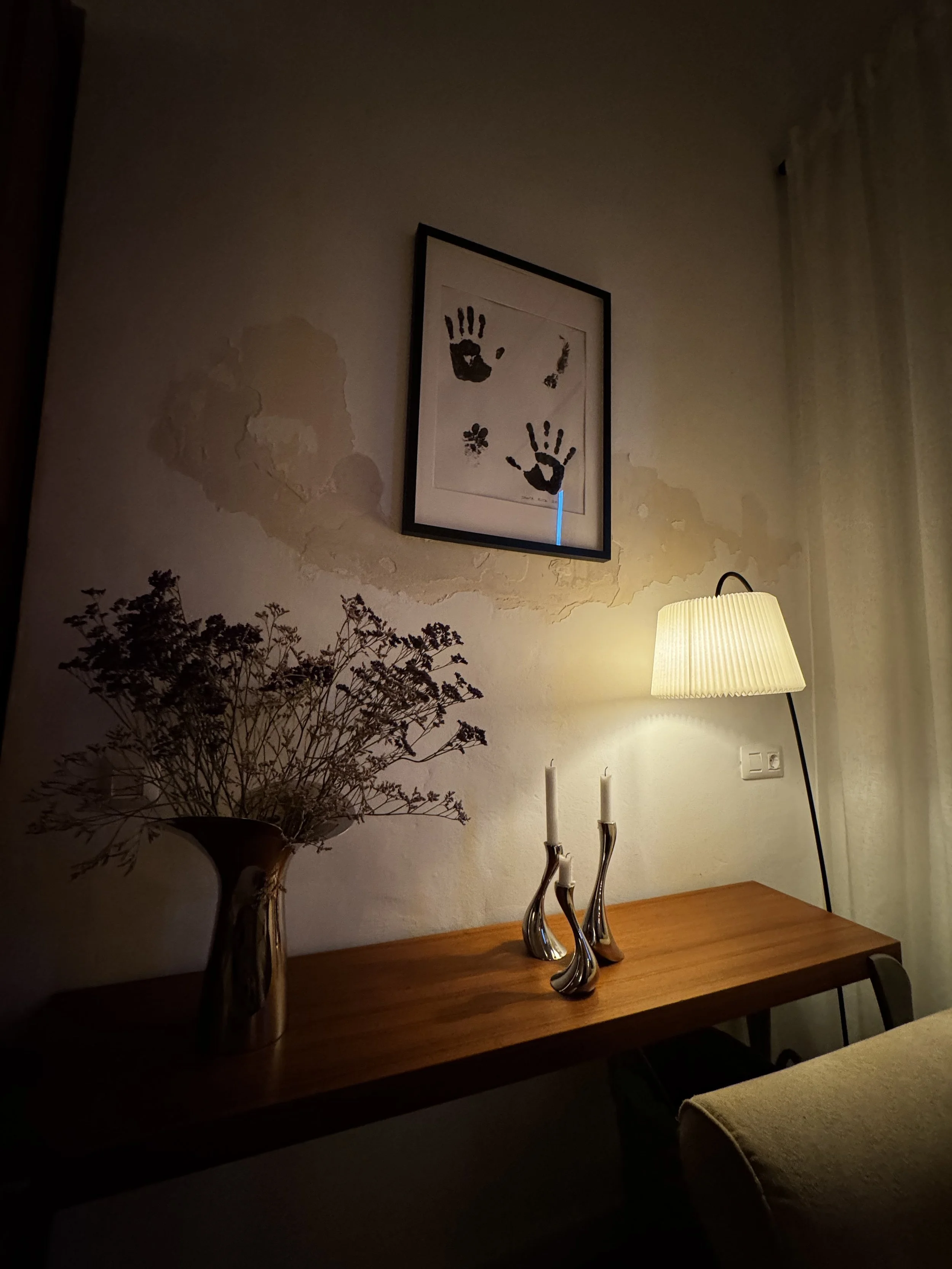
Freshly painted walls slowly began revealing patches beneath the surface.
At first, those patches drove me crazy.
How could walls look like this only a few months after being painted?
For as long as I could remember, I had believed that every imperfection was simply a problem waiting to be solved.
Years earlier, while designing our apartment in Warsaw, an architect had given us a piece of advice I never forgot.
"If there's something you can't change, don't hide it. Make it the most beautiful part of the room."
At the time he was talking about a concrete column standing right in the middle of our living room.
Our first instinct was exactly what most people would do.
How do we hide it?
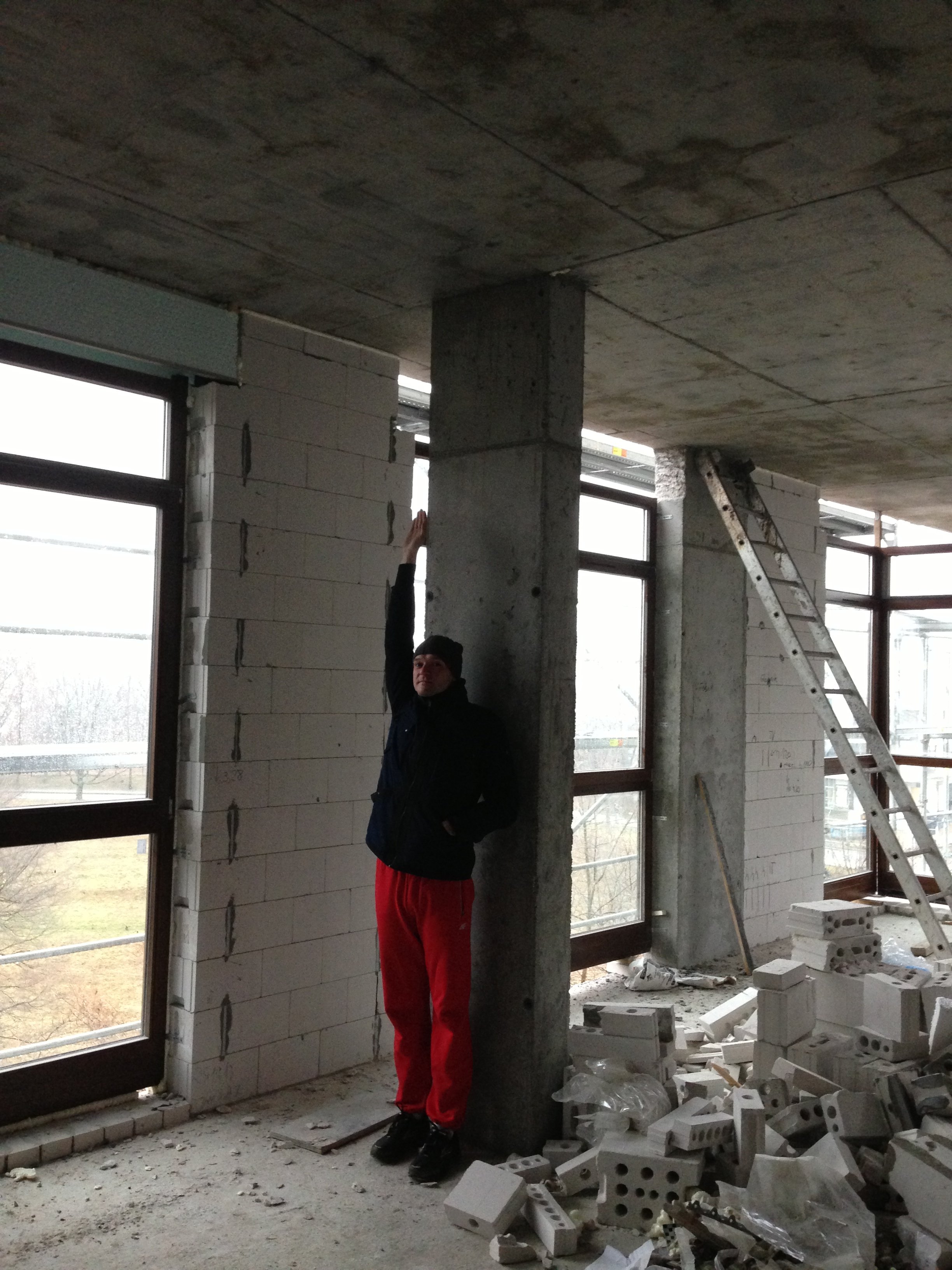
Instead of hiding it, we built our dining table around it.
The obstacle became the centrepiece.
What had first looked like a flaw became the part of the apartment everyone noticed first.
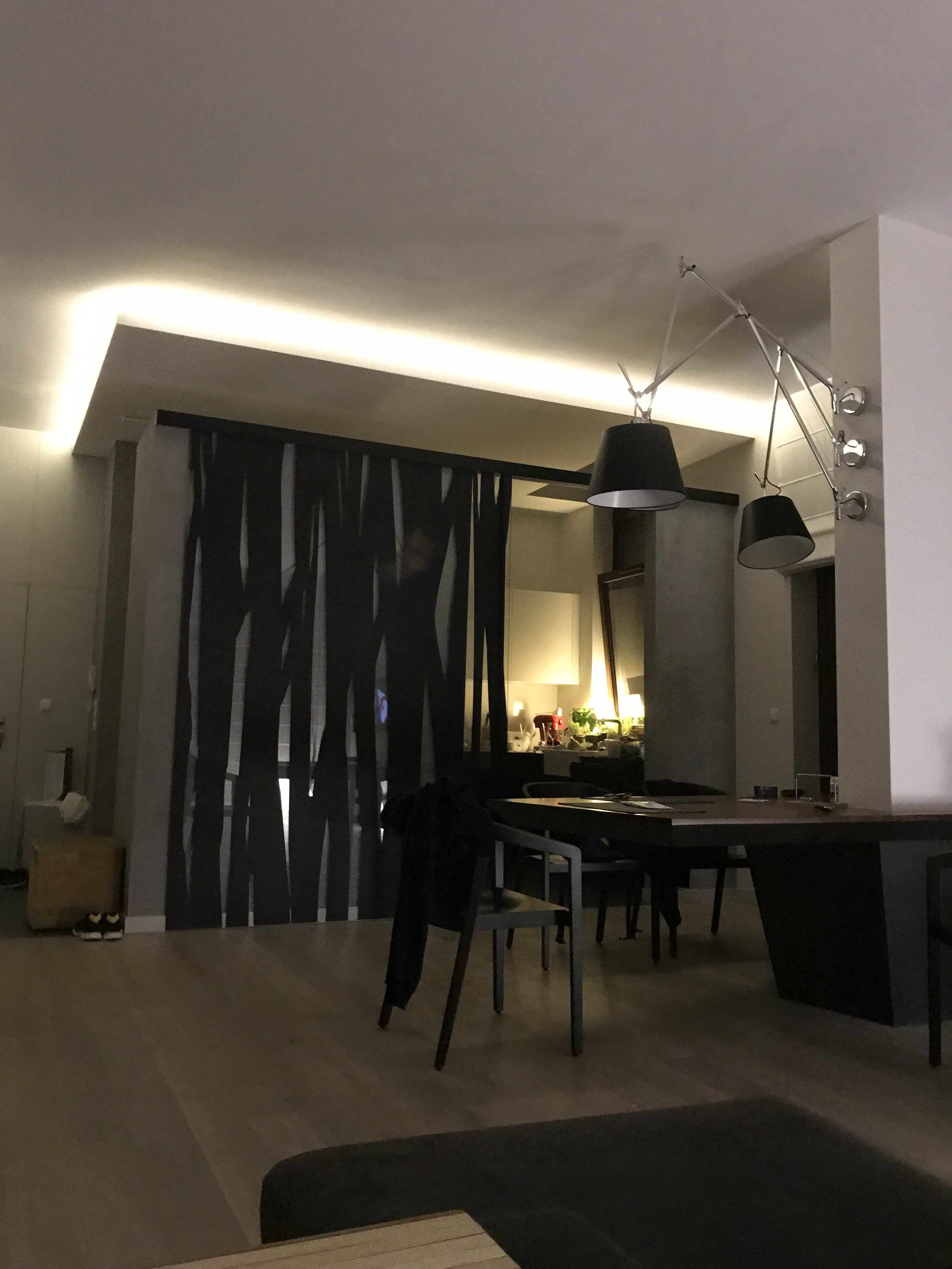
Years later, standing in our house in Lanzarote, I realised he had never really been talking about the column.
He had been talking about perspective.
Perhaps that is why discovering wabi-sabi felt strangely familiar. We had already met its Scandinavian cousin - hygge. One taught us how to create a home. The other taught us how to accept life.
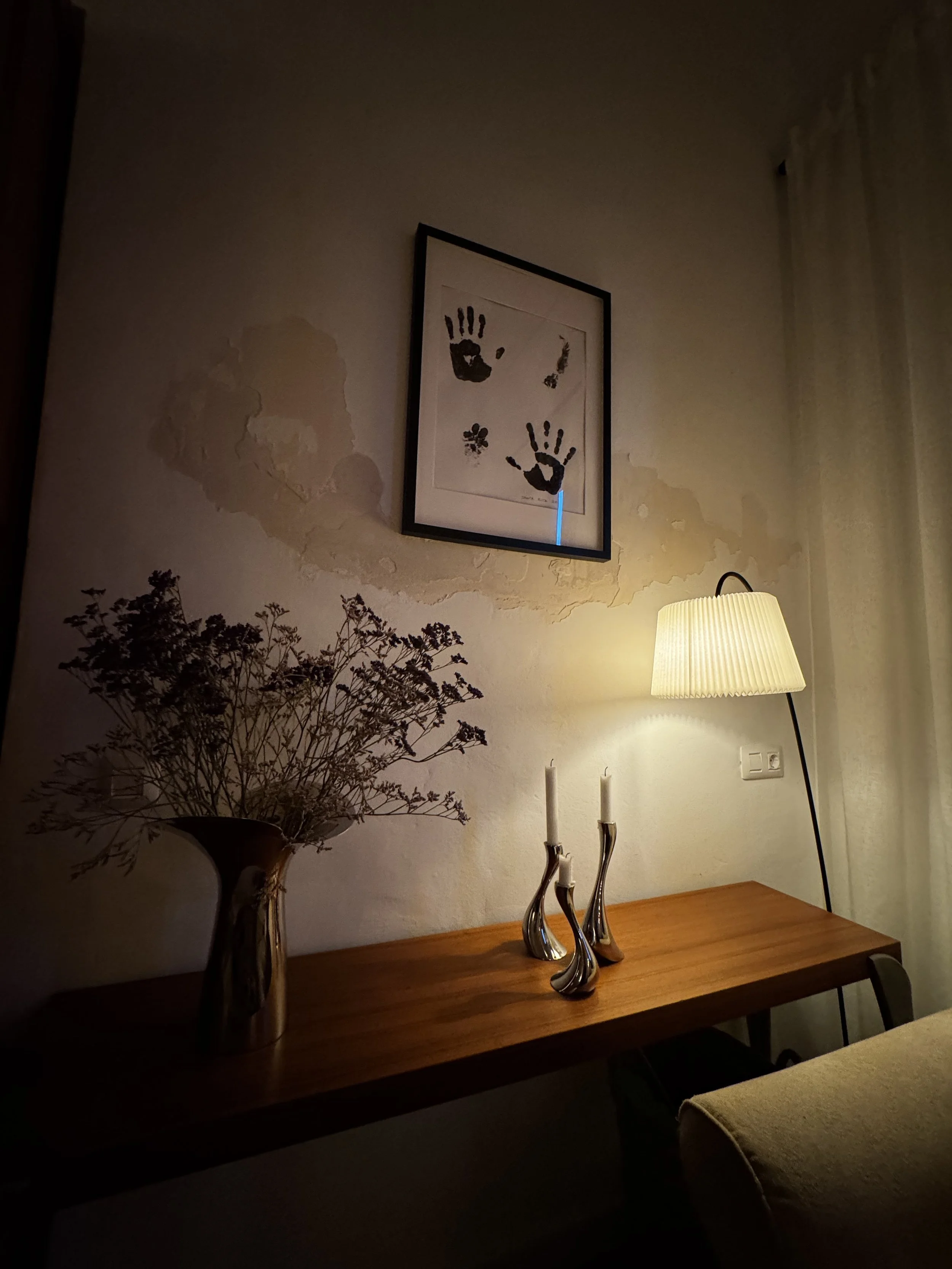
The walls in our house kept drawing my attention.
Fresh paint.
Fresh renovation.
Yet every few weeks another piece quietly let go.
At first, it drove me almost crazy.
My instinct was immediate.
If something looked wrong...
I wanted to fix it.
Then one day I stopped asking myself how to make those walls perfect again.
Instead, I asked a different question.
What if they didn't need fixing?
The next morning...
I picked up the vacuum cleaner.
Not to clean the walls.
To remove even more paint.
Wherever it had already started peeling but was still holding on, I gently vacuumed it away.
The random patches suddenly became intentional.
The walls stopped pretending to be new.
What remained wasn't damage.
It was the house quietly revealing itself.
For the first time...
I wasn't trying to hide the wall.
I was allowing it to be exactly what it was.
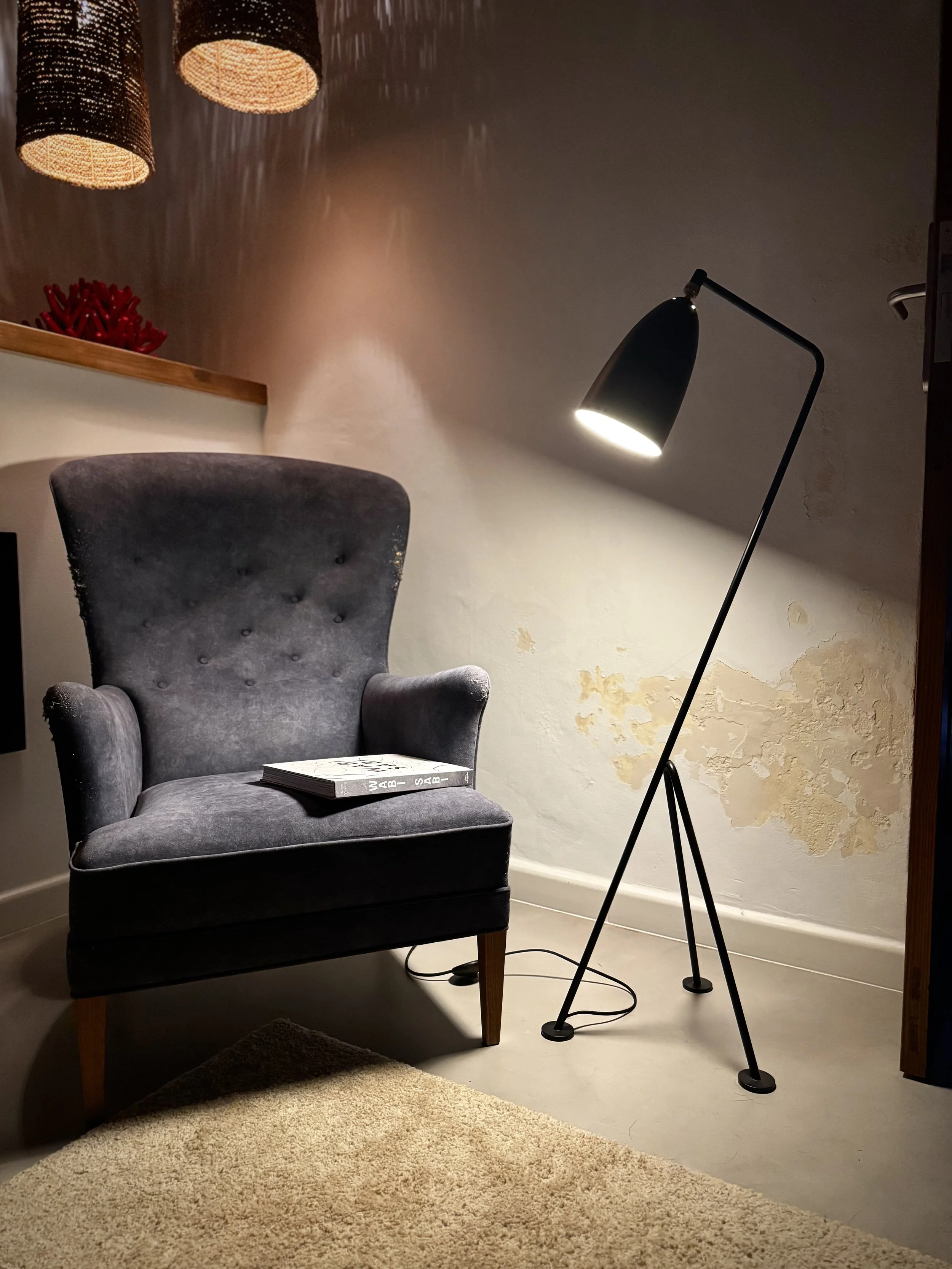
Weeks later I found Beth Kempton's book.
Suddenly there was a word for something Lanzarote had already been teaching us for years.
Wabi-sabi.
Not as an interior design trend.
Not as perfectly arranged Japanese ceramics.
But as a way of seeing.
A quiet acceptance that time, weather, salt, wind and life itself always leave their marks.
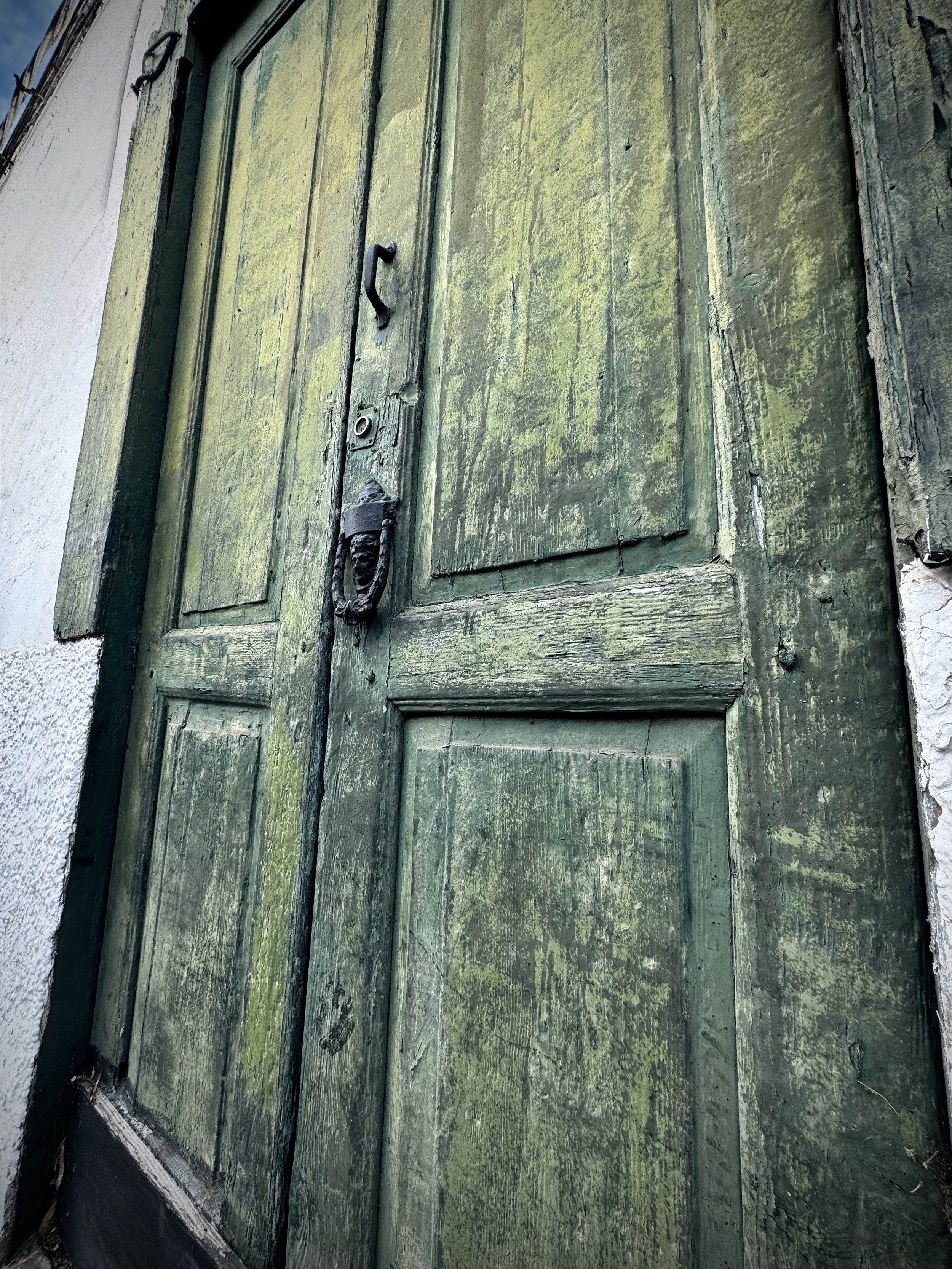
Perhaps Lanzarote isn't more imperfect than anywhere else.
It simply refuses to pretend otherwise.
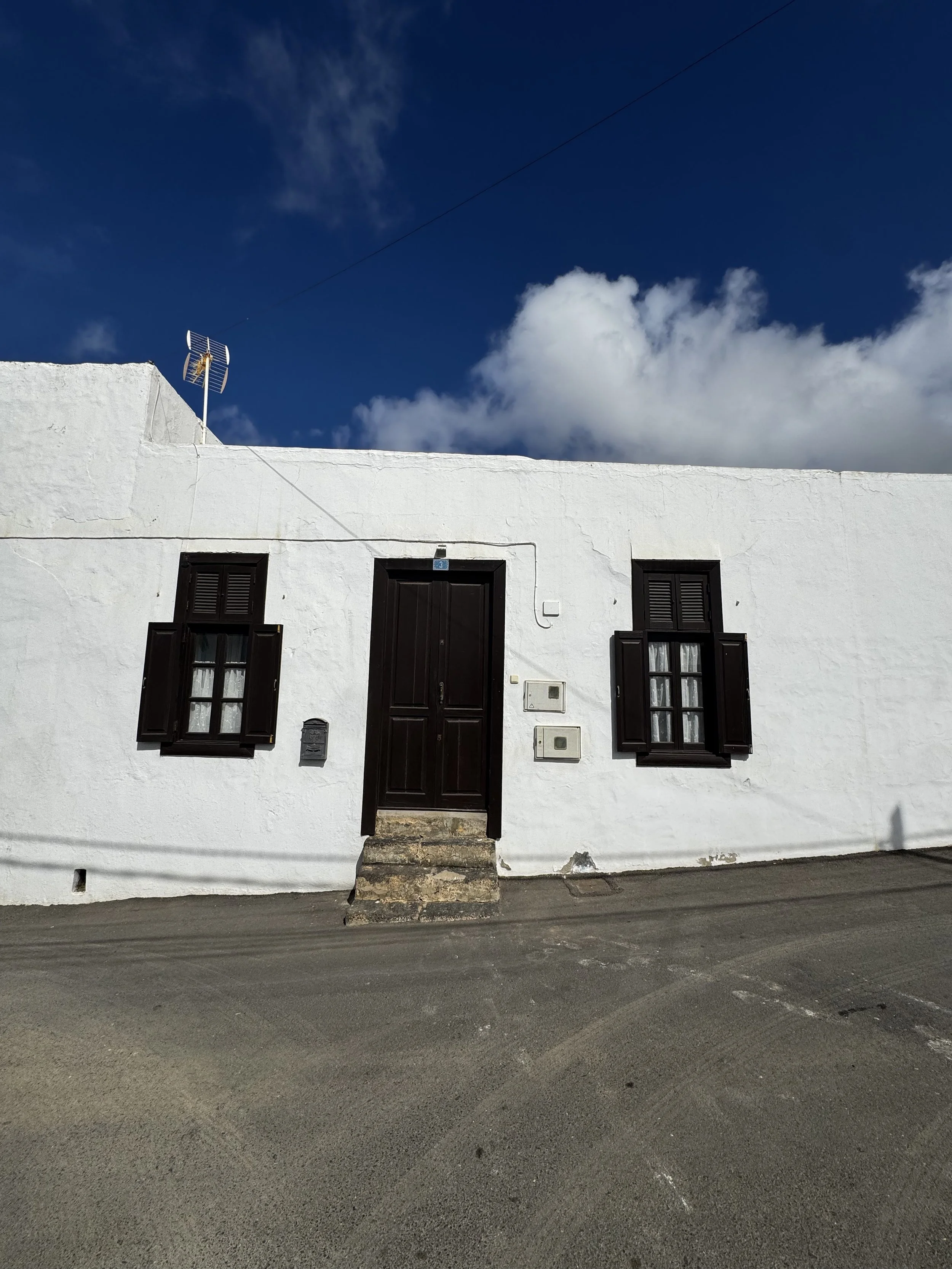
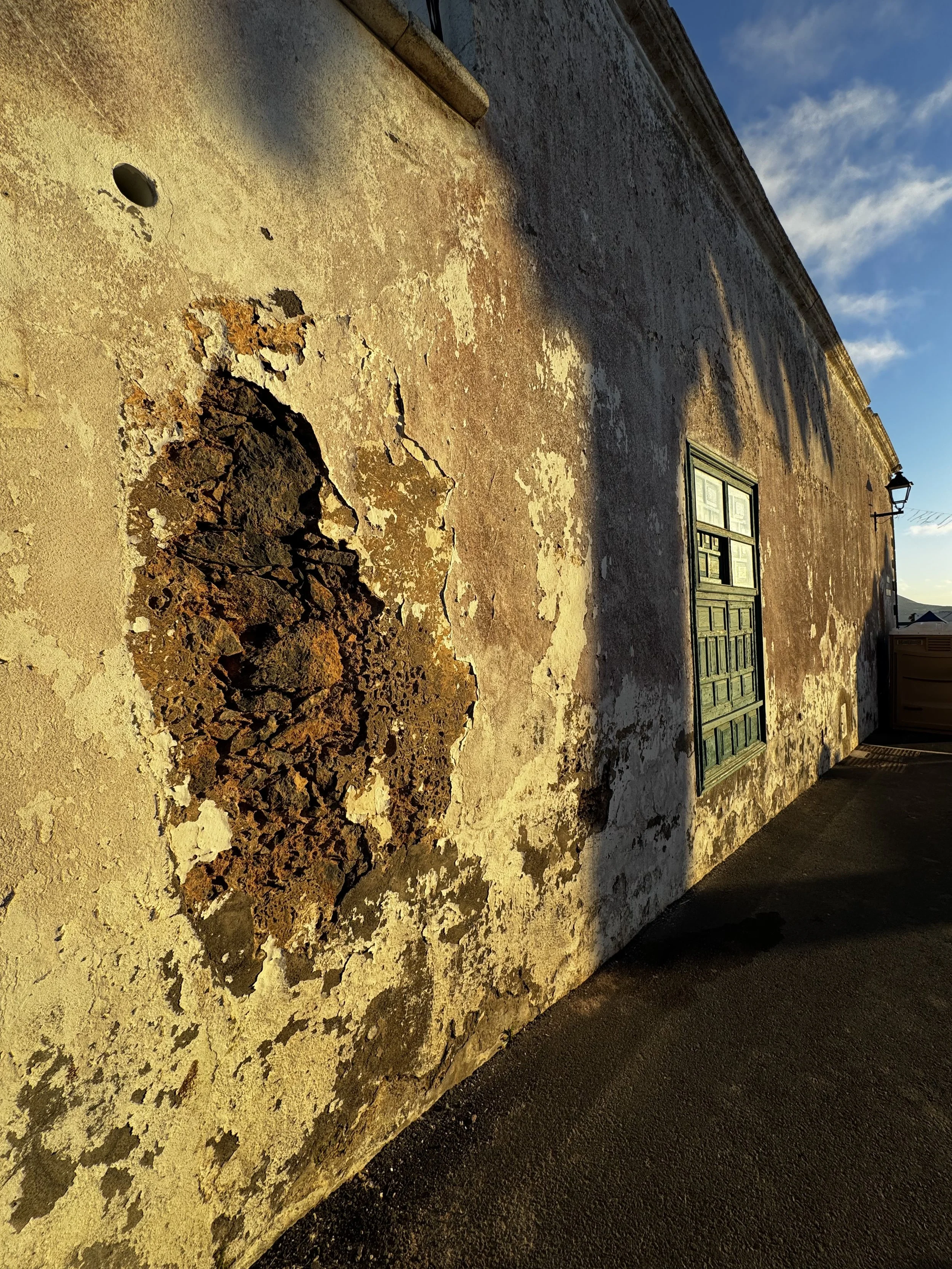
Old doors.
Weathered walls.
Volcanic stone.
Salt.
Rust.
The traces left by generations before us.
Nothing tries to hide the passing of time.
Nothing pretends to be younger than it is.
Maybe this is why some people immediately fall in love with Lanzarote...
...while others never quite understand it.
Because this island asks for something unusual.
Not admiration.
Not perfection.
Only attention.
The willingness to slow down long enough to notice.
The beauty of weathered wood.
The honesty of an old wall.
The confidence of a building that no longer needs to pretend.
The quiet dignity of things that have simply been allowed to grow old.
Beth Kempton gave us the language.
Lanzarote gave us the experience.
Looking back, I don't think we came here to discover wabi-sabi.
I think the island had been quietly teaching it to us all along.
Perhaps that is why, without ever planning to, we slowly stopped trying to make life perfect...
...and started noticing how beautiful it already was.