Looking for authentic villages in Lanzarote, away from the busy holiday resorts? Discover ten places worth exploring, from rural fincas and volcanic landscapes to coastal walks, scenic drives and unexpected local stories.
Lanzarote is famous for its volcanic landscapes, beautiful beaches and extraordinary creations by César Manrique. But some of the island's most rewarding experiences are found in its smaller villages.
We've been living on Lanzarote for more than three years, after first discovering the island as visitors many years ago. And although we've explored it countless times, we're still finding new reasons to love it.
This is our personal selection of ten villages, each with its own character, history and something that makes it worth discovering. Some deserve an entire afternoon; others are best enjoyed as a short stop along a beautiful country road.
Not every village is a destination in itself. And that's part of the pleasure of exploring Lanzarote beyond the tourist resorts.
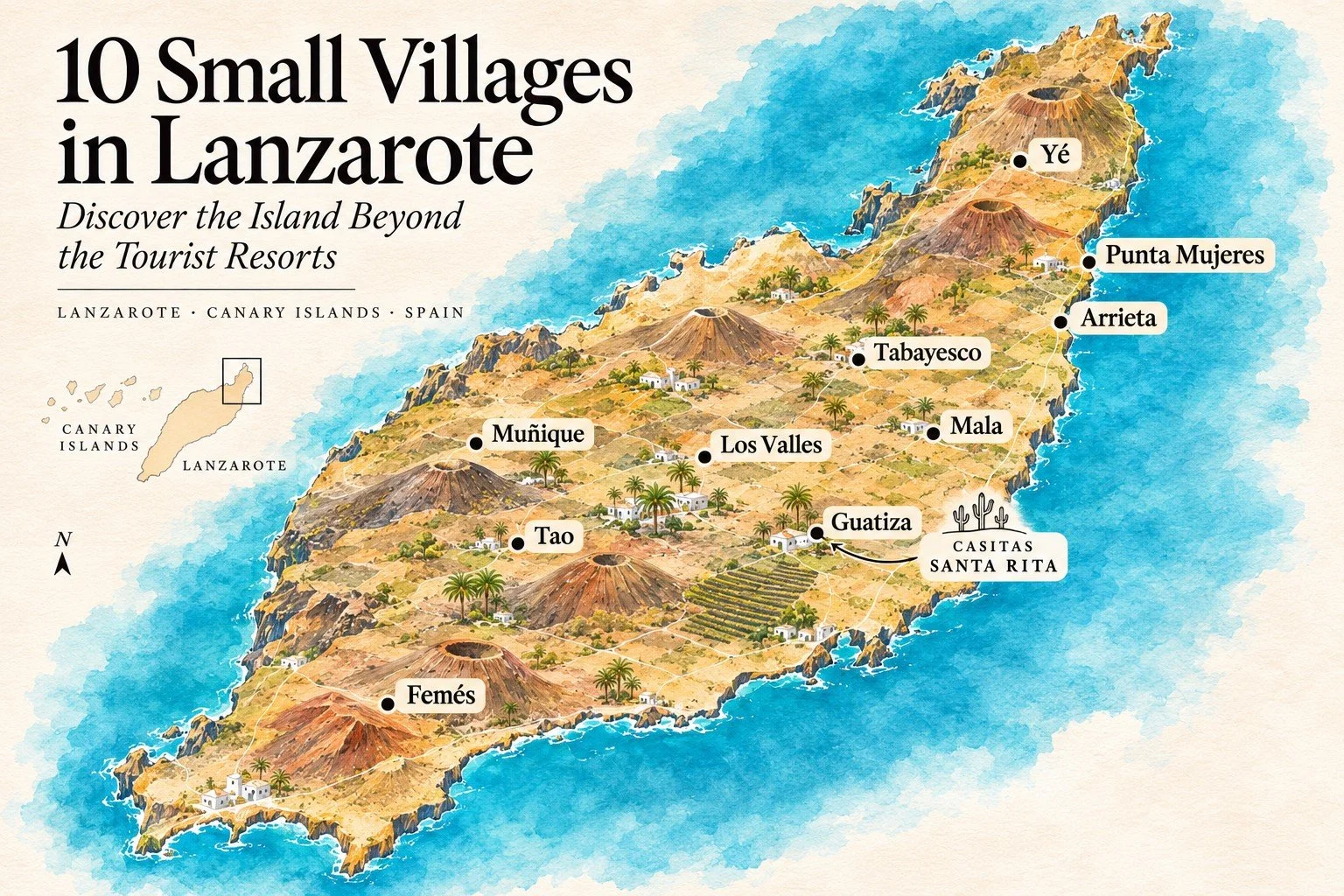
Which Villages in Lanzarote Are Worth Exploring?
For mountain scenery and spectacular views, Femés, Tabayesco, Los Valles and Yé are particularly interesting.
For rural landscapes and a quieter side of island life, explore Guatiza, Mala, Tao and Muñique.
If you prefer the coast, Punta Mujeres is known for its natural swimming pools, while Arrieta is worth visiting for its sandy beach, seafood restaurants and unusual Casa Juanita.
These aren't necessarily Lanzarote's most picturesque villages. They're places that have caught our attention for different reasons, from a quiet village square to an unexpected architectural detail or a remarkable road through the countryside.
10 Small Villages in Lanzarote at a Glance
Guatiza — Jardín de Cactus, traditional architecture, hiking
Mala — Rural fincas, volcanic coastal walks
Tabayesco — Cycling, mountain roads, Atlantic views
Tao — Historic country estates, rural architecture
Muñique — Volcanic landscapes, countryside drives
Los Valles — Traditional Canarian food, mountain viewpoints
Yé — Volcán de la Corona, Mirador del Río
Femés — Dramatic scenery, village history, viewpoints
Arrieta — Sandy beach, seafood restaurants, Casa Juanita
Punta Mujeres — Natural swimming pools, coastal walks
Most of these villages are in northern and central Lanzarote. Rather than trying to see them all in one day, we recommend exploring them over two or three relaxed outings.
1. Guatiza – Cactus Gardens, Traditional Architecture and Beautiful Walking Routes
Best for: Authencity, César Manrique, village life and hiking in northern Lanzarote.
Guatiza is a traditional agricultural village in northeastern Lanzarote, surrounded by volcanic landscapes and fields of prickly pear cacti.
These cacti are more than a distinctive feature of the scenery. For generations, they supported the cultivation of cochineal, an insect used to produce a valuable natural red dye that played an important role in the island's agricultural history.
Today, Guatiza is best known for Jardín de Cactus, one of César Manrique's most remarkable creations. Set within a former quarry, the garden combines architecture, landscape and an extraordinary collection of cacti.
But we think Guatiza deserves more than a quick visit to its famous garden.
At the heart of the village stands Iglesia del Cristo de las Aguas, overlooking a charming traditional square. It's one of our favourite corners of Guatiza, with whitewashed architecture and the quiet rhythm of everyday village life.
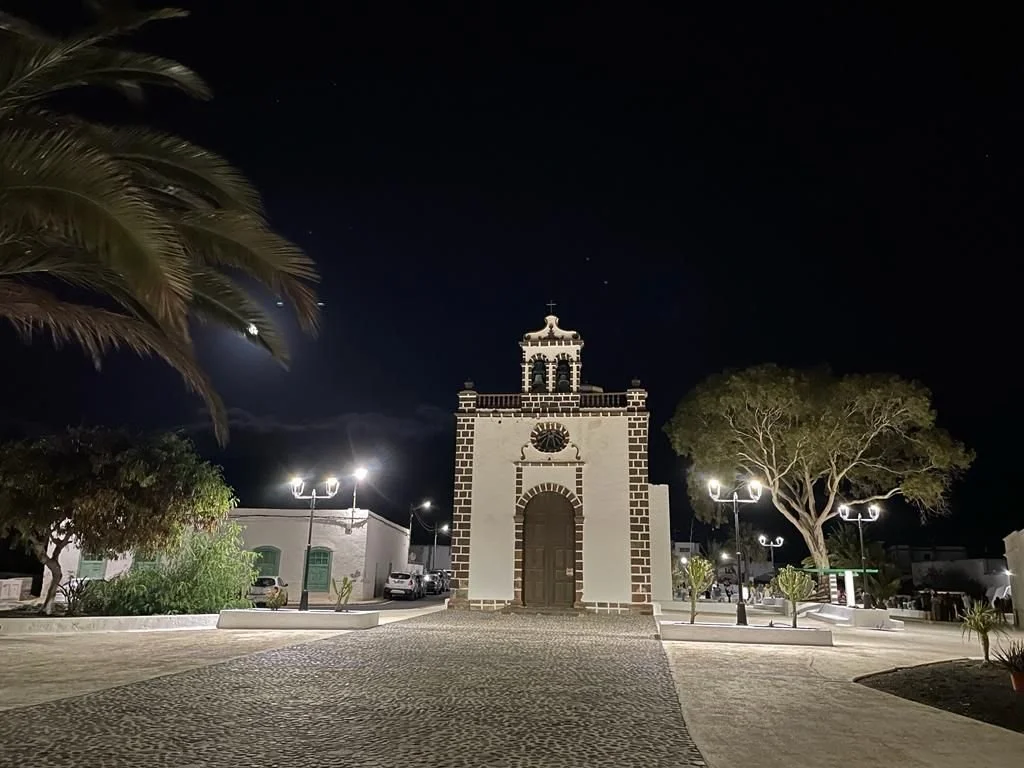
For walkers, the surrounding countryside offers another wonderful discovery: Barranco de Tenegüime.
Accessible from the area near Guatiza's cemetery, this dramatic volcanic ravine leads towards Los Valles. Its geological formations and extraordinary scenery make it one of the most memorable walking areas in this part of Lanzarote. Access and route conditions should be checked before visiting.
Guatiza is also where we live and where we created Casitas Santa Rita, our two adults-only holiday homes in restored historic buildings.
It's a village we know particularly well, and one that we'll explore in much greater detail in a separate local guide.
Our local tip: Don't visit Guatiza just for Jardín de Cactus. Take time to see the church and village square, and explore the surrounding agricultural landscape.
2. Mala – Rural Fincas and a Wild Atlantic Coastline
Best for: Countryside, quiet roads, volcanic scenery and coastal walking.
Mala is unusual among Lanzarote's villages because it doesn't have the compact centre you might expect.
Instead, many of its houses stand on relatively large fincas, surrounded by gardens, cultivated land and traditional agricultural fields.
The buildings are scattered across the landscape rather than concentrated around a central square, giving Mala a spacious, rural character.
One of our favourite ways to discover the area is to walk towards Charco del Palo, then continue along the rugged Atlantic coastline.
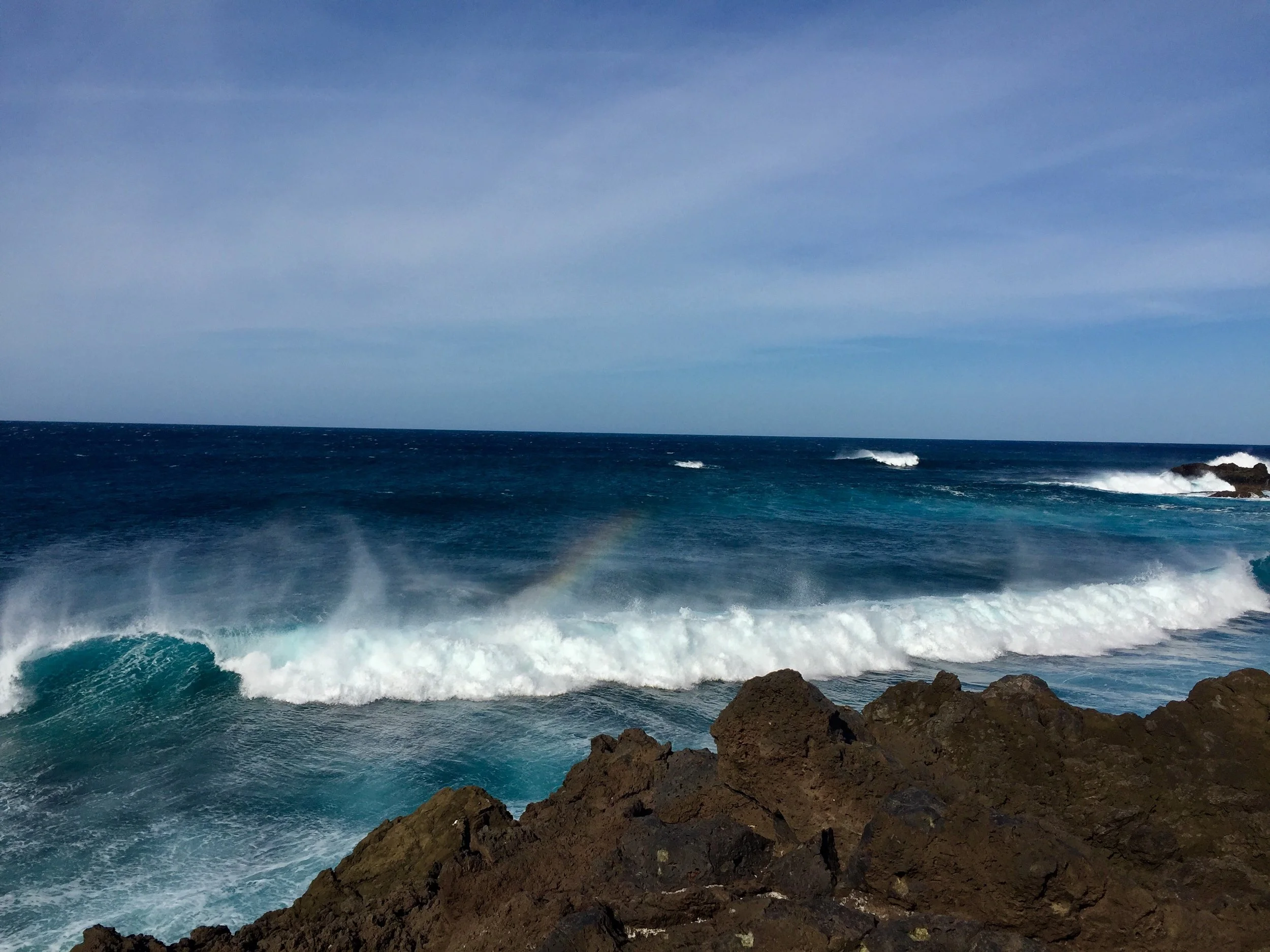
This stretch of coast is a landscape of black volcanic rocks, ocean spray and wide-open views. It's particularly beautiful when the sea is dramatic, although walkers should always keep a safe distance from breaking waves.
Charco del Palo is also a well-established naturist community, something worth knowing before exploring the surrounding coastline.
Mala isn't a village of major monuments or famous attractions. Its appeal lies in the landscape, the unusual settlement pattern and the relationship between the countryside and the Atlantic.
Our local tip: Combine a drive through Mala's quiet rural lanes with a walk along the volcanic coast near Charco del Palo.
3. Tabayesco – A Tiny Church, Spectacular Views and a Famous Cycling Climb
Best for: Road cycling, mountain scenery and panoramic views towards Arrieta.
Tabayesco is a small village in one of northern Lanzarote's most beautiful valleys.
For road cyclists, the name is particularly familiar. The climb from the coast towards Haría is one of the island's celebrated cycling routes, attracting enthusiasts and athletes training on Lanzarote.
The winding road climbs steadily through the valley, with increasingly spectacular views towards Arrieta and the Atlantic Ocean.
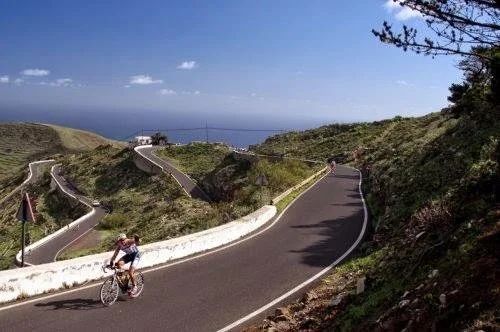
But there's another reason we love Tabayesco.
The village has a beautiful little white church and a small, charming square that seem almost hidden within the surrounding mountains.
It's a lovely contrast: an intimate village setting surrounded by dramatic scenery.
You don't have to be a cyclist to appreciate the road. Driving through the valley towards Haría is one of the most scenic experiences in northern Lanzarote.
Our local tip: Stop in the village rather than simply driving through. The little church and its square deserve a few minutes of your time.
4. Tao – A Historic Canarian Estate and Panoramic Volcanic Views
Best for: Rural architecture, historic properties and countryside scenery.
Tao is a small agricultural village in central Lanzarote, surrounded by cultivated fields and volcanic landscapes.
It's not a conventional sightseeing destination, but it offers a glimpse of the island's rural character.
One particularly interesting place nearby is Casona de Tao, a restored historic Canarian country estate set on a hillside overlooking the surrounding landscape.
The property combines traditional architecture with panoramic views across Lanzarote's volcanic interior.
Today, Casona de Tao operates as a rural boutique hotel and an intimate wedding venue. Its setting offers something quite different from the island's large coastal hotels: a private, rural atmosphere surrounded by countryside.
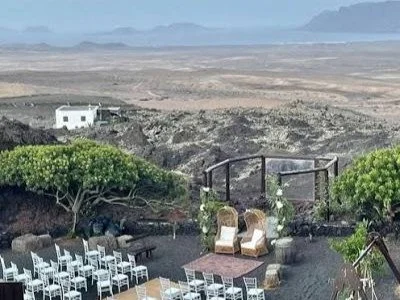
Because Casona de Tao is a private property, visits and events should be arranged directly with the venue.
Explore Casona de Tao and its wedding venue
Our local tip: We wouldn't suggest travelling to Tao solely for sightseeing. Instead, include it in a leisurely drive through central Lanzarote, where the agricultural landscape and volcanic scenery are the main attractions.
5. Muñique – Volcanic Landscapes and the Roads of Rural Lanzarote
Best for: Countryside drives, agricultural landscapes and exploring central Lanzarote.
Muñique is a small agricultural village in the interior of Lanzarote, surrounded by open countryside and volcanic scenery.
Like Tao, it isn't a place with a long list of attractions. What we enjoy here is the landscape itself and the roads connecting the island's rural communities.
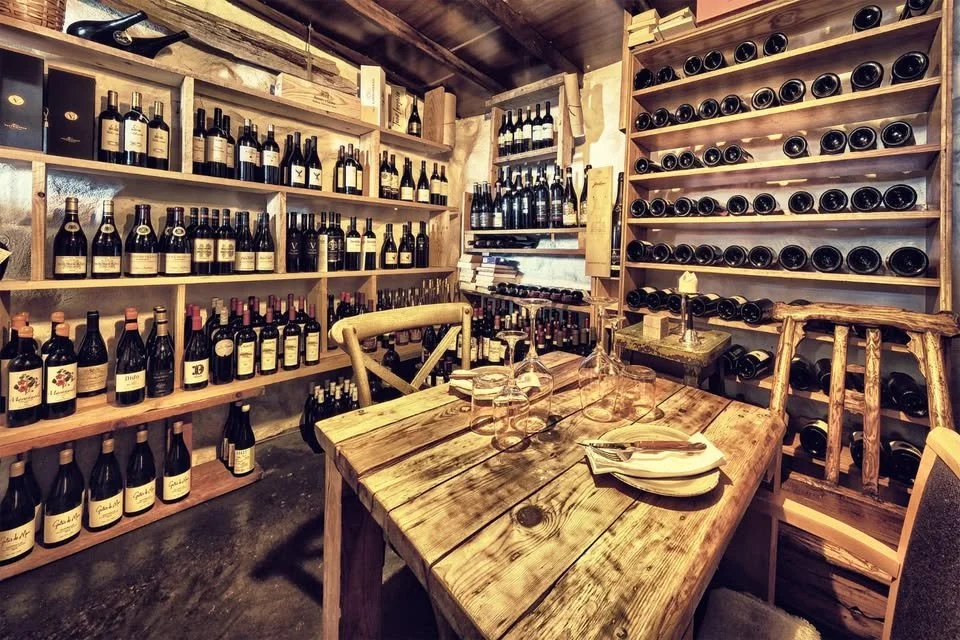
One of our favourite restaurants in the area is Casa Morelino, an Italian restaurant in nearby Tiagua.
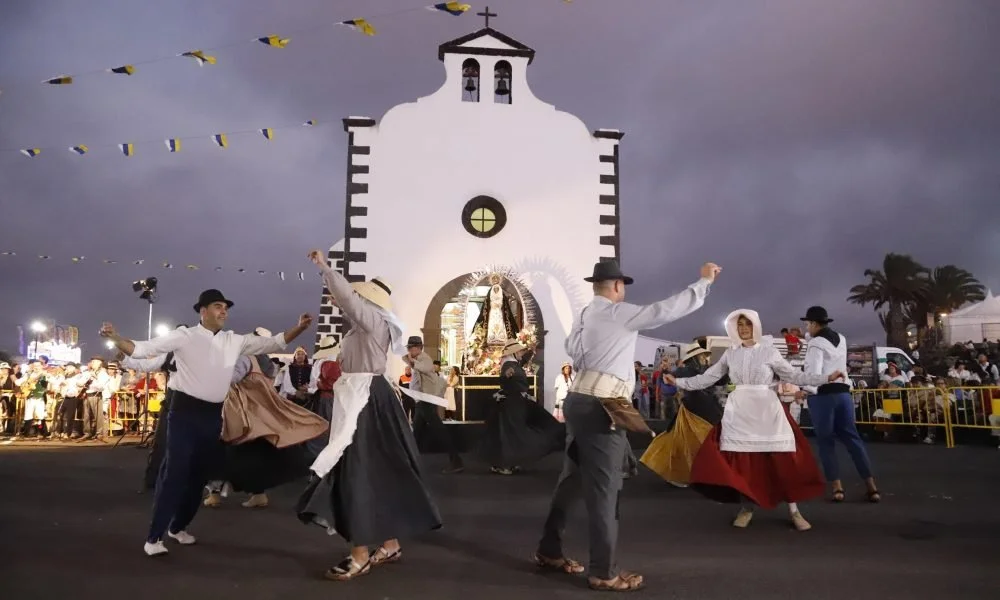
Another experience we recommend is the drive towards Mancha Blanca, where you'll find Ermita de Nuestra Señora de los Dolores, affectionately known as Pa Dolores.
The chapel is closely connected to Lanzarote's volcanic history and the island's devotion to the Virgen de los Dolores.
If you're exploring the area on a Sunday morning, don't miss the Mancha Blanca farmers' market.
Visiting this agricultural market has become one of our favourite weekly rituals. We come for the locally grown fruit and vegetables, but also for the people, the conversations and the pleasure of discovering what's in season.
It's one of the most genuine ways we've found to experience everyday life on Lanzarote.
Read our story: Every Sunday in Mancha Blanca
Our local tip: Combine Muñique and Tiagua with a visit to Mancha Blanca. On Sundays, make time for the farmers' market. This is an outing where the journey is as enjoyable as the destination.
6. Los Valles – Traditional Canarian Food and Some of Lanzarote's Best Mountain Views
Best for: Local restaurants, terraced fields, scenic drives and Famara viewpoints.
Los Valles is a traditional agricultural village nestled among the hills of northern Lanzarote.
Its terraced fields are particularly beautiful after winter rains, when the landscape can turn surprisingly green.
If you've only seen Lanzarote's dry volcanic plains, this greener side of the island may come as a surprise.
Los Valles is also a good place to discover traditional Canarian food.
We particularly recommend two restaurants.
Teleclub Los Valles is known for generous portions and traditional home-style cooking. Teleclubs are an important part of local life in Lanzarote, and eating in one can be a very different experience from dining in a tourist resort.
Restaurante Mirador de Los Valles offers another opportunity to enjoy local cuisine, with beautiful views across the surrounding countryside.
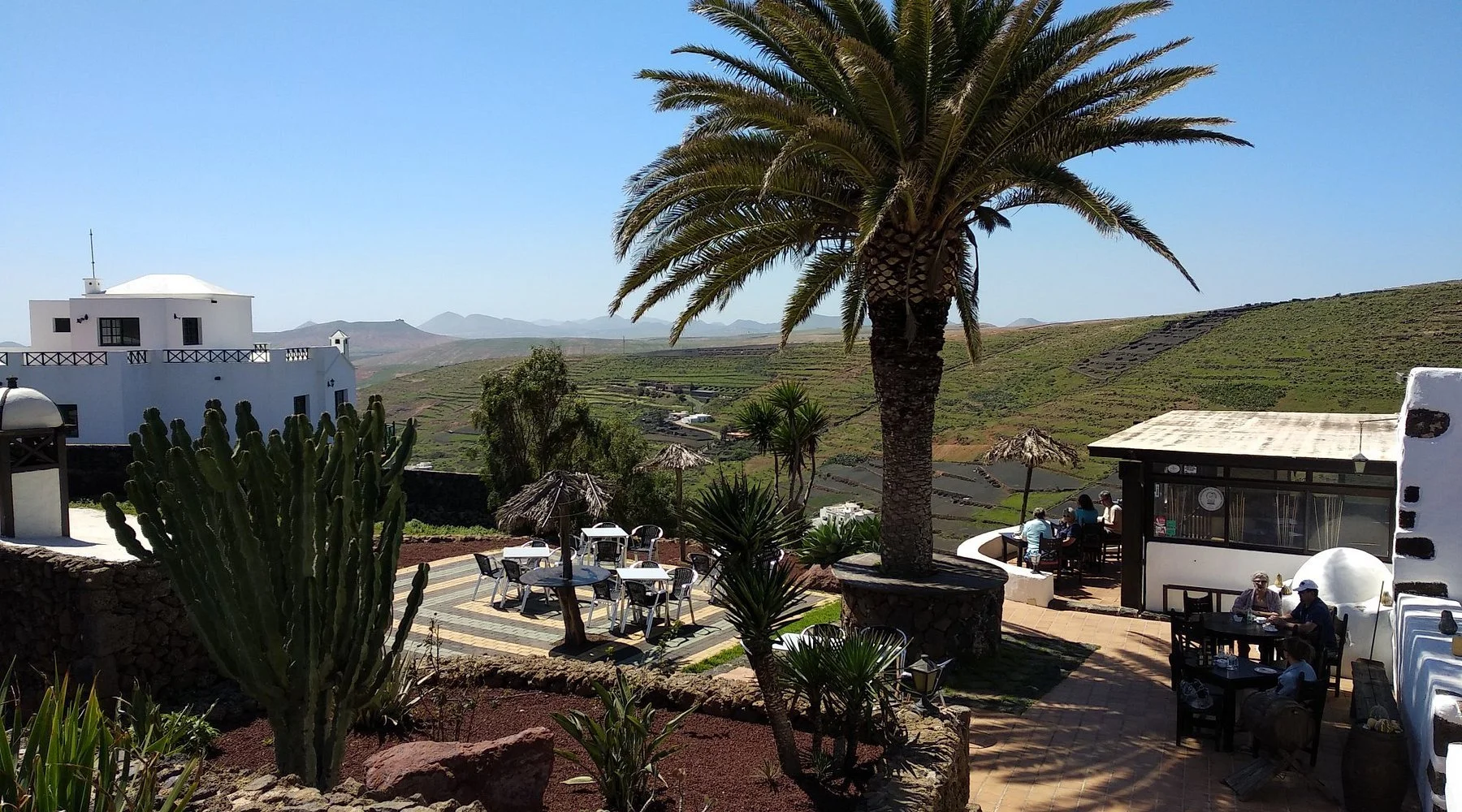
But the landscape above the village is perhaps even more memorable.
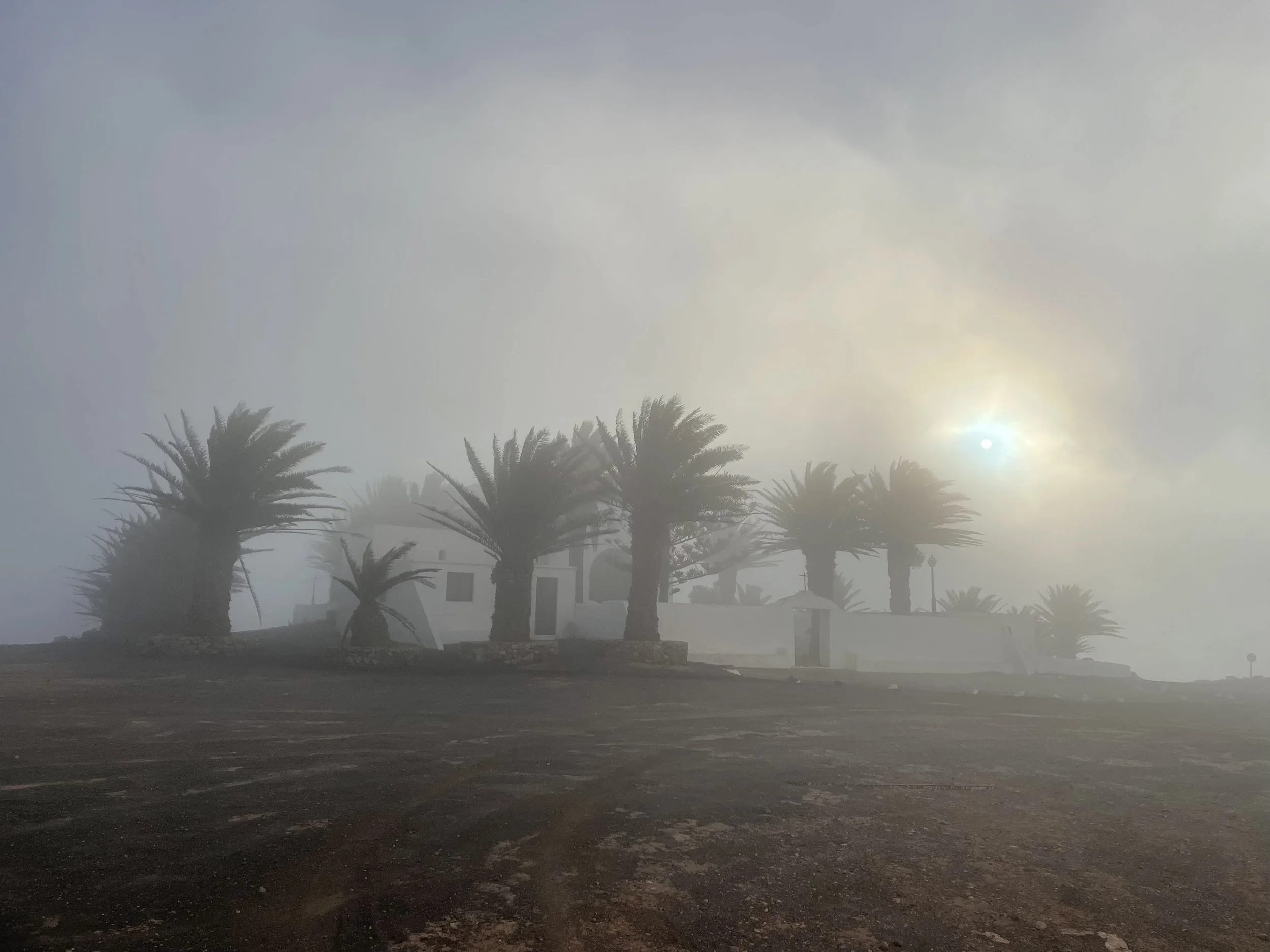
The winding road towards Ermita de las Nieves, a small chapel high above the cliffs of Famara, offers some of Lanzarote's most extraordinary mountain scenery.
Nearby, El Bosquecillo is another remarkable viewpoint overlooking Famara Beach, the Atlantic Ocean and the Chinijo Archipelago.
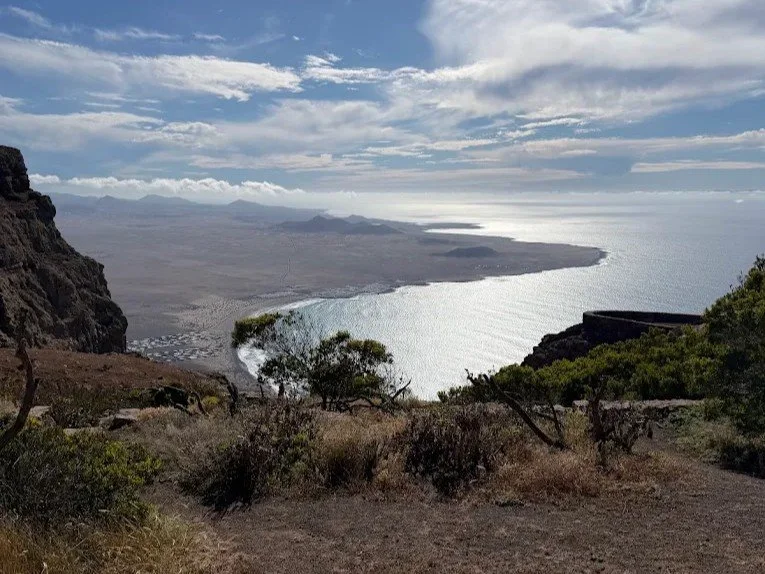
On a clear day, the views are unforgettable.
However, this part of Lanzarote can be windy, cool or covered in mist, even when the coast is sunny. The access road can also be quite rough and uneven in places, so drive slowly and carefully.
Our local tip: Visit Los Valles for lunch, then continue towards Ermita de las Nieves and El Bosquecillo if the weather is clear.
7. Yé – Volcán de la Corona, Mirador del Río and Excellent Grilled Meat
Best for: Volcanic landscapes, northern viewpoints, hiking and traditional grills.
Yé is a small village near the northern tip of Lanzarote, set beneath the impressive Volcán de la Corona.
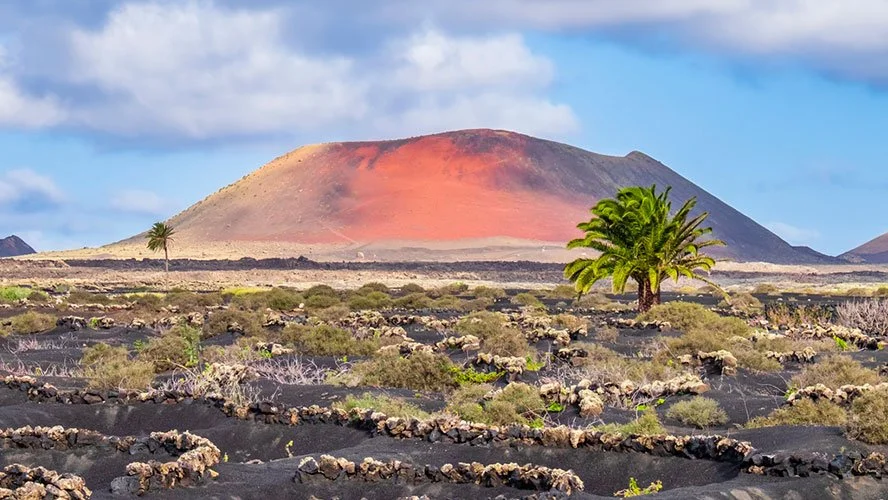
The surrounding countryside is characterised by volcanic fields, vineyards and beautiful views across the northern landscape.
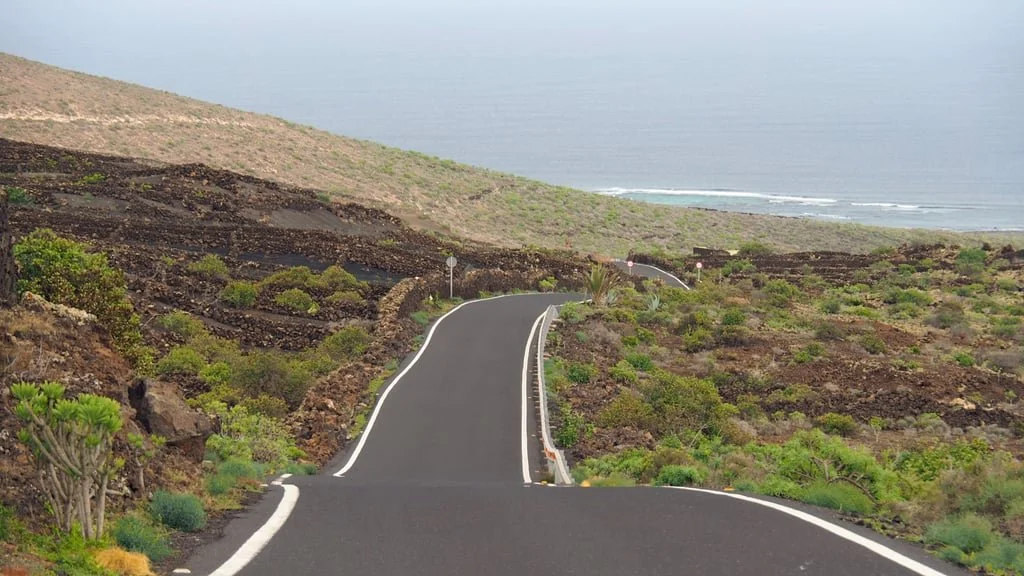
One of our absolute favourite drives on Lanzarote is the road from Órzola to Yé. Winding through a rural landscape dotted with traditional fincas, it offers breathtaking views of the surrounding hills and volcanic countryside. It's one of those journeys where you almost wish the road would never end.
Yé is also a convenient starting point for exploring Mirador del Río, one of César Manrique's most celebrated architectural creations.
From this spectacular viewpoint, the Atlantic stretches towards La Graciosa and the Chinijo Archipelago.
For food, we particularly recommend Grill-Asador Volcán de la Corona, a restaurant known for grilled meats and traditional dishes.
It's a wonderful place to stop for lunch when exploring the north.
Hiking enthusiasts may also be interested in the area around Volcán de la Corona. The volcanic terrain is spectacular, although visitors should check current access rules and trail conditions before setting out.
Our local tip: Combine Yé with Mirador del Río and a leisurely lunch at Grill-Asador Volcán de la Corona.
8. Femés – A Mountain Village, Extraordinary Views and the Story of Vicenta
Best for: Southern Lanzarote viewpoints, village architecture, history and human stories.
Femés is a whitewashed village perched high in the mountains of southern Lanzarote.
The approach from Playa Blanca and Maciot is dramatic, with steep slopes and sweeping views across the surrounding landscape.
The road is also known among cycling enthusiasts for its demanding gradients. However, restrictions apply to cycling on the steep approach from Maciot, so visitors should not assume that the route is open to bicycles.
At the heart of the village stands the Church of San Marcial del Rubicón, beside a charming traditional square.
From the nearby viewpoint, the landscape stretches across southern Lanzarote towards Playa Blanca and, on clear days, Fuerteventura.
But Femés has another story that we find particularly moving.
Vicenta Bravo Marrero is a remarkable woman whose life reflects the hardships, resilience and wisdom of an earlier Lanzarote.
Born in 1939, she spent much of her life collecting sea salt and working as a cook in Femés, where she became known for her traditional cooking at Casa Emiliano. In 2026, she received the prestigious Jameo de Oro award in recognition of her contribution to Lanzarote's cultural heritage.
We discovered her testimony through Elena Feral's La Piel de Canarias project, and it inspired us to write one of our most personal stories about the island.
Her story reminds us of something simple but important: learning to listen and observe before speaking.
It offers a perspective on Lanzarote that no viewpoint or tourist attraction can provide.
Read our story: Vicenta – First, Learn to Listen
Our local tip: Don't rush through Femés. Spend time in the village square, admire the views and discover the human stories behind the landscape.
9. Arrieta – A Coastal Village with a Sandy Beach and a Curious House
Best for: Beach time, seafood restaurants and a relaxed stop along the northern coast.
Arrieta was once a small fishing village, but relatively little remains of that traditional character today.
Over the years, it has developed into a coastal destination popular with visitors. Much of its residential architecture dates from the late twentieth century, particularly the 1980s and 1990s, and we wouldn't describe it as one of Lanzarote's most architecturally attractive villages.
The waterfront, with its concentration of restaurants, is the main focus of visitor activity.
That said, Arrieta still has a few good reasons to stop.
The most obvious is Playa de La Garita, a sandy beach popular with local families, swimmers and surfers.
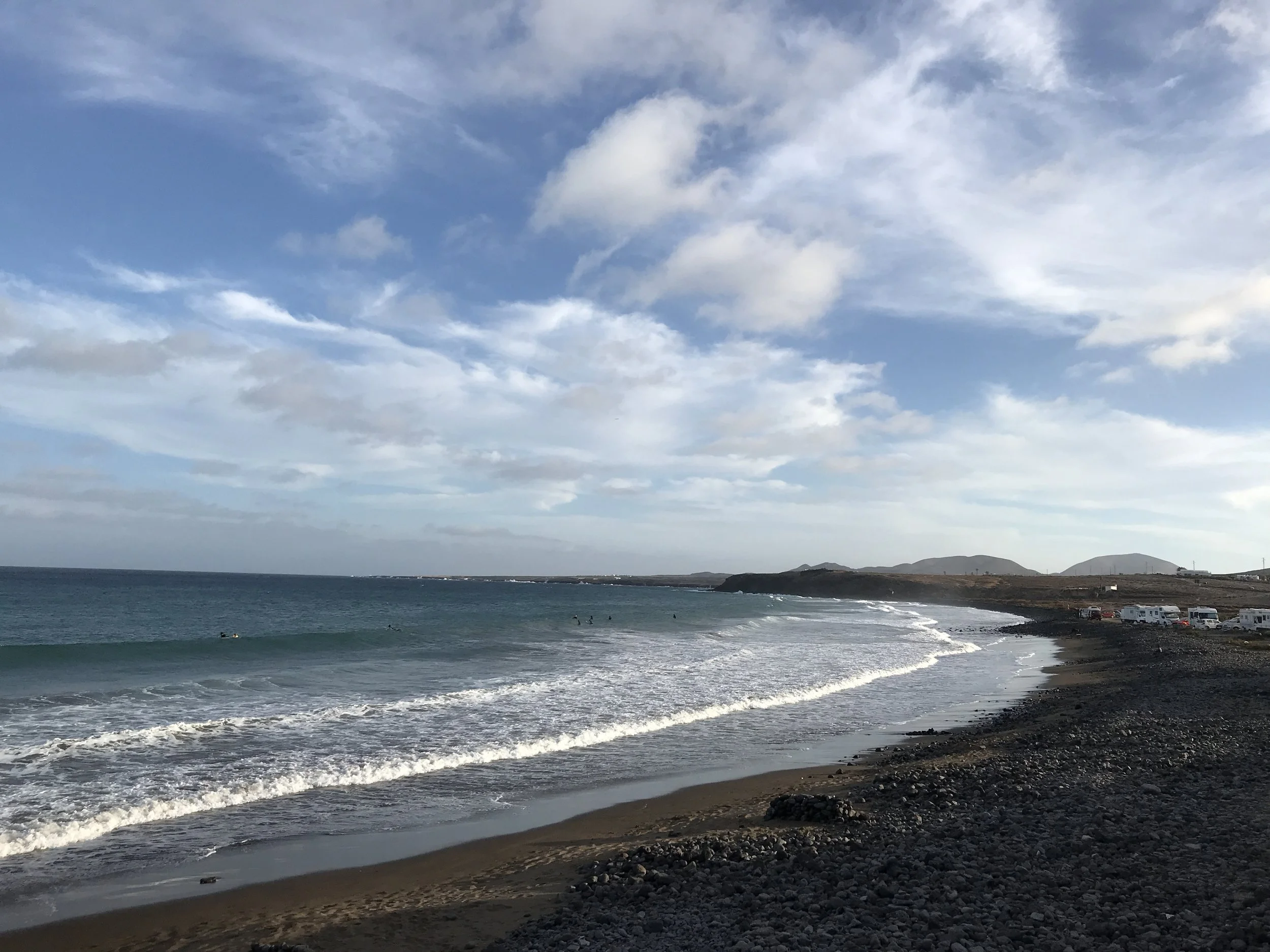
It's a pleasant place for an afternoon by the sea, perhaps followed by lunch at one of the waterfront seafood restaurants.
Arrieta also has an unusual architectural landmark: Casa Juanita, sometimes called the Chinese House.
Built in the early twentieth century, the colourful building has a touching history connected to a family who returned from Argentina and hoped the Atlantic climate would help their ill daughter.
Its distinctive appearance makes it one of Arrieta's most recognisable buildings.
Nearby, the small natural seawater pool known as El Charcón offers another opportunity to enjoy the coastline when conditions are safe.
For us, Arrieta is more a place for a beach visit, a seafood lunch or a short coastal stop than a destination for discovering beautiful traditional village architecture.
Our local tip: Come for Playa de La Garita, enjoy lunch by the sea and take a short walk to see Casa Juanita. There's no need to plan an entire day around the village itself.
10. Punta Mujeres – Natural Swimming Pools, a House Full of Flowerpots and Our Favourite Italian Restaurant
Best for: Natural pools, coastal walks, village photography and Italian food.
Punta Mujeres is one of northern Lanzarote's most distinctive coastal villages.
Here, traditional whitewashed houses stand beside a rugged volcanic shoreline, with the Atlantic Ocean just a few steps away.
The village is particularly famous for its natural seawater swimming pools, formed among the volcanic rocks.
When the sea is calm and conditions are suitable, the pools offer a wonderful place to swim while enjoying the extraordinary volcanic coastline.
But there's another little attraction we love.
Casa Carmelina is a delightful white house decorated with an extraordinary collection of colourful flowerpots.
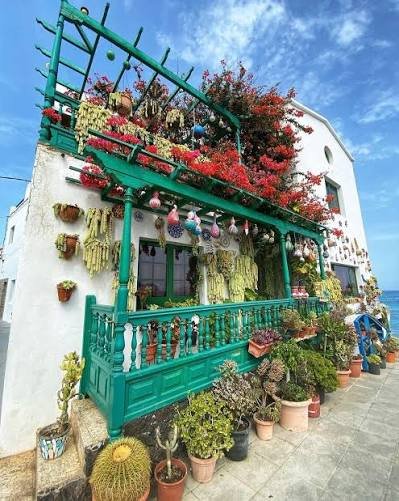
It's one of those small, unexpected discoveries that makes wandering through a village so enjoyable.
You'll find it on Calle Virgen del Pino, near the natural pools.
And then there's Mamma Grazia, our favourite Italian restaurant in the area.
This welcoming trattoria serves traditional Italian food, including pasta and pizza, and it's somewhere we genuinely enjoy returning to.
Our ideal afternoon in Punta Mujeres is wonderfully simple: walk along the ocean, discover Casa Carmelina, enjoy the natural pools if conditions allow and finish with a meal at Mamma Grazia.
Sometimes the simplest experiences are the most memorable.
Our local tip: Punta Mujeres is particularly enjoyable for a leisurely coastal walk followed by lunch or dinner.
How to Explore Lanzarote's Small Villages
The best way to discover these villages is to take your time, follow the smaller roads and leave room for unexpected stops.
A car gives you the most flexibility, particularly in the mountains and rural areas, although some villages are accessible by public transport.
If you're wondering whether renting a car is necessary, we've explored the advantages, alternatives and practical considerations in our guide: Do You Need a Car in Lanzarote?
Practical Tips for Visiting Lanzarote's Small Villages
When is the best time to visit? Lanzarote's villages can be explored throughout the year, but the experience changes with the seasons. Cooler months are particularly pleasant for walking, while winter rain can bring unexpected greenery to the volcanic landscape. For more on temperatures, wind and seasonal differences, read our guide: When Is the Best Time to Visit Lanzarote?
How much time should you allow? Plan two or three relaxed outings rather than trying to visit all ten villages in one day. Some places deserve a longer walk or lunch; others are best enjoyed as short stops along a scenic route.
Discover Another Lanzarote
For us, Lanzarote has never been just a collection of famous attractions.
Of course, Timanfaya, Jameos del Agua, Papagayo and Mirador del Río are extraordinary places, and they're absolutely worth visiting.
But there's another side of the island that reveals itself more slowly.
It's found in village squares, traditional restaurants, agricultural terraces, mountain roads and conversations with people who have spent their lives here.
We call it Another Lanzarote.
It's also the reason we chose to make our home in Guatiza, a traditional village in northern Lanzarote.
Here, at Casitas Santa Rita, we've restored historic buildings to create two independent, adults-only holiday homes: Casita Luna and Casita Coco.
Each has its own private terrace, fully equipped kitchen and access to our shared heated pool and cactus garden. Casita Luna also has a private jacuzzi.
There's no television by design. Instead, we've focused on comfort, privacy and creating a place where guests can slow down.
From Guatiza, you can explore the villages, beaches, volcanic landscapes and cultural attractions of northern Lanzarote, then return to a peaceful place to relax.
Because sometimes the best way to discover Lanzarote is simply to give yourself more time.
Explore Casita Luna · Explore Casita Coco · Discover Another Lanzarote