

Vicenta
First, learn to listen.
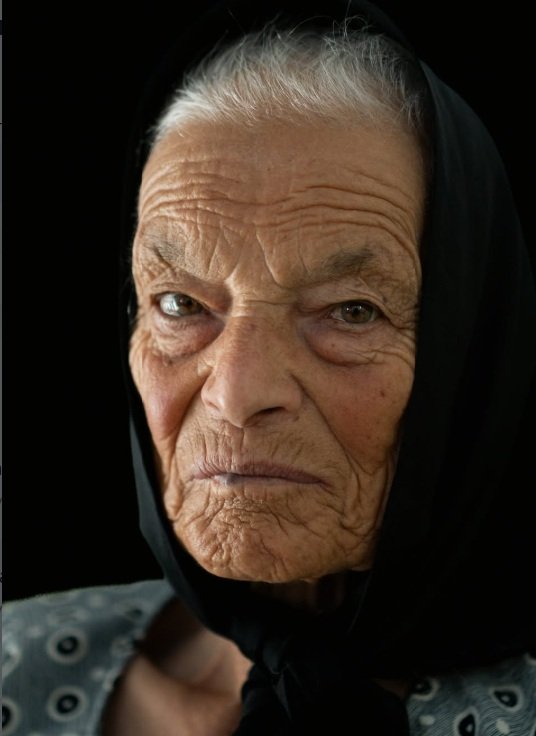
People for whom this landscape was never simply beautiful.
Something changed in the way we looked at Lanzarote after walking the Camino de los Gracioseros.
Until then, we thought we knew this island quite well.
We had lived here for three years. We knew its roads, its villages, its volcanoes. We knew where the light falls differently in the evening and where the wind disappears behind a stone wall. We had restored an old house here and, little by little, made Lanzarote our home.
But the Camino made us realise how much we still didn't see.
We began to look differently at the people who were born here. Especially the older ones.
At the men and women whose memories belong to a Lanzarote that existed before tourism, before the airport changed everything, before cars made distances small.
People for whom this landscape was never simply beautiful.
It was where they worked.
Where they walked.
Where they raised their families.
Where they endured hunger, drought, loss and extraordinary physical hardship — often without thinking of any of it as extraordinary.
Perhaps this is what fascinates us most.
We came to Lanzarote by choice.
There were things about the life we had in Poland that no longer felt right for us. Leaving was not an impulse. It was a decision we thought about, prepared for and eventually made.
We had that choice.
People of Vicenta's generation had very little of it.
They were born here. This was their island, their land, their reality. You could not simply decide that the conditions were too difficult and look for another version of life somewhere else.
Lanzarote did not have to adapt to them.
They had to learn how to adapt to Lanzarote.
To its lack of water. To its wind. To its distances. To a soil that gave little unless you understood how to work with it. To years when there was simply not enough.
And somehow, what strikes us today is not bitterness.
Quite the opposite.
There is a respect for this island among many of the older people here that is difficult to explain if you have not spent time with them.
We see traces of it around us in Guatiza.
In farmers who have been working since early morning and who, when you ask ¿Qué tal?, rarely offer a grand account of how life is treating them.
Ahí vamos.
There we go.
On we go.
Two words that seem to contain an entire philosophy.
Not everything is wonderful. Not everything has to be. There is work to do today. Tomorrow there will be work again.
The sun rises over there.
It sets over there.
The plants need water. The animals need feeding. Something needs repairing. Someone will pass by. Another day begins.
There is an order to it.
And perhaps what we recognise in some of these people is not happiness — at least not happiness in the way our modern world constantly tells us to pursue it.
It is something quieter.
Peace, perhaps.
A sense of being in one's place.
This fascinates us because we come from a world with an almost infinite number of choices. We can change countries, careers, houses, cars, phones. We can buy things that promise to make life easier and then replace them with newer things promising to make it easier still.
And yet so many of us seem to spend our lives looking for precisely the peace that these people sometimes appear to carry without ever giving it a name.
There are Porsches on Lanzarote now.
Of course there are.
But leave one outside during a calima and by morning it will be covered in exactly the same fine Saharan dust as the thirty-year-old car parked beside it.
The island is wonderfully indifferent to such distinctions.
Perhaps living for generations in a place like this teaches you something about what matters and what doesn't.
And then we discovered the story of Vicenta Bravo Marrero.
We had never met her.
We came across her through Elena Feral and her project La Piel de Canarias, where Elena recorded an extraordinary encounter with Vicenta and allowed her to tell something of her own life.
And we stopped.
Because in this one woman we recognised so much of what we had only recently begun to notice around us.
Vicenta started working when she was five years old.
Five.
Her mother sent her to work in the salt pans because the family needed every pair of hands it had.
She spent a lifetime beside the ocean and never learned to swim.
She became a mother thirteen times.
Six of her children died.
Twelve were born at home.
When Elena asked whether she had wanted to have so many children, Vicenta's answer came from a reality almost unimaginable to us today:
“No había remedios como ahora. Era lo que tocaba.”
There were no remedies like there are now.
It was simply what life required.
Years later, both of Vicenta's legs were amputated.
She spoke openly about death too. About having suffered enough. About wanting, when her time came, to be reunited with those she had lost.
There is plenty in Vicenta's story that could make us talk about hardship.
But strangely, that is not what stayed with us.
It was something else.
Elena asked Vicenta what advice she would give to someone just beginning their life.
Think about that for a moment.
A woman who had begun working at five.
Who had known hunger.
Who had given birth thirteen times and buried six of her children.
Who had worked with her hands and lived through changes that transformed Lanzarote beyond recognition.
What does a person like that tell someone standing at the beginning of life?
Work hard?
Be strong?
Never give up?
No.
Vicenta said:
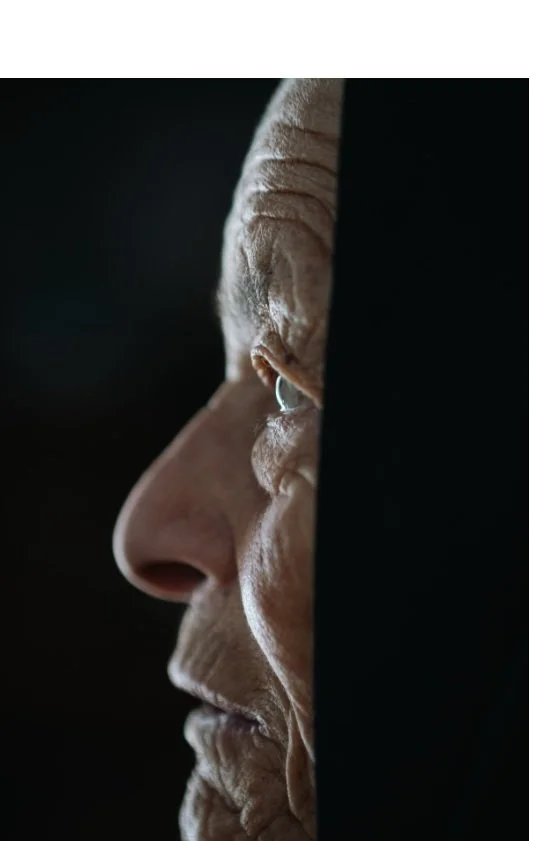
“Aprender a escuchar. Aprender a observar. Solo así podrás hablar con coherencia.”
Learn to listen.
Learn to observe.
Only then will you be able to speak with coherence.
There are people who spend years at universities trying to arrive at something this simple.
Others spend fortunes searching for peace in books, retreats, therapies, philosophies and places far away from home.
And then there is an old woman from Lanzarote who worked from the age of five and, when asked what she has learned about life, tells us:
Listen.
Observe.
Then speak.
Perhaps this is the kind of wisdom we have slowly begun to recognise here.
Not intellectual knowledge.
Not something accompanied by titles or certificates.
Something accumulated differently.
Through repetition. Through loss. Through work. Through watching the same sun rise over the same land thousands of times.
Through knowing that tomorrow will bring another day and that whatever it brings, somehow:
Ahí vamos.
We don't want to romanticise that life.
Poverty is not beautiful.
Losing children is not wisdom.
Working from the age of five is not something to be nostalgic about.
The old Lanzarote was extraordinarily hard, and many of the changes that came later made people's lives immeasurably better.
But perhaps progress does not mean that every form of knowledge belonging to the world before it becomes obsolete.
Perhaps some things are worth stopping for.
Listening to.
Observing.
We came here because of the island.
We stayed long enough to discover its people.
And slowly, we began to understand that perhaps they are the island.
When we wrote about the women of the Camino de los Gracioseros, we ended with a thought that has stayed with us ever since.
The voices carrying these memories are growing quieter.
Their stories deserve the opposite.
Not a whisper.
A full mezzoforte.
At the time, perhaps we did not yet understand what that would ask of us.
Vicenta gave us the answer.
First, learn to listen.
Aprender a escuchar. Aprender a observar. Solo así podrás hablar con coherencia.
Vicenta Bravo Marrero’s testimony and the details of her life quoted or described in this story come from Elena Feral’s encounter with Vicenta, published through La Piel de Canarias. We are grateful to Elena for listening to Vicenta and for preserving and sharing her words.