

When Is the Best Time to Visit Lanzarote? It Depends on What You Want to Do
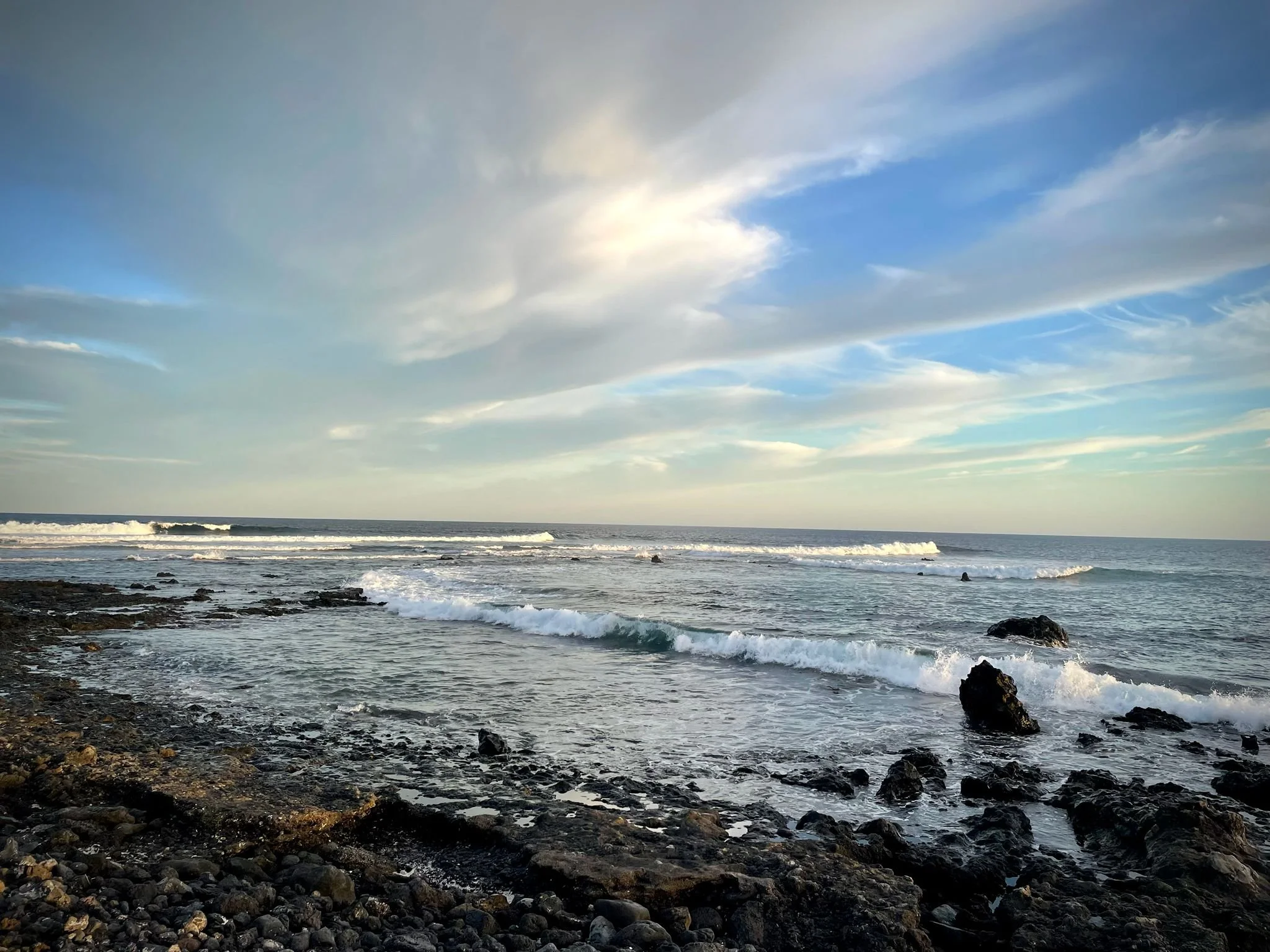
Atlantic light on the coast of Lanzarote — where the weather, wind and ocean can make every season feel different
Ask when the best time to visit Lanzarote is and you will usually get a month.
But that is not quite the right answer.
Lanzarote is unusual because there is no obvious season when the island simply closes down. Winter can mean walking in sunshine while much of Europe is cold and grey. Summer brings the hottest weather but also stronger trade winds. Autumn keeps much of the warmth while the island begins to feel different again.
So instead of asking “What is the best month to visit Lanzarote?”, it may be more useful to ask:
What do you want Lanzarote to be like when you get here?
Lanzarote weather at a glance
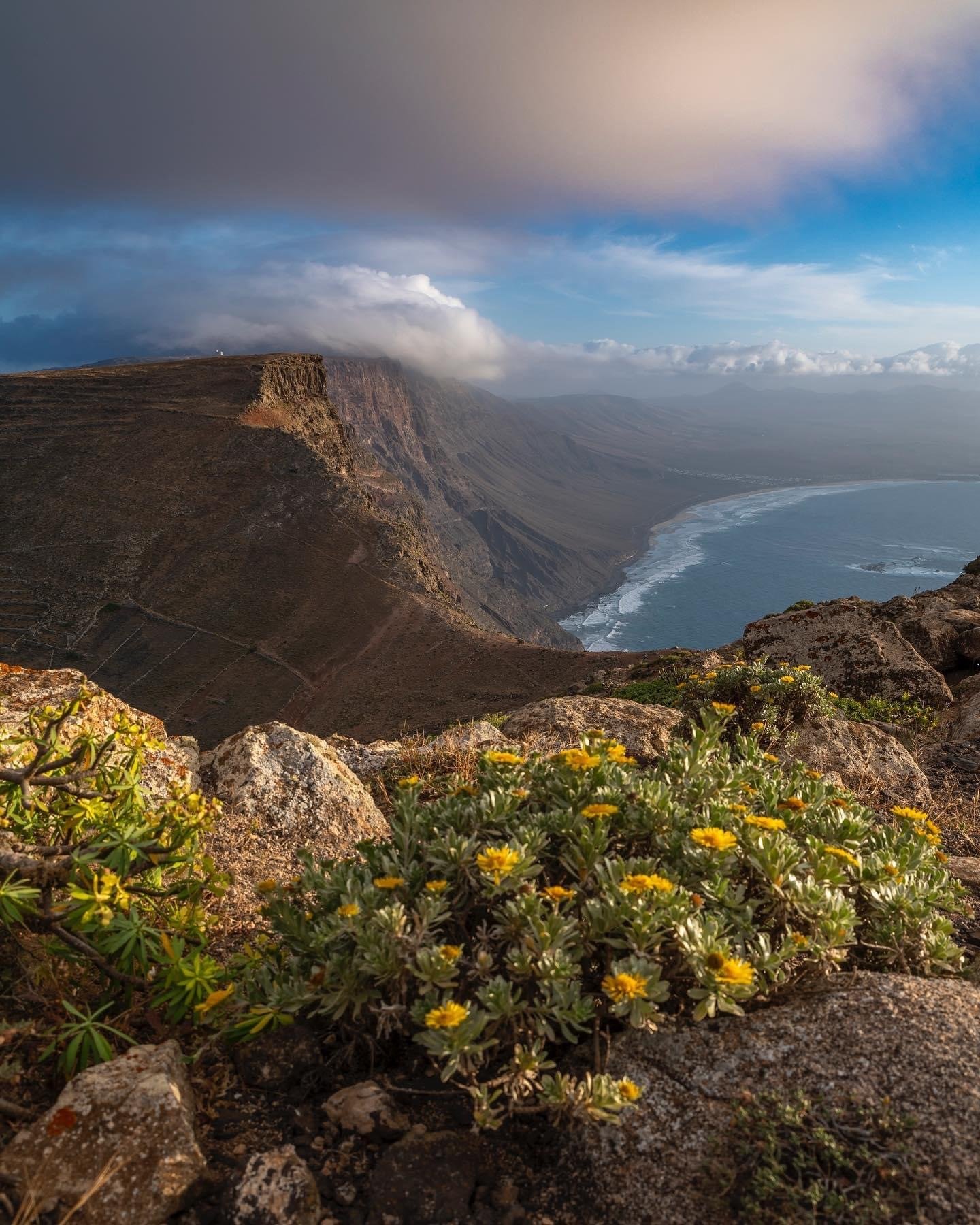
After the winter rains, Lanzarote can reveal an unexpected side — green slopes and wildflowers emerging from the volcanic landscape.
Lanzarote has a mild, dry climate throughout the year.
Average daytime maximum temperatures range from around 21°C in January to 29°C in August. Rainfall is low even by Canary Islands standards, with virtually none during the summer months and relatively little during winter.
That makes Lanzarote a genuine year-round destination — but not the same destination all year round.
If you want…
Winter sun — December–March
Hiking and exploring — November–April
Long warm days — June–September
Warm evenings and beach weather — August–October
Cycling and active holidays — October–May
A balance of warmth and exploring — April–June or September–November
Less chance of strong summer trade winds — September–November
There is an important caveat to every suggestion above: Lanzarote's weather does not follow a timetable.
A January afternoon can feel remarkably warm in a sheltered spot. A July day can feel much cooler when the wind gets up. And a change of only a few kilometres — or simply moving from an exposed beach to a protected terrace — can completely change how the same weather feels.
That is part of understanding Lanzarote.
If you're coming for winter sun
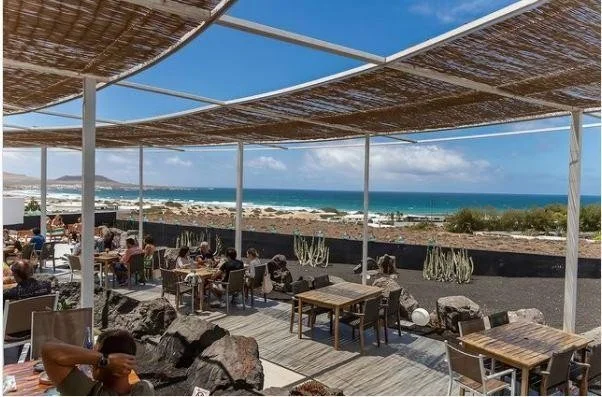
Winter in Lanzarote often means something wonderfully simple: lunch outside, sunshine and the Atlantic in front of you.
December to March is one of the best periods if what you really want is an escape from the European winter rather than a traditional hot-weather beach holiday.
Average daytime maximum temperatures are around 21–23°C, and Lanzarote still receives plenty of sunshine.
That sounds mild on paper. In reality, 21°C in the sun on a sheltered terrace can feel wonderful.
But this is where expectations matter.
Winter in Lanzarote is not guaranteed summer.
Evenings can be cool. You may want a light jacket. There can be cloudy periods and occasional rain. If your definition of a successful holiday is spending every day in swimwear beside the pool, January is a less certain proposition than September.
If instead you want to have breakfast outside, walk through volcanic landscapes without overheating, explore villages, visit markets, eat lunch in the sun and remember that northern Europe is currently wearing a coat, winter makes much more sense.
The trade-off: wonderfully mild conditions for exploring, but less certainty of genuinely hot beach weather.
If you want Lanzarote at its warmest
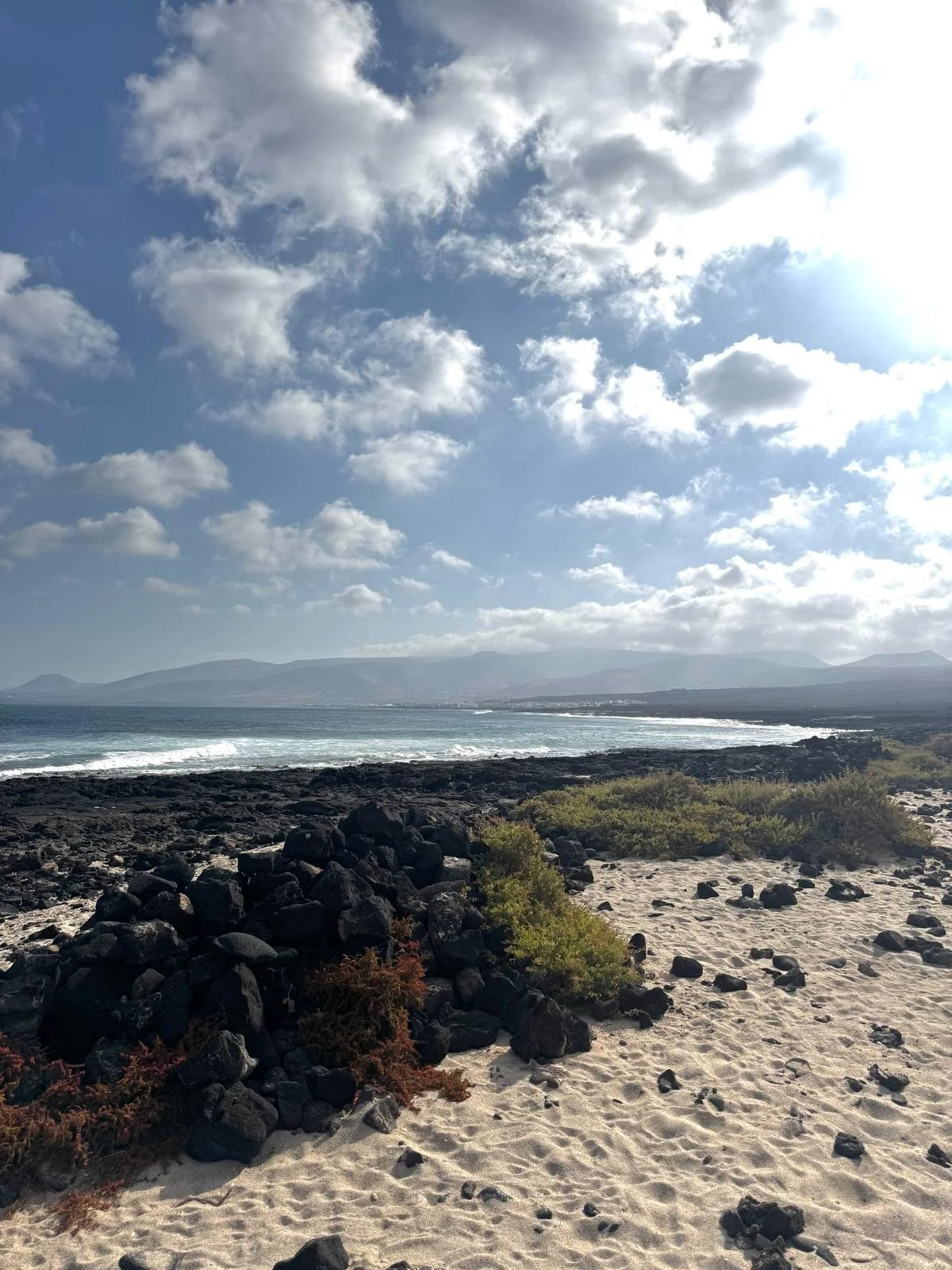
Summer in northern Lanzarote: bright Atlantic light, volcanic rock and clouds still gathering over the island.
July, August and September bring the highest temperatures, with August normally the hottest month.
Average daytime maximum temperatures reach around 28–29°C in July and August, rainfall is almost nonexistent, and evenings are considerably warmer than in winter.
For a conventional summer holiday, that makes the choice appear simple.
Except Lanzarote has another character in summer:
the wind.
The north-easterly trade winds are part of the island's climate, and they tend to be particularly noticeable during summer. In an exposed place, a windy 27°C can feel very different from the same temperature behind a wall or in a protected courtyard.
That does not mean you should avoid Lanzarote in July or August. Far from it. The wind is one reason the island can remain surprisingly comfortable even when temperatures rise.
But it does mean that choosing where you spend the day can matter almost as much as choosing the month.
A windy morning at Famara and a sheltered afternoon on the south coast can feel like two different weather forecasts.
The trade-off: maximum warmth and almost no rain, but also a greater chance that the trade winds become part of your holiday.
A word about calima
There is one important exception to Lanzarote's normally moderate temperatures: calima.
When hot, dry air and Saharan dust move across the Canary Islands from Africa, temperatures can rise dramatically and visibility may fall under a dusty haze.

Calima on the move: Saharan dust crossing the Atlantic towards the Canary Islands.
During stronger episodes, temperatures in Lanzarote can approach or even exceed 40°C — very different from the summer averages shown in climate tables.
Calima can occur at different times of year and is difficult to predict far in advance, so it is not something you can realistically plan your holiday around.
If it happens while you are here, change the plan.
This is not the day for a long exposed hike or a heroic cycle across the island. Slow down, seek shade, drink plenty of water and save the volcano for another day.
If the sea and beach time matter most
There is a small trap in thinking about Lanzarote.
The hottest air temperatures and the best-feeling sea do not necessarily peak at exactly the same moment.
The Atlantic warms slowly.
This means late summer and early autumn can offer a particularly attractive combination: warm days, warm evenings and an ocean that has had the entire summer to heat up.
For travellers whose ideal Lanzarote day involves swimming, reading on the beach, lunch somewhere by the sea and perhaps another swim before sunset, September and October deserve serious consideration.
September in particular is an interesting month. Average daytime maxima remain close to summer levels, while the strongest period of the summer trade winds is beginning to ease.
October remains warm, although the statistical chance of rain begins to increase.
And remember that the “best beach weather” also depends on the beach.
Some beaches are exposed to swell or wind while others can be remarkably protected on the same day. The smartest strategy in Lanzarote is sometimes not to wait for perfect weather.
It is to go to the part of the island where today's weather works in your favour.
The trade-off: late summer and early autumn offer an excellent combination for swimming and beach life, but autumn weather gradually becomes less predictable.
If you're coming to hike and explore
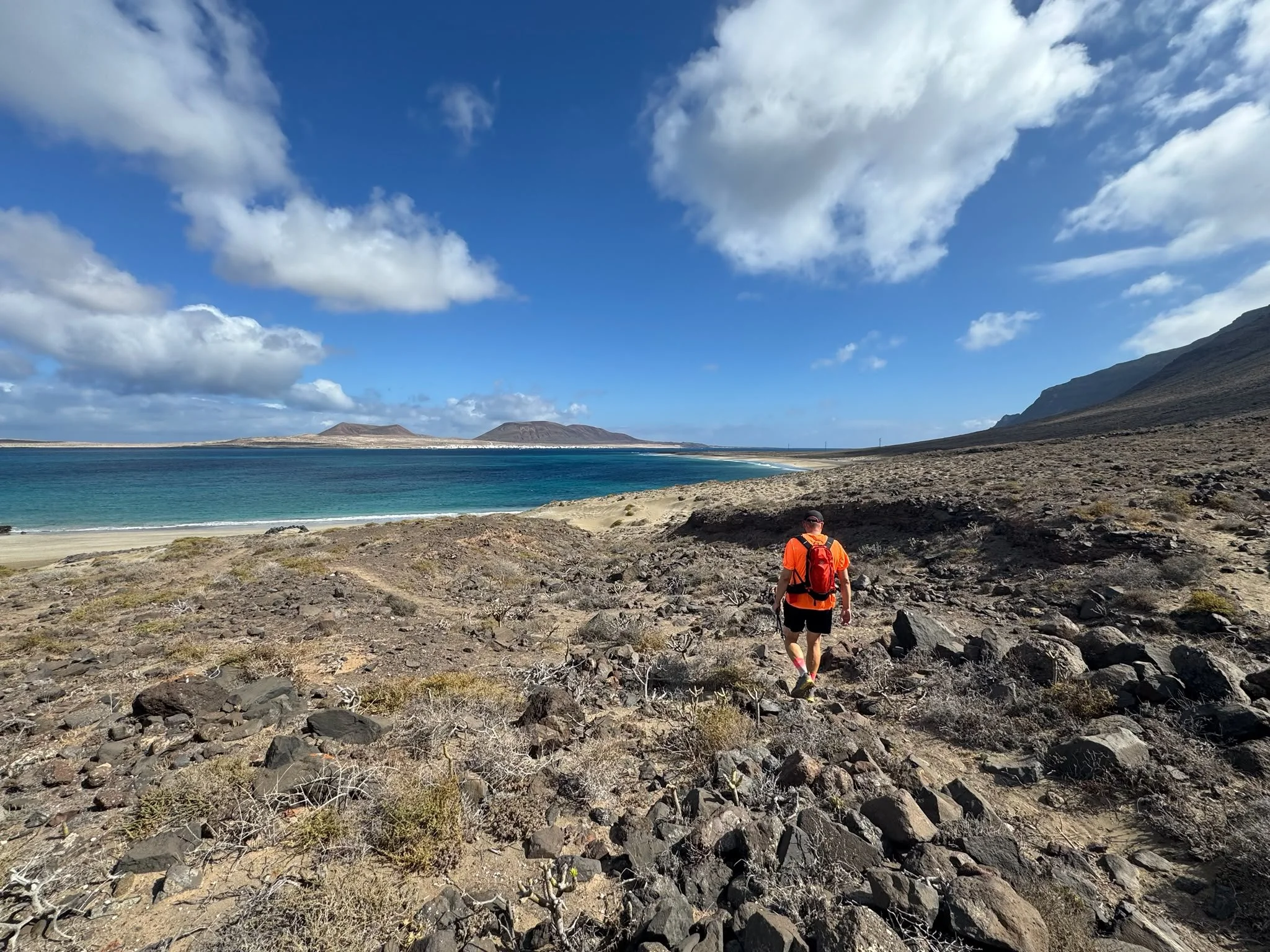
Walking the Camino de los Gracioseros — a reminder that Lanzarote is often at its best when the temperature invites you to keep exploring.
This is where the conventional idea of “best weather” becomes almost useless.
For hiking, the hottest months are often not the best months at all.
Lanzarote has very little natural shade. Walking through La Geria, climbing towards a volcanic crater or following an exposed coastal trail is a very different experience at 22°C than at 29°C under an intense Atlantic sun.
For travellers who want to spend serious time outdoors, roughly November through April can be one of the most rewarding periods of the year.
The days are cooler. The light can be beautiful. And walking becomes something you can do for hours rather than something you need to fit into the early morning.
Spring has another advantage.
After periods of winter rain, parts of an island famous for black lava and ochre volcanoes can unexpectedly turn green. Tiny plants and flowers appear in landscapes that many visitors imagine to be permanently barren.
It does not happen according to a tourist calendar. It depends on the rain.
But when it does, you see another Lanzarote.
The trade-off: cooler conditions are much better for serious exploration, but winter brings a slightly greater possibility of cloud, rain and cooler evenings.
If you're coming to cycle
Cyclists face essentially the same equation as hikers, amplified by the wind.
Lanzarote is a major cycling destination precisely because you can ride throughout much of the year, but October through spring generally offers a more comfortable balance between temperature and physical effort than peak summer.
There is another thing worth understanding before you arrive.
Lanzarote may not have enormous mountains, but that does not make riding here easy.
The landscape is exposed. Climbs accumulate. And the wind can turn a perfectly manageable route into something much more serious.
If cycling is central to your trip, do not look only at temperature averages. Check the wind forecast every morning and plan the direction of your route accordingly.
On this island, the wind is not simply weather.
Sometimes it is part of the terrain.
If you'd rather avoid the wind
Here we need to be careful.
There is no reliably wind-free season in Lanzarote.
Wind is part of the island.
But it is generally more persistent during the summer trade-wind season, particularly around July, while autumn often brings calmer periods.
That makes September, October and November attractive months for travellers who dislike strong wind but still want relatively warm conditions.
There is, however, a more useful piece of advice than choosing a month:
learn to use the island's geography.
Wind conditions can vary substantially from one location to another. A beach facing directly into the prevailing wind may be uncomfortable while another part of the island feels almost calm.
Shelter matters enormously too.
The traditional architecture of Lanzarote understood this long before weather apps existed. Walls, courtyards and the semi-circular volcanic-stone shelters known as zocos were practical responses to life in an exposed landscape.
Instead of asking whether Lanzarote will be windy during your holiday, a better question is sometimes:
Where should I go today because it is windy?
That is a different way of travelling around the island.
If you want to see Lanzarote slightly differently

After the rain, another Lanzarote appears — green fields and wildflowers where you might expect only volcanic earth.
There is another season that rarely appears in “best time to visit” lists.
The one after rain.
Lanzarote receives very little rainfall, so rain is hardly the defining feature of a holiday here.
But precisely because water is scarce, its effect on the landscape can be dramatic.
After sufficient winter rain, green begins to appear between the black volcanic fields. Plants emerge in places that seemed empty. The colours of the island change.
You cannot book this Lanzarote six months in advance.
You have to be lucky.
And perhaps that is the point.
Not every memorable experience on the island can be scheduled.
So when is the best time to visit Lanzarote?
There isn't one.
For winter sun and exploring, look at December through March.
For hiking and active days, consider late autumn through spring.
For the hottest weather, July and August are the obvious choices.
For warm sea, warm evenings and beach days, September and October are particularly compelling.
And if you want perhaps the best compromise between comfortable temperatures, outdoor activities and beach weather, the shoulder periods — especially spring and early autumn — are difficult to beat.
But Lanzarote rewards something else too.
Do not plan every day before you arrive.
Check the wind. Look at the clouds. Notice where the sun is. If the north is grey, drive south. If one coast is windy, explore the other. If the weather does something unexpected, change the plan.
Because the best time to experience Lanzarote may not only depend on when you come.
It may depend on how willing you are to let the island decide what kind of day you are going to have.