

Lanzarote Away from the Resorts
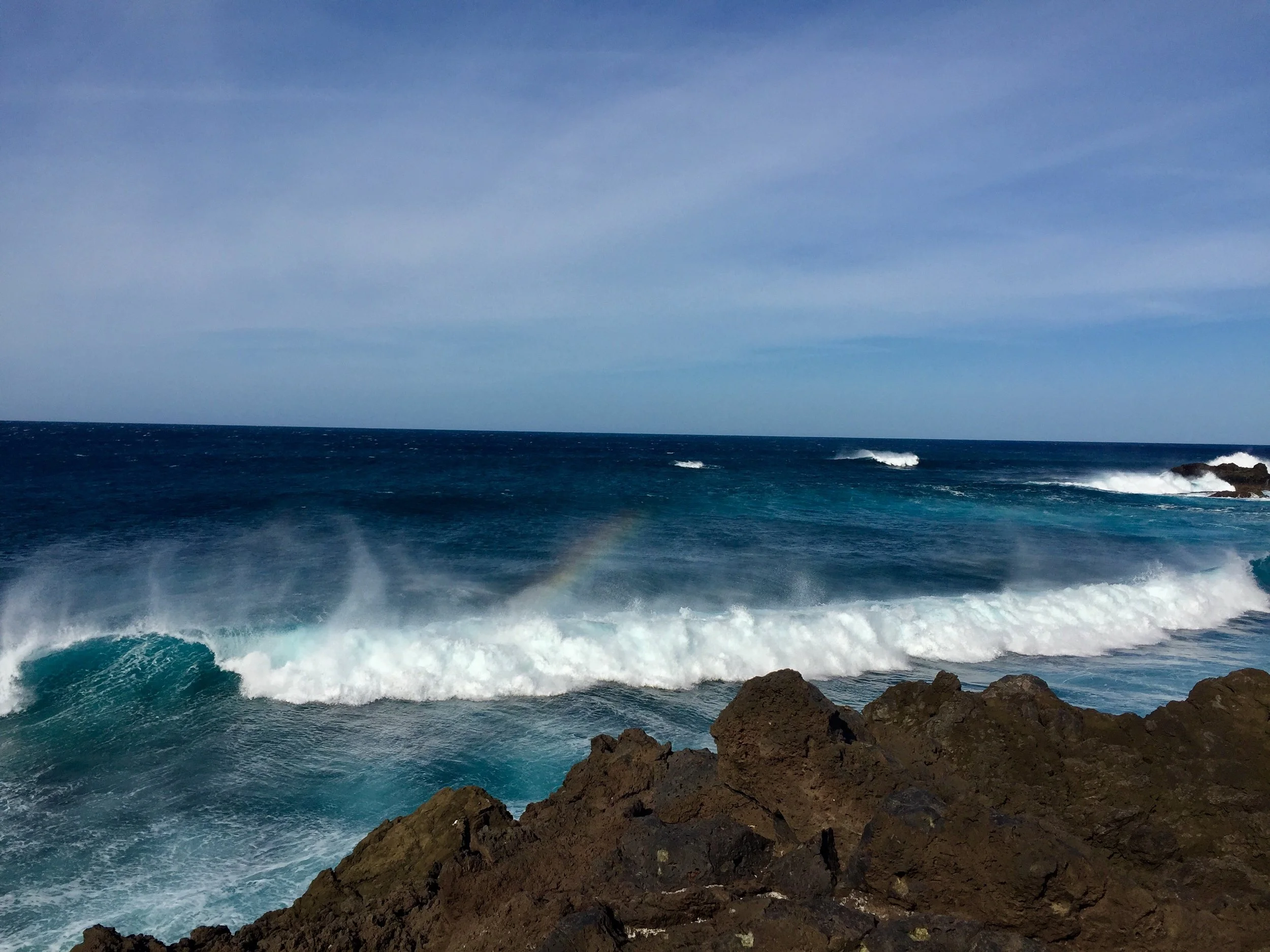
The Atlantic on Lanzarote’s quieter northern coast.
Most guides to “authentic Lanzarote” eventually become another list.
Ten hidden gems. Seven secret beaches. Five villages tourists don’t know about.
We think there is a better way to experience the island.
Getting away from the resorts is not really about finding secret places. Lanzarote is too small, too well travelled and too well mapped for many genuine secrets to remain.
It is about changing the way you move through it.
Leave the main road sometimes. Visit familiar places at unfamiliar hours. Drive through villages without asking what attraction is there. Stop treating everything between two pins on Google Maps as empty space.
Do that, and Lanzarote begins to reveal another side of itself.
Not a better or more “authentic” island. Puerto del Carmen, Playa Blanca and Costa Teguise are also Lanzarote. Tourism has been part of the island’s story for decades.
But away from the resorts, every now and then, you catch a glimpse of a world that seems to have disappeared elsewhere.
If you want to see where Lanzarote actually lives
Start with the villages.
Haría, Guatiza, Mala, Máguez, Soo, Tinajo, Mancha Blanca, La Vegueta and dozens of smaller settlements were not built primarily to entertain visitors.
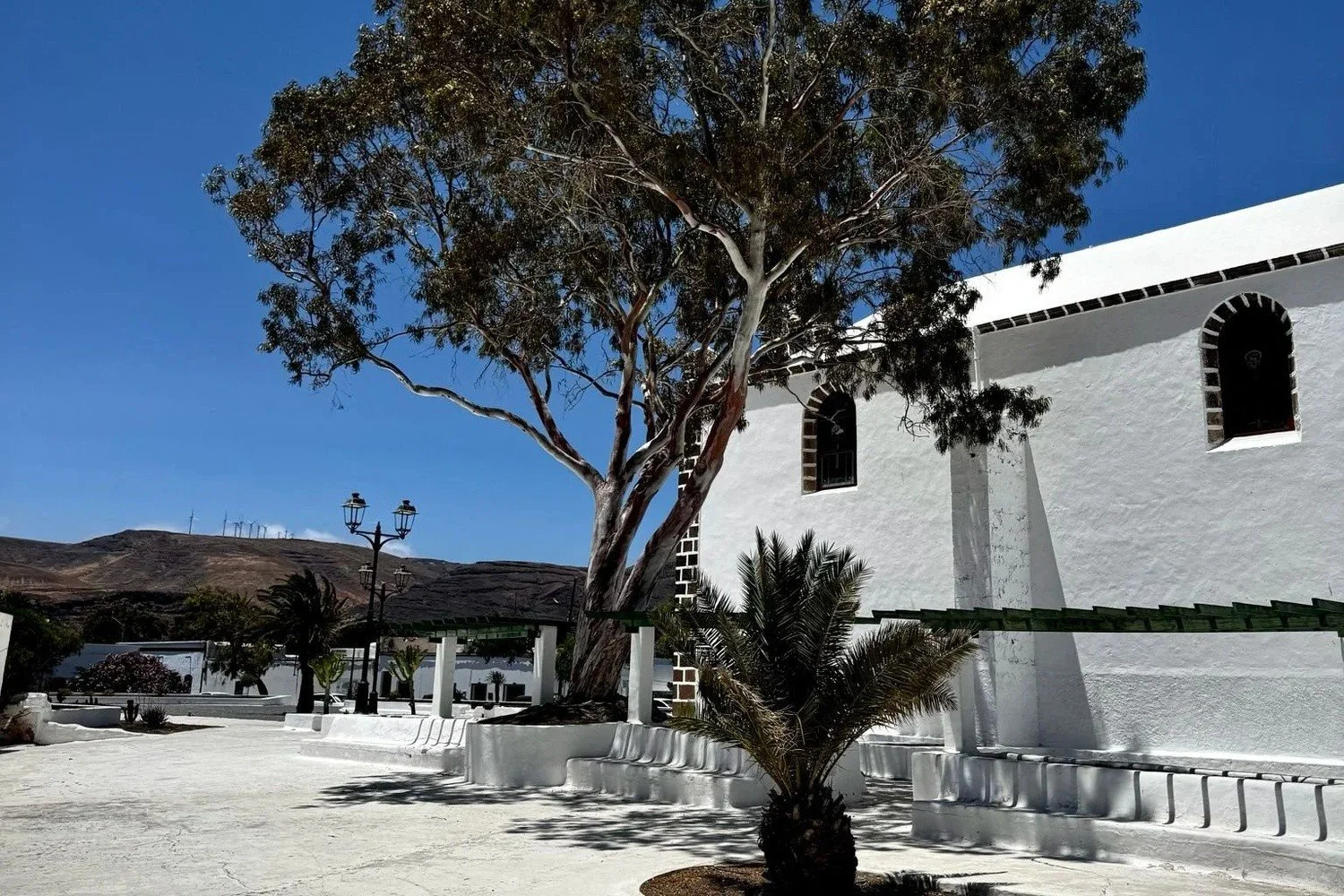
Guatiza — a village that continues at its own rhythm, whether visitors come or not.
That changes the relationship you have with them.
There may be no famous monument to see. No carefully designed promenade. Sometimes there is remarkably little to “do”.
That is not a problem to solve.
Walk around. Look at the houses. Notice how gardens survive in a climate where almost nothing should grow easily. Sit in a square. Have a coffee.
Watch the ordinary rhythm of a place that continues whether visitors arrive or not.
And don’t assume that you need to find a completely unknown village to escape the crowds.
Sometimes you simply need to arrive at a different time.
If you want to see Teguise, don’t only go on Sunday morning
The Sunday market in Teguise is one of Lanzarote’s best-known weekly events. It fills the old capital with people, stalls, music and activity.
Some visitors love it.
Alongside local crafts, however, you will also find plenty of mass-market goods, and the streets can become extremely busy.
If markets, crowds and energy are what you enjoy, Sunday morning may be exactly the right time to visit.
But it is not the only Teguise.
Come back after dark.
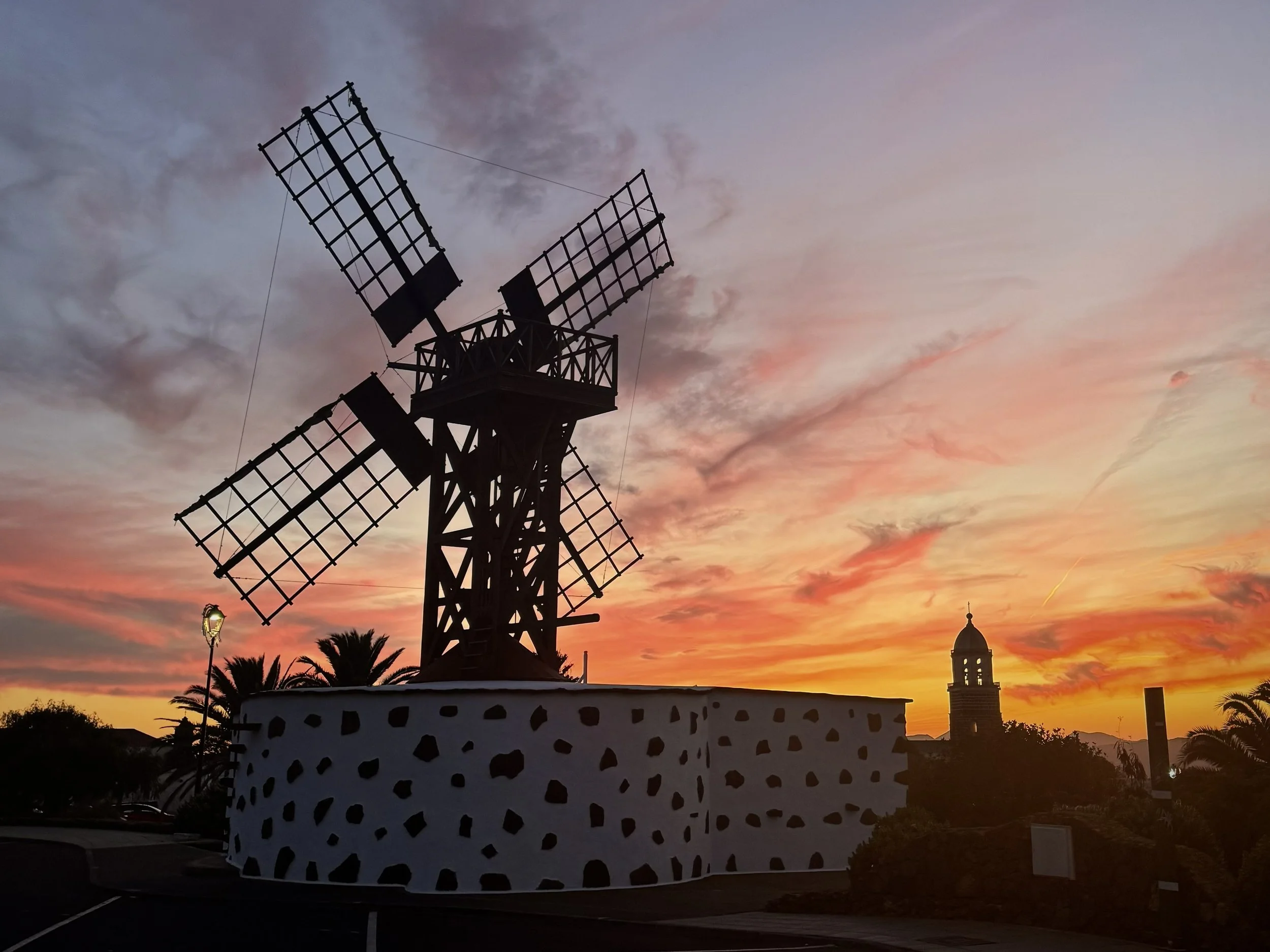
Teguise after the daytime crowds have gone. A very different town begins to appear.
The stalls have disappeared. The coaches are gone. The old façades are illuminated, the squares become quiet and footsteps replace the daytime noise.
You suddenly notice the architecture.
You notice the streets.
You notice the silence.
It can feel like a completely different town.
Sometimes getting away from the crowds doesn’t require finding another place. It requires visiting the same place at another time.
If you want to understand local life, look for places that weren’t created for visitors
One of the best examples is the teleclub.
You will find teleclubs in villages across Lanzarote. They developed as social and cultural meeting places for local communities, and many also serve straightforward Canarian food.
Some have become well known beyond their villages. Others remain decidedly ordinary.
And that is precisely the point.
Don’t visit one because somebody has declared it a “hidden gem”.
Go because it offers a glimpse of how a village functions when hospitality is connected to community rather than designed exclusively around tourism.
The same principle applies to smaller everyday places.
Drive from Soo towards Famara and you can stop at Tienda de Lourdes.
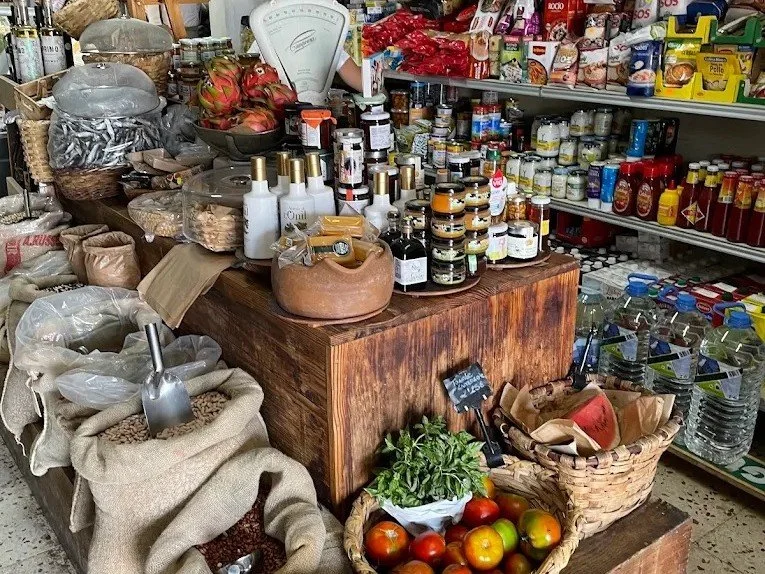
Tienda de Lourdes in Soo — a small village shop where somehow almost everything fits inside.
It is a tiny shop that feels as though time has somehow passed around it. There is no carefully manufactured nostalgia here. It is simply a small village shop with an improbable amount of what you might actually need inside.
You don’t need to make a special journey to see it.
In fact, that would almost miss the point.
If you happen to be passing, stop.
If you want to discover Lanzarote, stop treating the road as a transfer
Some of the most beautiful journeys on Lanzarote don’t need an attraction at the end.
One of our favourites runs between La Vegueta and Mancha Blanca.
Drive slowly and look around.
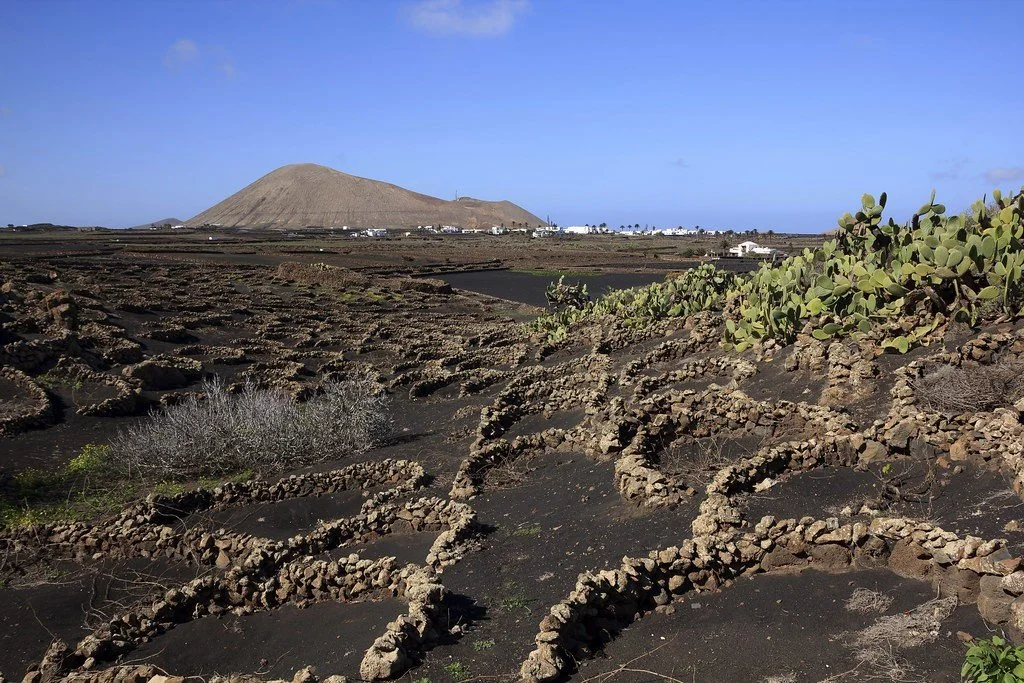
Between La Vegueta and Mancha Blanca, small plots of volcanic land are still worked field by field.
The road passes small fields and vineyards cut into dark volcanic earth, old houses and haciendas, stone walls and people working plots of land under a sun that offers very little mercy.
At first glance, parts of Lanzarote can appear almost empty.
Look again.
This is worked land.
Much of it is not industrial agriculture on a vast scale but small plots cultivated with an intimacy that comes from repetition.
Families have worked this landscape across generations.
What looks to an outsider like another patch of black earth can be a piece of land somebody knows almost furrow by furrow.
There is a respect for the land here that is difficult to explain until you see someone working it.
And then there are other roads.
Órzola → Mirador del Río
Northern Lanzarote unfolds around you as you climb.
Soo → Famara
The landscape becomes increasingly vast and the cliffs of Famara begin to dominate the horizon.
Tinguatón → LZ-30 → La Geria
You pass through an extraordinary volcanic landscape near Volcán del Cuervo before entering wine country.
Don’t race through them because the navigation says you will arrive in 23 minutes.
The road is not the part before the experience.
The road can be the experience.
If you see an interesting road, sometimes take it
This is still one of the ways we discover Lanzarote ourselves.
You are driving somewhere and notice a small road disappearing towards a volcano, between fields or into a village you have never visited.
Turn.
Not every time. Not recklessly. And certainly not through a barrier, onto private property or along a track your rental car was never intended to drive.
But Lanzarote is a small island.
If it is a normal public road and you have time, curiosity can be a surprisingly good navigator.
Some roads are immaculate.
Others are not.
Occasionally the surface becomes so poor that the sensible speed feels closer to 5 km/h than 50.
Slow down.
Because at 5 km/h something unexpected happens.
The landscape stops being scenery outside the car window.
You see the stone walls. The vines. The abandoned building. The shape of the lava. A house apparently growing out of the rock. Someone working a field. A road heading somewhere you hadn’t planned to go.
Some of our favourite places in Lanzarote were not places we were looking for.
We found them because we wanted to know where the road went.
If you encounter something you don’t understand, don’t immediately turn it into an attraction
One August evening in Guatiza, we went out to walk the dog.
Nothing unusual was supposed to happen.
Then people began appearing.
Dozens of residents were walking together, some wearing traditional clothes. They talked as they went. There was food and drink. People of different generations were simply walking together towards something we hadn’t even known was taking place.
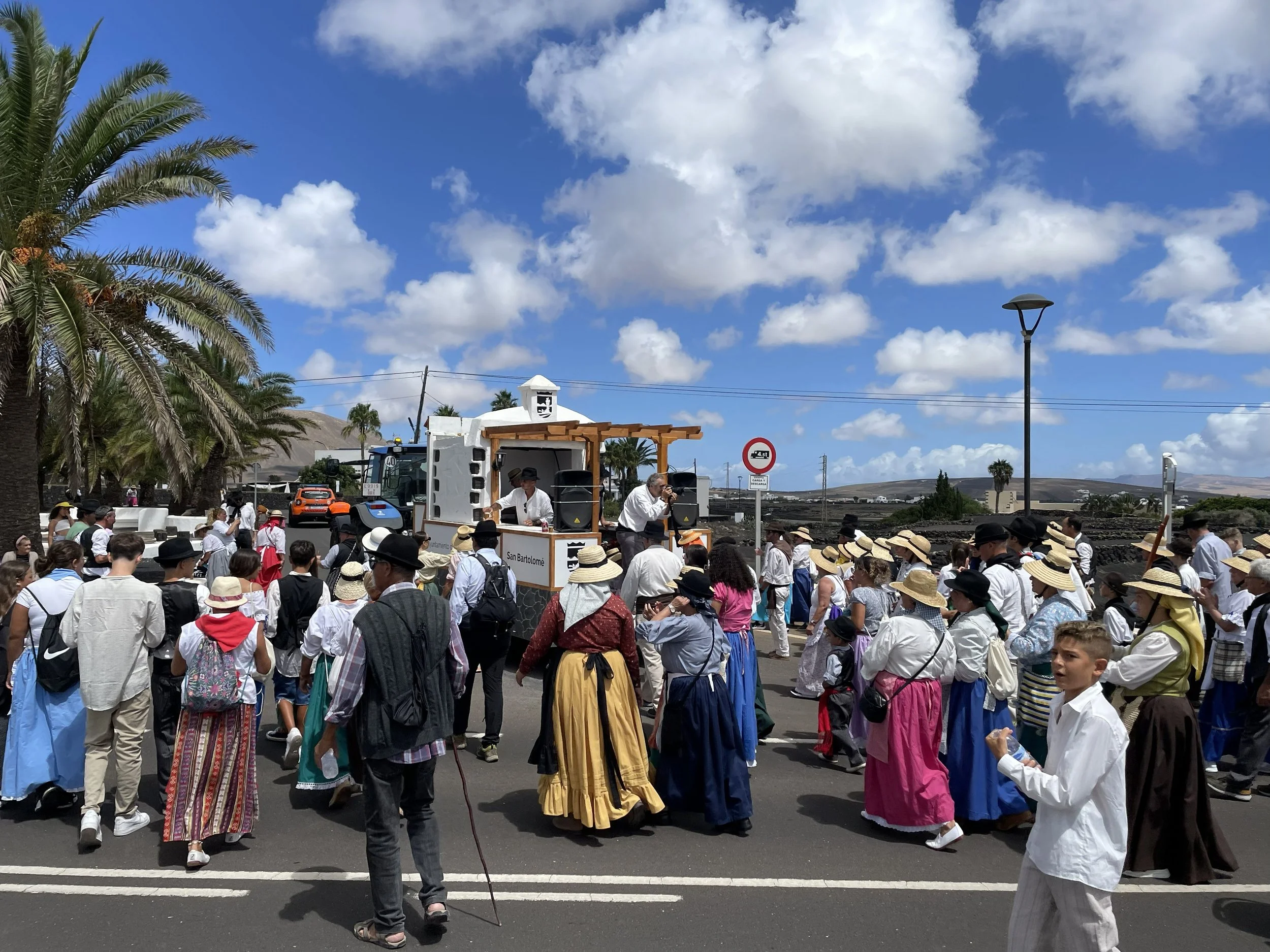
The annual pilgrimage to Nuestra Señora de las Nieves — tradition here is still something people participate in, not something performed for visitors.
They were taking part in the annual pilgrimage to the Ermita de Nuestra Señora de las Nieves, high above the Famara cliffs.
What was striking wasn’t that people were wearing traditional clothing.
Lanzarote is not frozen in the past.
Everyone has a phone in their pocket. They drive cars, work modern jobs and live in exactly the same complicated century as the rest of us.
What stayed with us was something else.
They were doing it because this is something their community still does.
Nobody appeared to be performing tradition for an audience.
They were participating in it.
We stood there surprised — and, perhaps, slightly envious.
There is something powerful about belonging to a ritual that existed before you and may continue after you.
You won’t necessarily find moments like this in a guidebook.
And you shouldn’t chase them.
Sometimes you simply happen to be there.
If you want a quieter coast, don’t automatically search for a “secret beach”
“Secret beach” may be one of the most overused expressions in travel writing.
Instead, try changing what you are looking for.
There is a difference between spending time in a resort built around beach holidays and visiting a coastal village where the ocean is simply part of everyday life.
Places such as Arrieta, Punta Mujeres, Órzola or La Santa offer different versions of that experience.
You may find a small harbour rather than a marina. A natural swimming pool rather than a hotel pool. Fishing boats rather than excursion boats.
None of these places are secret.
They don’t need to be.
The objective isn’t to be the only visitor there.
It is to experience a place that still has a reason to exist when visitors leave.
If you really want to get away from the resorts, change your pace
It is perfectly possible to leave Puerto del Carmen in the morning, visit six “authentic villages”, photograph them all and return in time for dinner without really experiencing anything differently.
You can leave the resorts and still experience Lanzarote as a checklist.
So occasionally remove something from the itinerary.
Take the road you don’t know.
Stay in Teguise after everyone else has left.
Stop somewhere because you are curious rather than because it has four thousand Google reviews.
And allow some parts of the day to have no objective at all.
This isn’t about pretending to “live like a local”.
You don’t.
Neither do we believe that tourists somehow contaminate places simply by visiting them.
It is much simpler than that.
It is about leaving enough space for Lanzarote to surprise you.
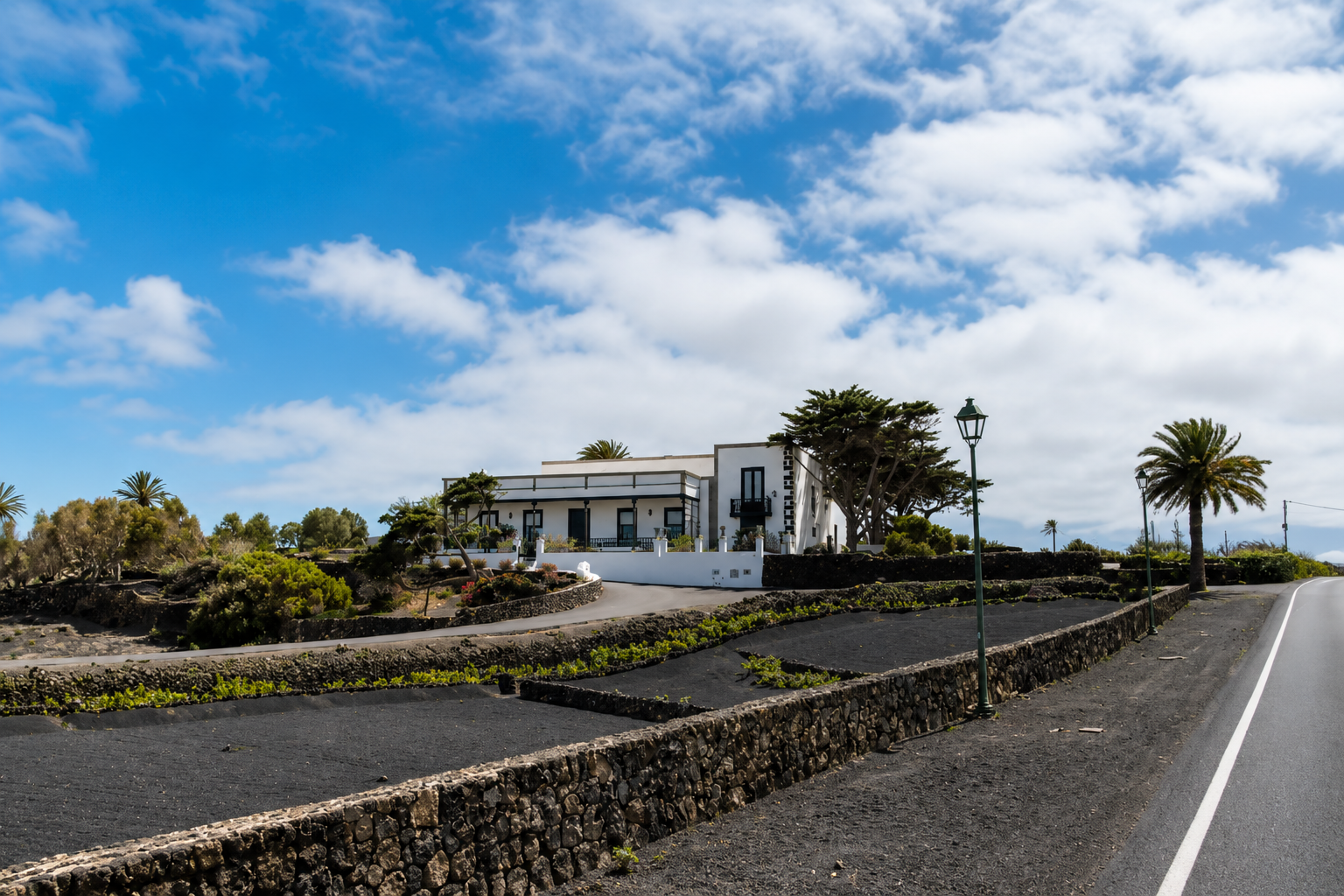
Sometimes the places you remember most are simply the ones you notice from the road.
Because away from the resorts, the island sometimes offers glimpses of things that have become harder to find elsewhere.
Someone working a small piece of volcanic land his family has known for generations.
Neighbours walking together because once a year they have always walked together.
A village shop that is still simply a village shop.
An illuminated old town after the crowds have gone home.
A road with no famous attraction waiting at the end.
None of this means Lanzarote has escaped the modern world.
It hasn’t.
But every now and then, if you stop looking for the next thing you are supposed to see, you catch a glimpse of something else.
A world in which not everything has yet been optimised, packaged or turned into an experience.
A glimpse, perhaps, of what the world looked like before it became so complicated.
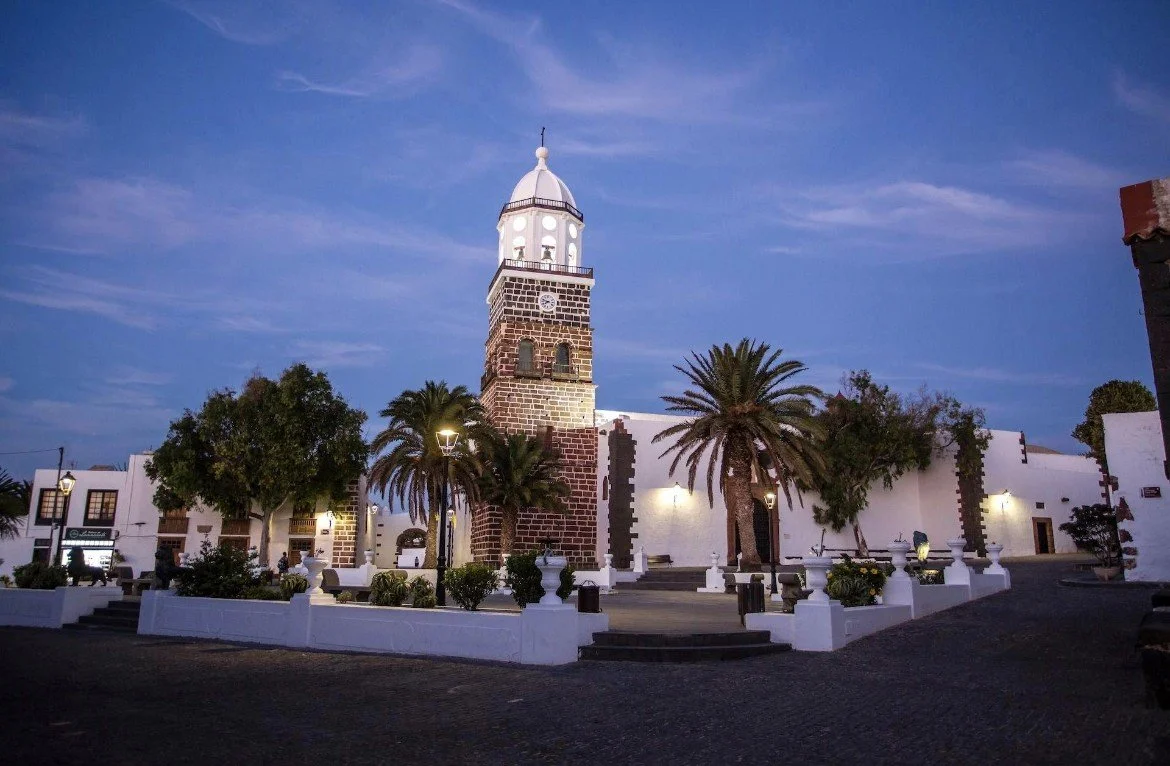
Teguise after dark — when the market disappears and the old capital becomes quiet again.