

Planning 5–6 Days in Lanzarote? Here's Our Guide to the North
Wild Beaches, Timeless Villages & Where the Island Slows Down
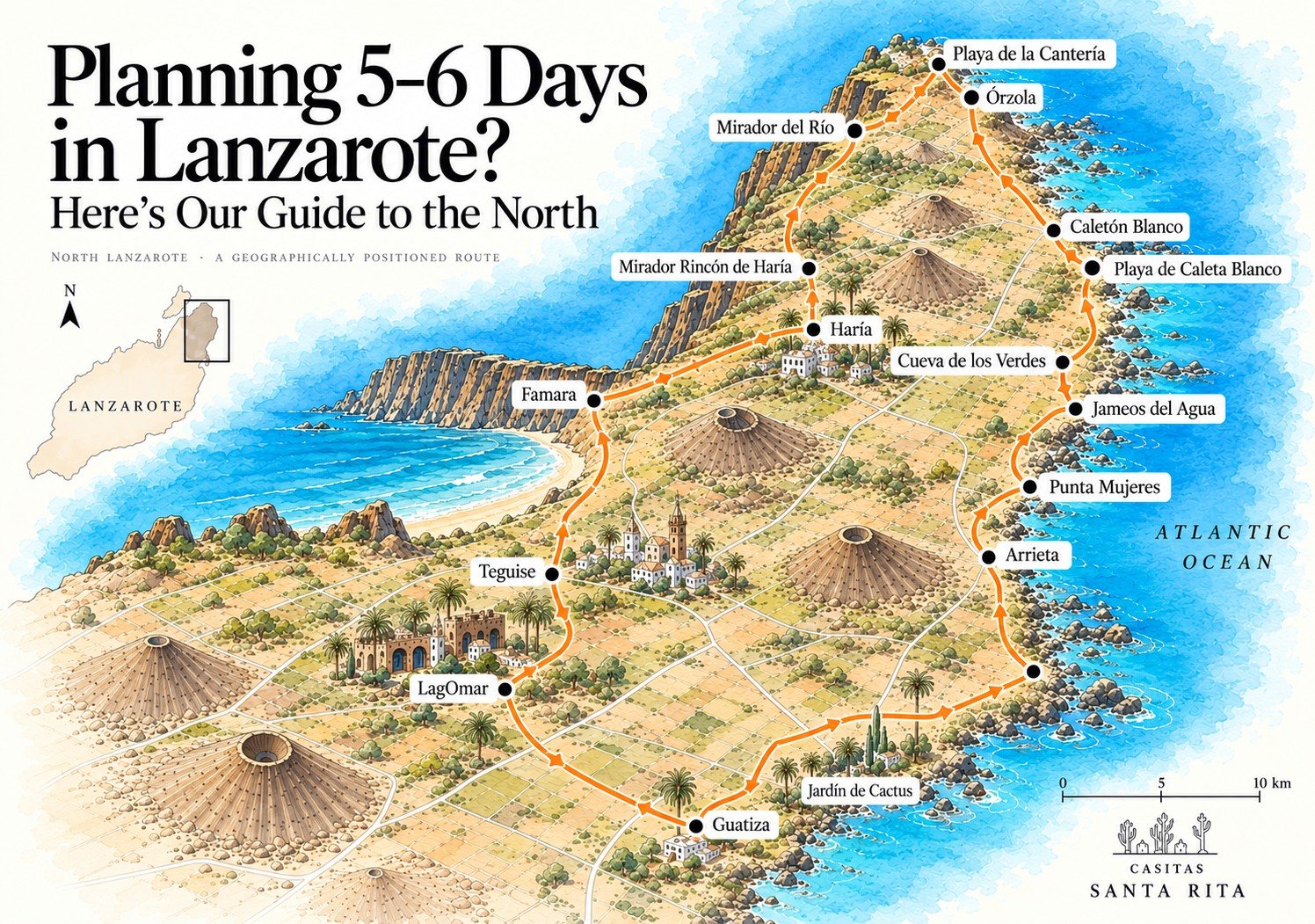
There is another side to Lanzarote. One that has little to do with hotel complexes, crowded promenades or the familiar image of a Canary Island holiday.
It's a place of small whitewashed villages, black volcanic rock, natural swimming pools and beaches where the Atlantic still feels wonderfully untamed. A place where you might stop for a coffee and end up staying for lunch, simply because there's no particular reason to leave.
This is the Lanzarote we fell in love with. And, eventually, the one we chose to call home.
If you've read our guide to the south, you'll already know that we prefer exploring Lanzarote at our own pace. The north deserves exactly the same approach. You could rush between its best-known attractions in a day, but you'd miss much of what makes this part of the island special.
So here are the places we return to, the restaurants we enjoy, the viewpoints we prefer and a few suggestions you probably won't find on every tourist itinerary.
1. Guatiza — Where Our Lanzarote Begins
Our journey starts in Guatiza, a small village surrounded by volcanic fields, agricultural terraces and thousands of cacti.
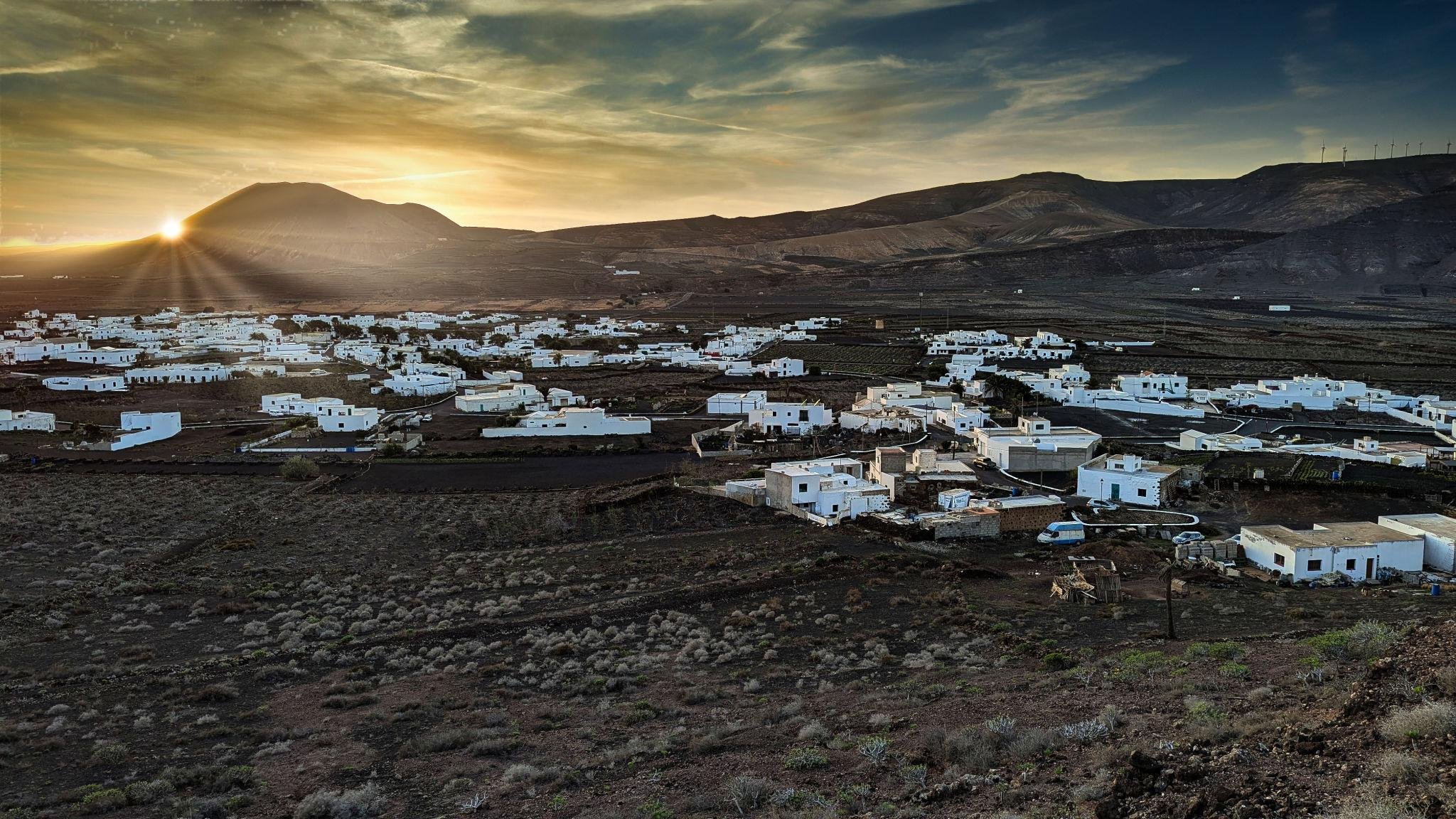
Four years ago, we bought a house here. What began as a personal connection with Lanzarote gradually became something more, and today Guatiza is home to Casitas Santa Rita, our two independent casitas tucked away in a peaceful garden.
It's a wonderfully unpretentious place. There's a village shop, a church, a handful of restaurants and the reassuring feeling that everyday life continues much as it always has.
One of our favourite places to eat locally is Teleclub Taiga. Teleclubs are part of the social fabric of many Canarian villages, and we love that they remain places where locals gather rather than establishments designed exclusively for visitors.
Just outside the village is one of Lanzarote's most remarkable attractions.
2. Jardín de Cactus — A Masterpiece on Our Doorstep
We have a particular admiration for César Manrique, the Lanzarote-born artist and architect whose influence can be seen throughout the island.
But what we admire most is not simply his architecture. It's his ability to recognise the beauty of a landscape that others might have overlooked.
Jardín de Cactus is a perfect example.
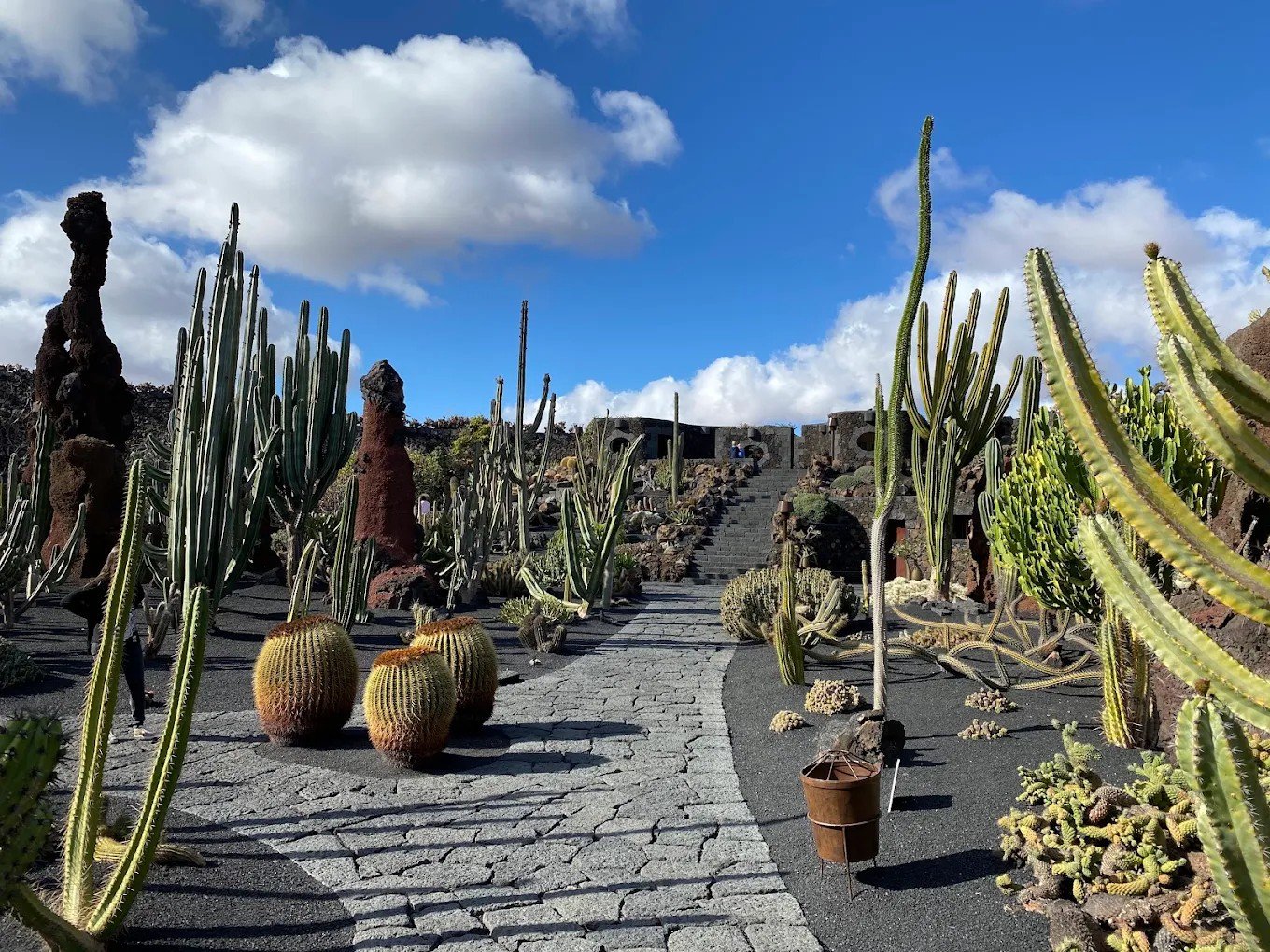
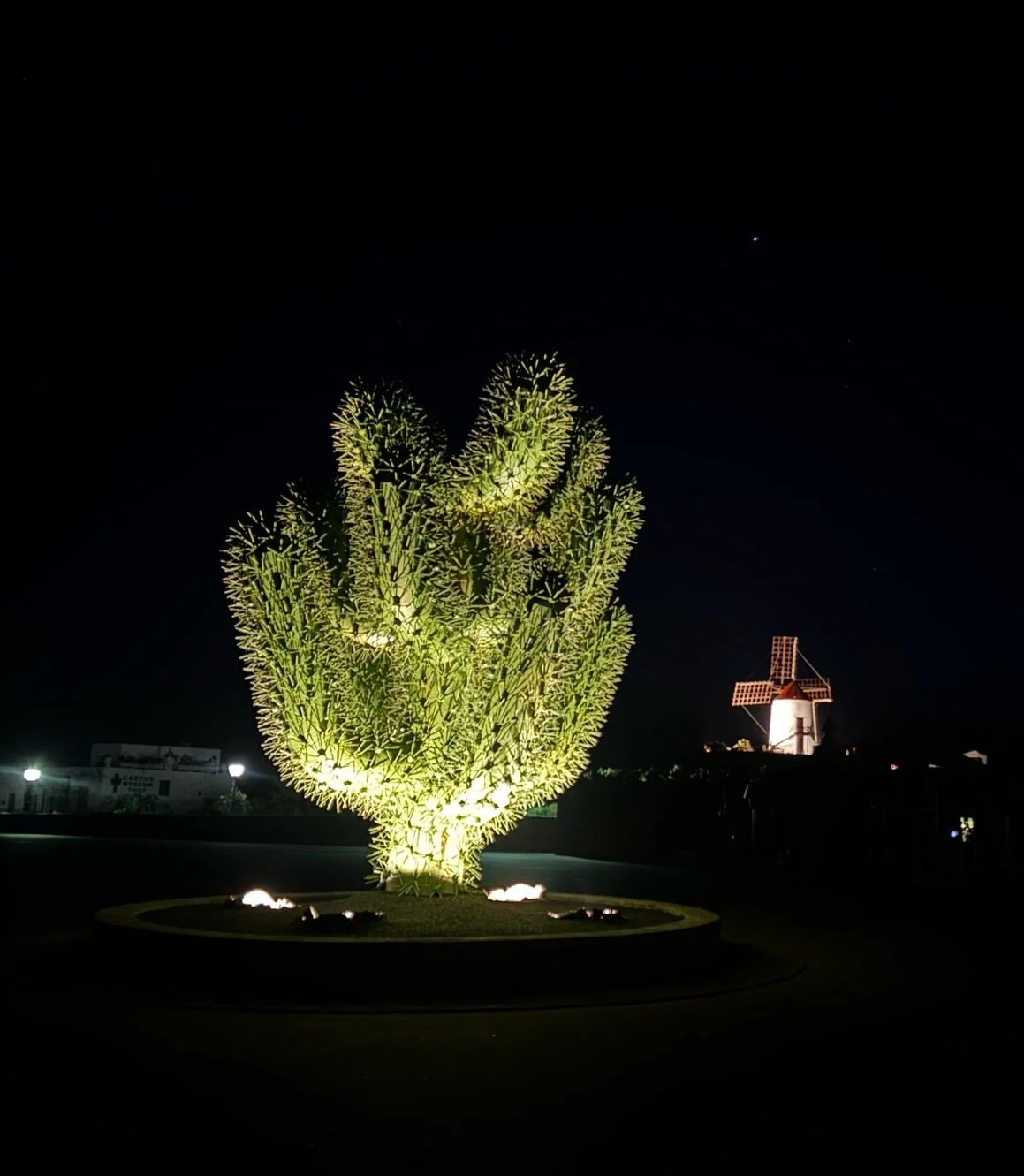
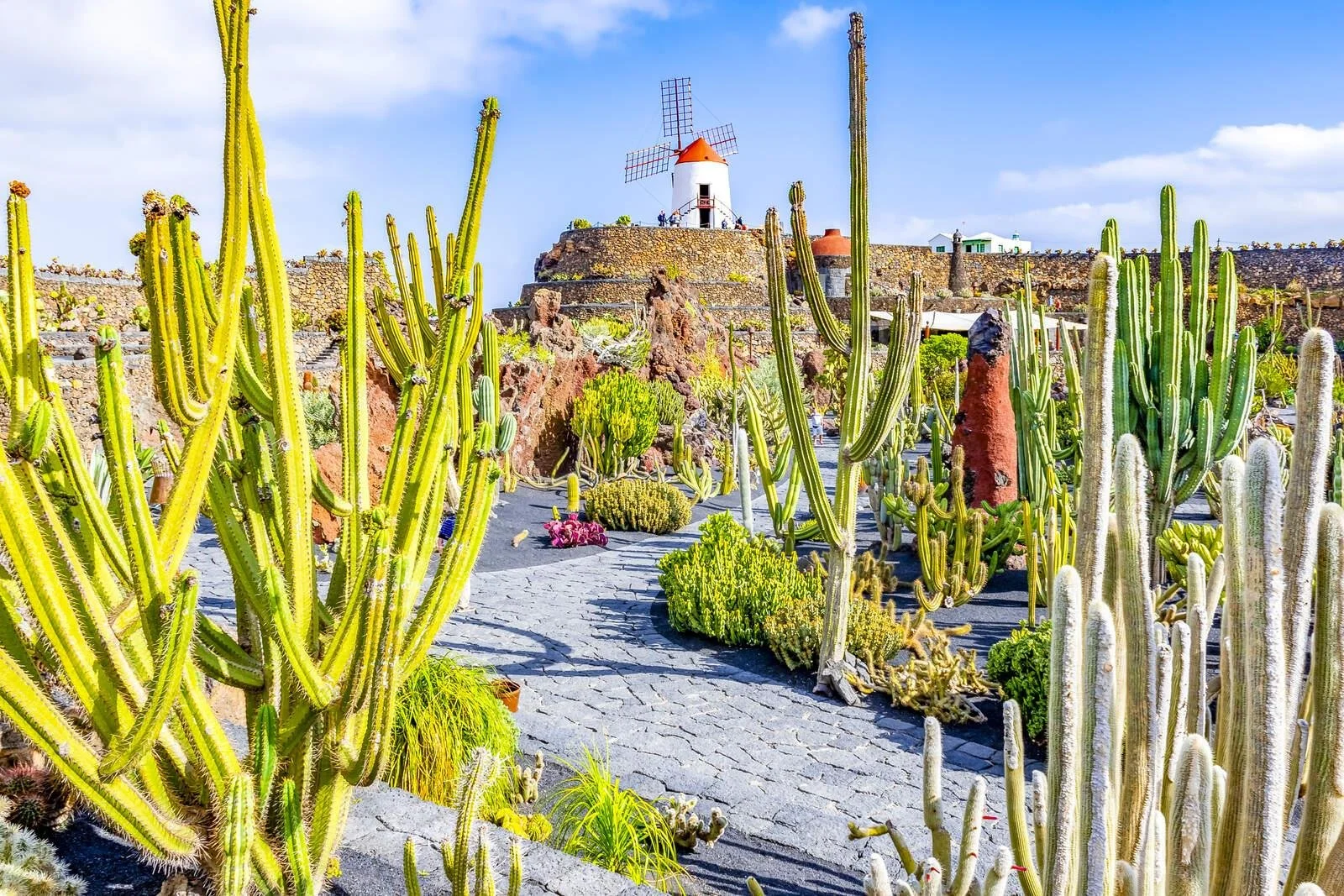
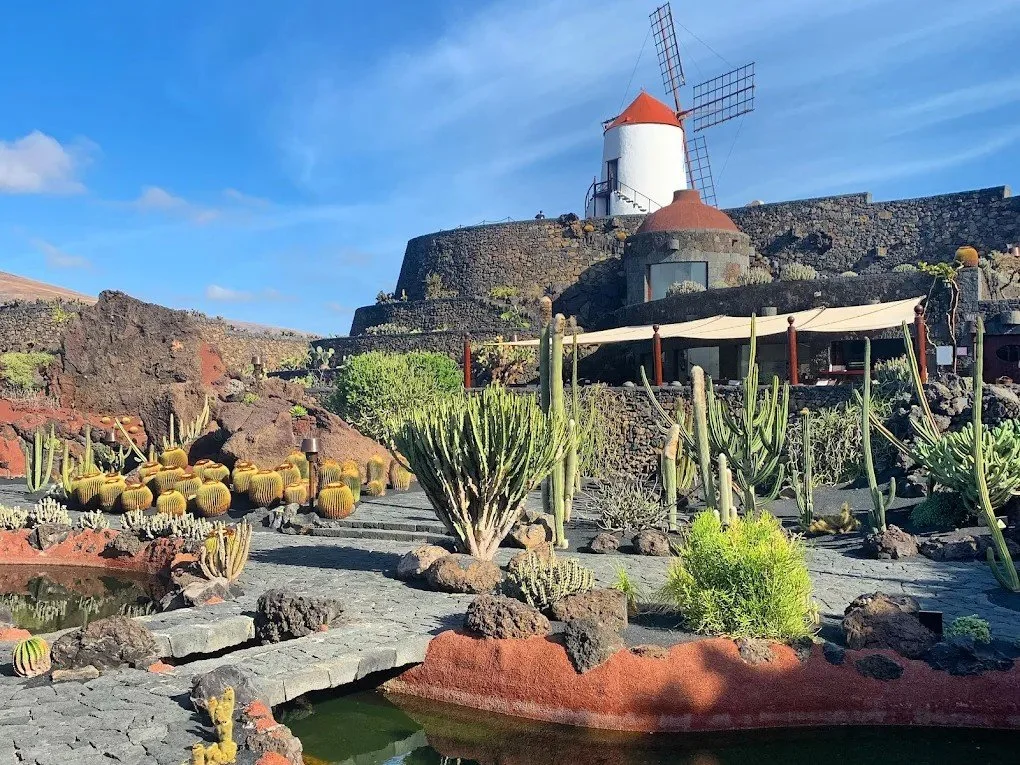
Created inside a former volcanic quarry, the garden brings together an extraordinary collection of cacti from around the world. Terraces of dark lava stone descend towards the centre, while an old windmill watches over the entire composition.
It's carefully designed, of course, but it never feels disconnected from the surrounding landscape.
The colours are extraordinary: deep black volcanic stone, dusty greens, occasional bursts of flowers and the bright Lanzarote sky above.
And the best part for us? It's practically on our doorstep.
You don't need to devote an entire day to Jardín de Cactus. Take your time, wander through the terraces, have a coffee and appreciate how beautifully Manrique managed to work with the island rather than against it.
3. Arrieta & Playa de la Garita — Life by the Atlantic
A short drive north brings you to Arrieta, a small coastal village with a character entirely different from the purpose-built resorts further south.
Arrieta isn't trying particularly hard to impress anyone. And that's precisely why we like it.
Its beach, Playa de la Garita, is a lovely place to spend a few hours. There's room to walk, sit and watch the ocean, and on calmer days it's an inviting place for a swim.
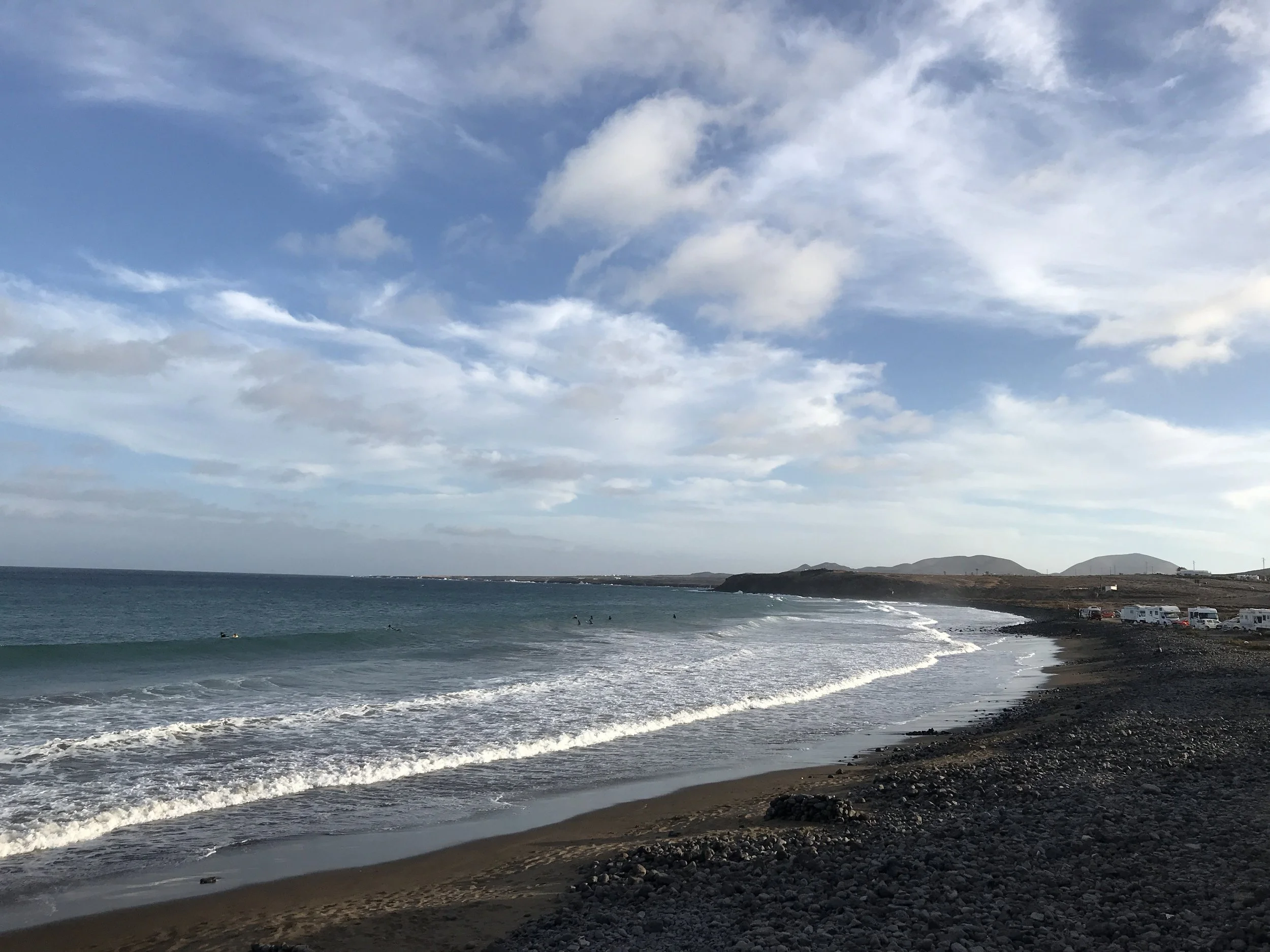
Playa de la Garita, is a lovely place to spend a few hours - 10 min from Casitas Santa Rita
When hunger strikes, we have two suggestions.
La Nasa is one of the places we enjoy for a meal in Arrieta, while La Casa de la Playa offers the pleasure of eating beside the beach.
Neither requires an elaborate plan. That's part of the appeal of this stretch of coast.
4. Punta Mujeres — Life by the Ocean
Just north of Arrieta is Punta Mujeres, one of our favourite coastal villages on the island.
Its natural swimming pools are formed by volcanic rock, creating sheltered pockets of seawater along the coast. When conditions are right, they're wonderful places to swim.
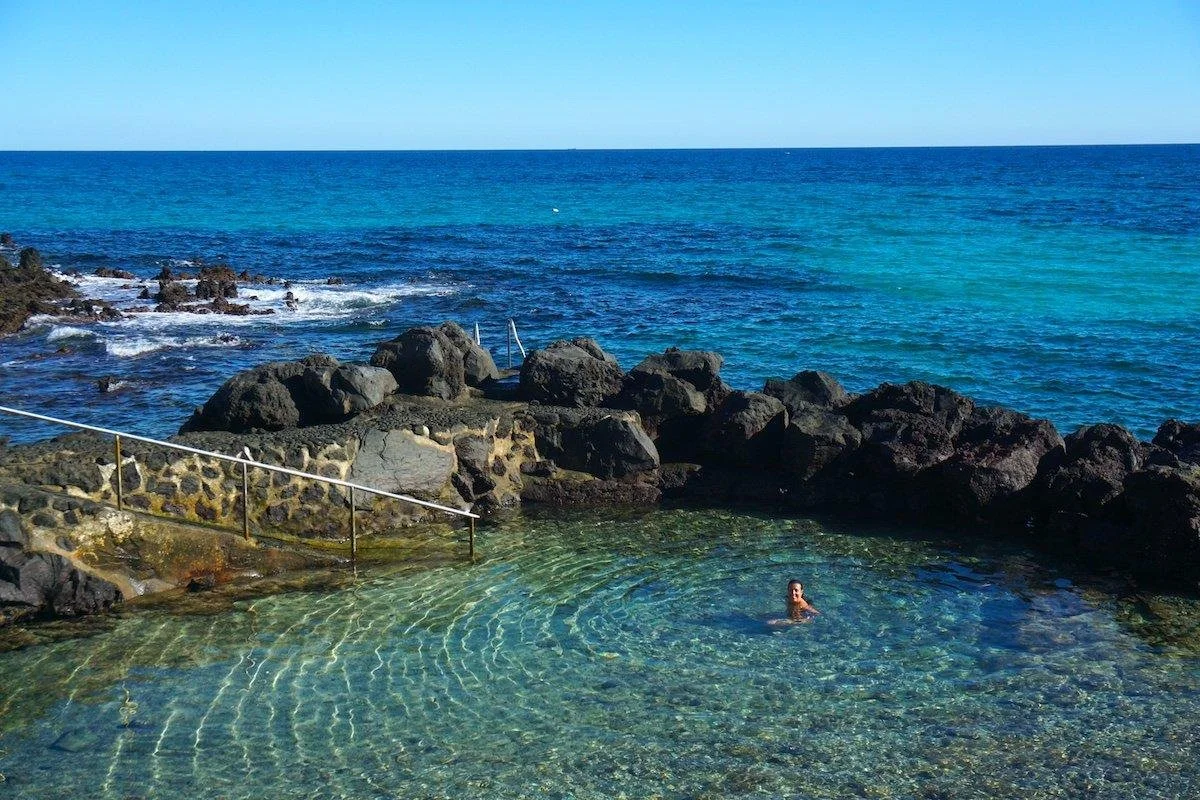
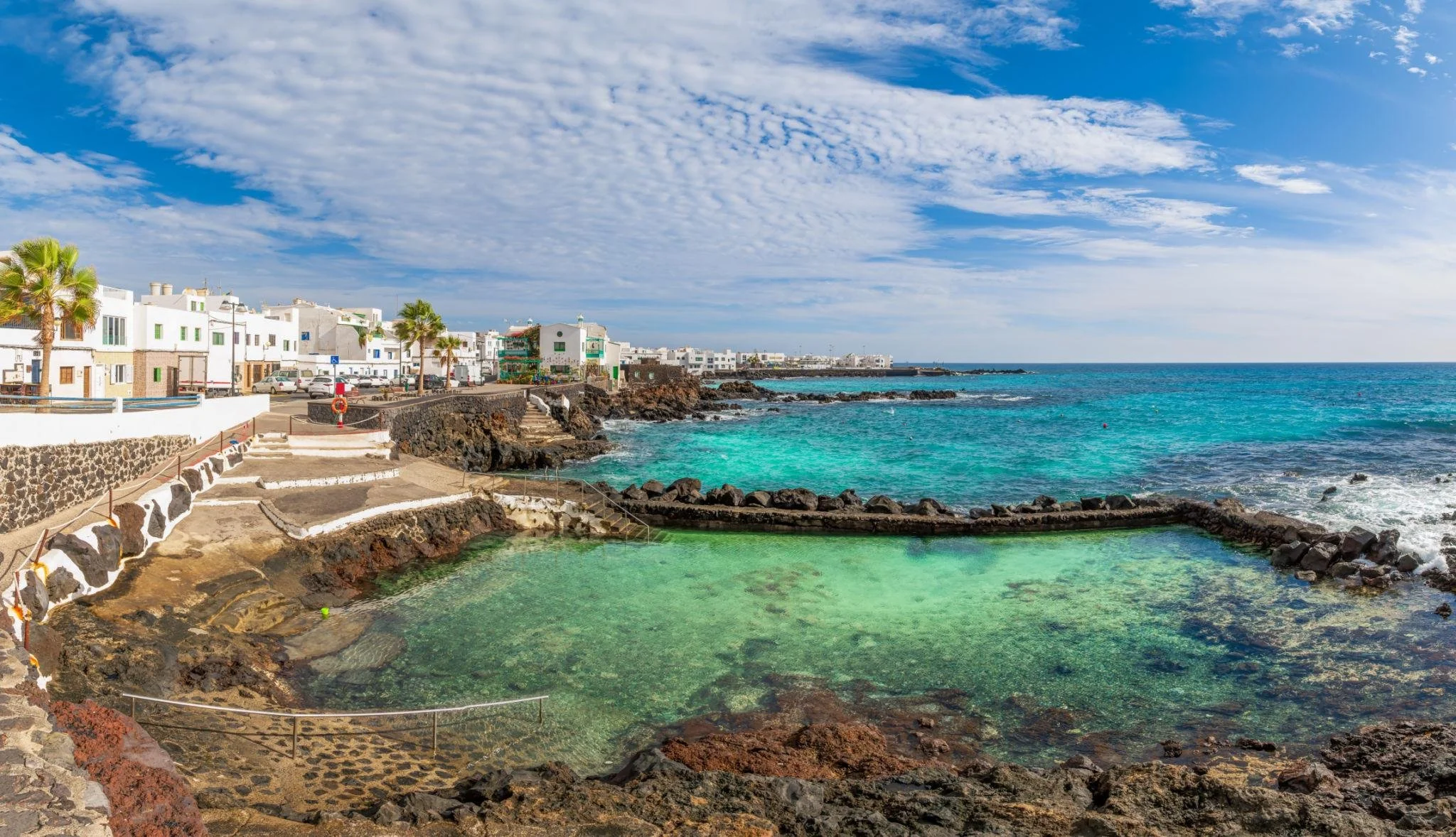
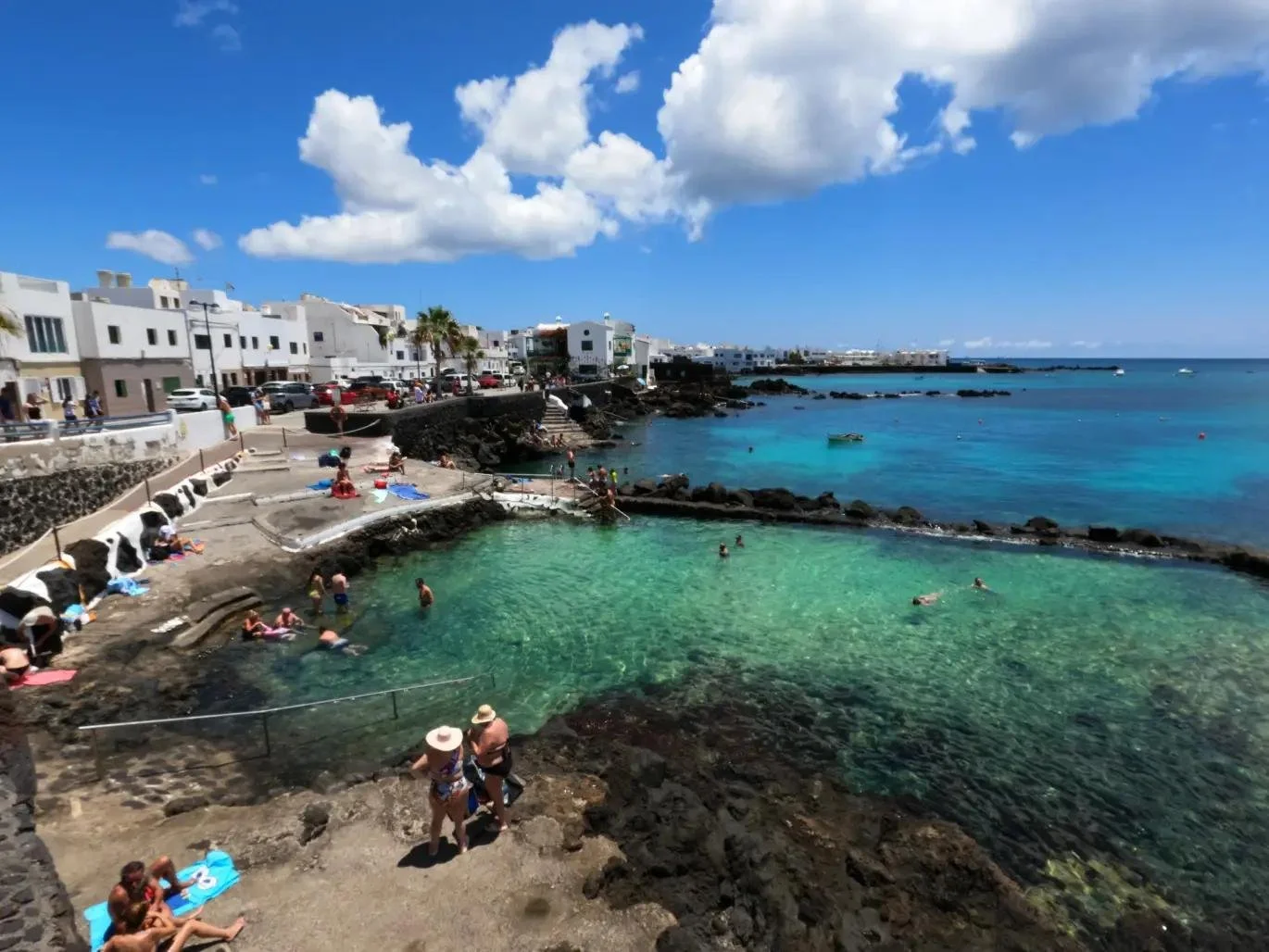
But Punta Mujeres is about more than its pools.
It's the white houses overlooking the Atlantic, the narrow streets, the sound of waves against the rocks and the sense that the village belongs to the people who live there.
We also have a soft spot for Mamma Grazia, a small Italian restaurant that makes a lovely change when you fancy something other than Canarian cuisine.
If you have time, walk along the coast and enjoy the changing shapes of the lava. The landscape here is wonderfully raw, and even a short walk can be memorable.
Just remember that natural pools are still part of the ocean. Conditions matter, particularly when the Atlantic is rough.
5. Jameos del Agua & Cueva de los Verdes — Two Worlds Beneath the Lava
A little further north, the landscape reveals one of Lanzarote's most fascinating geological stories.
Both Jameos del Agua and Cueva de los Verdes belong to the volcanic tunnel system created by eruptions of Monte Corona thousands of years ago.
Yet the two experiences couldn't be more different.
Cueva de los Verdes takes you underground, into an extraordinary world of solidified lava, natural passages and formations created by volcanic activity.
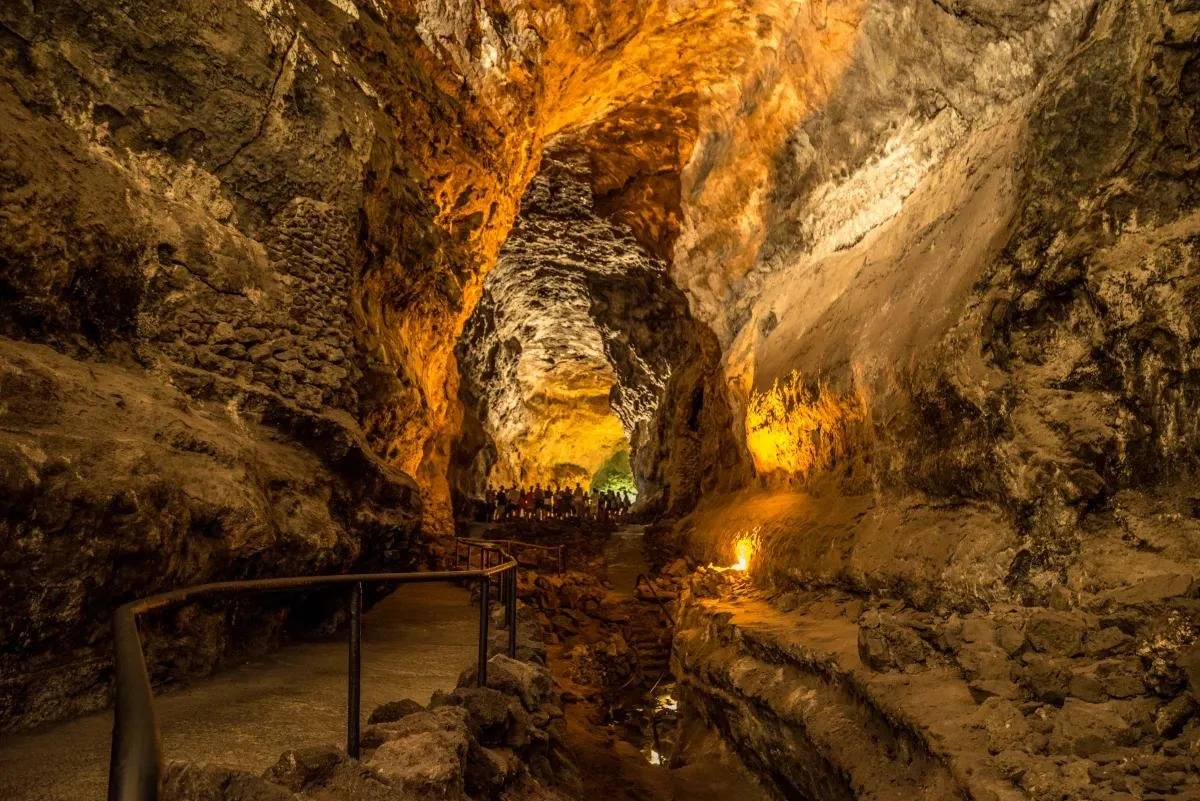
It's one of those places where the geology of Lanzarote suddenly becomes much more tangible. You are not simply looking at a volcanic landscape; you're walking through its history.
We genuinely think it's worth visiting.
Jameos del Agua, meanwhile, demonstrates what happens when nature meets the imagination of César Manrique.
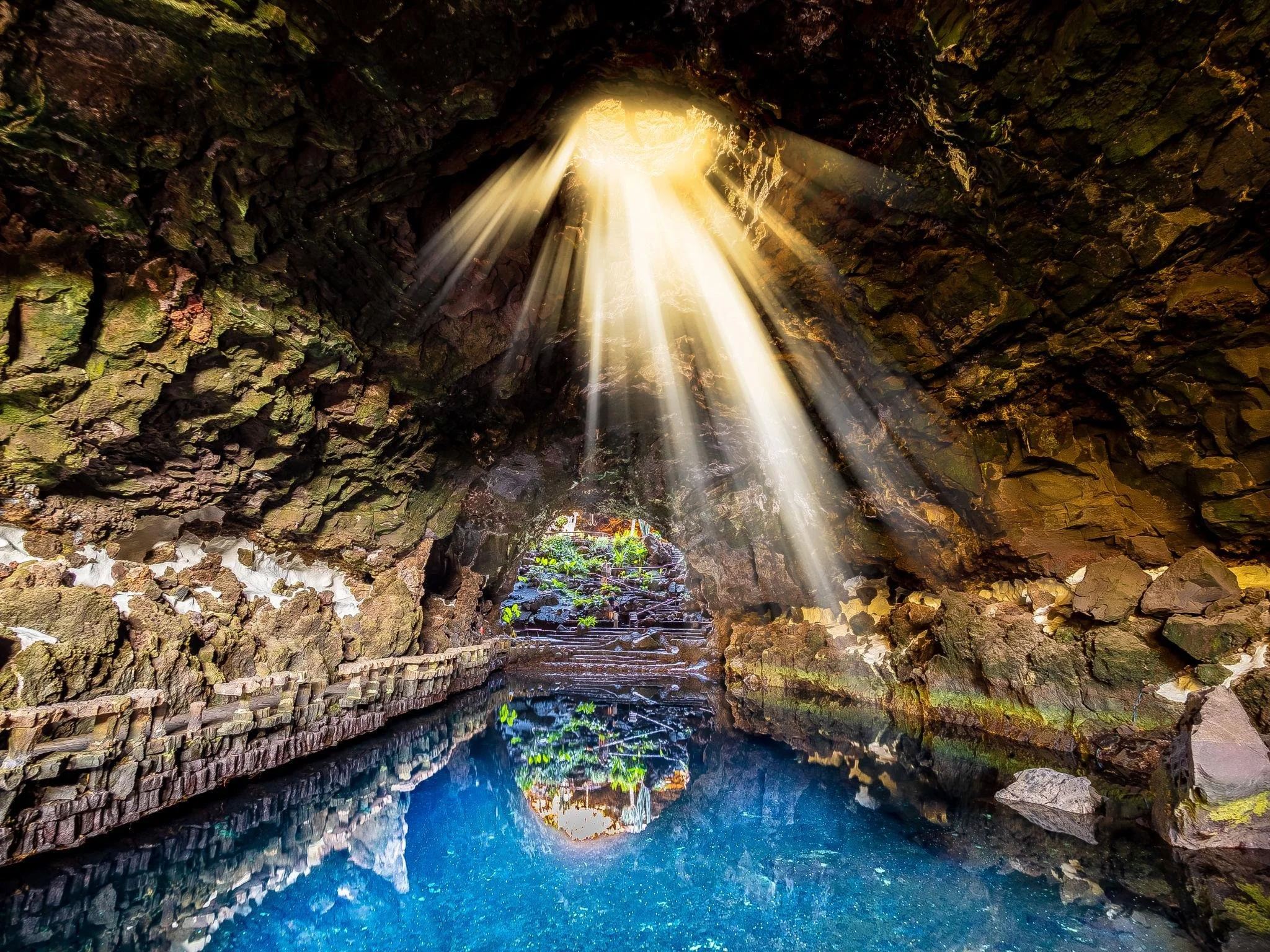
An open volcanic chamber becomes a garden. A natural pool becomes the centrepiece of a remarkable architectural composition. The boundaries between the built environment and the landscape almost disappear.
It's beautiful during the day, but there's another experience we particularly recommend.
Noches de Jameos — A Different Kind of Evening
If your dates allow, consider visiting Jameos del Agua for one of its Friday evening experiences.
Dinner, music, dramatic lighting and the atmosphere of the volcanic surroundings make it something quite different from a conventional sightseeing visit.
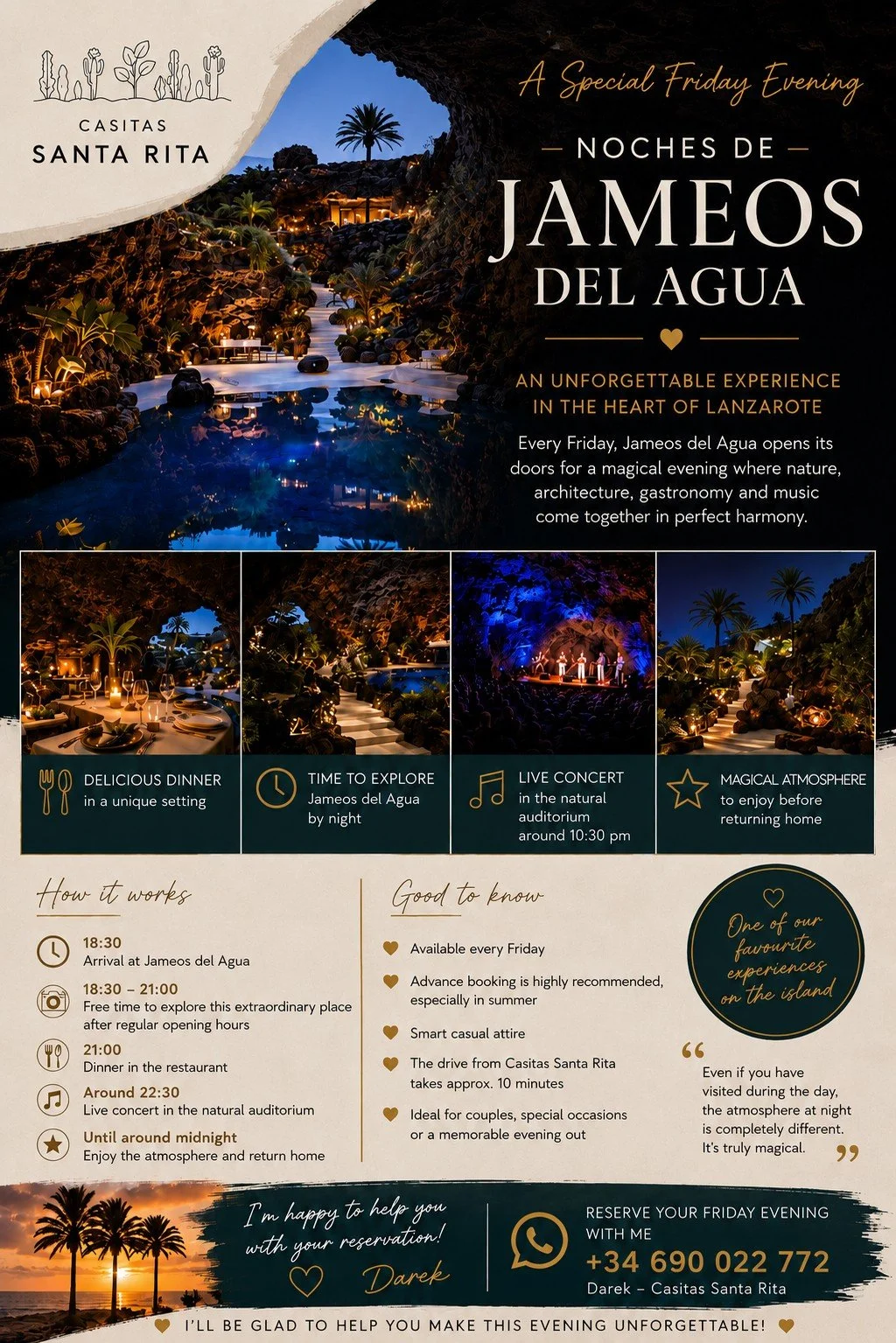
For us, this is one of the loveliest ways to experience Manrique's work.
Check the official programme and book in advance, as evening events and availability can change.
6. Caleta Blanco & Caletón Blanco — Where Lava Meets White Sand
Continue towards the northern tip of Lanzarote and you'll discover a remarkable contrast.
After kilometres of dark volcanic coastline, suddenly there are patches of brilliant white sand, shallow turquoise water and black lava formations.
Caleta Blanco and Caletón Blanco are among the most photogenic places in the north, but what we love is their simplicity.
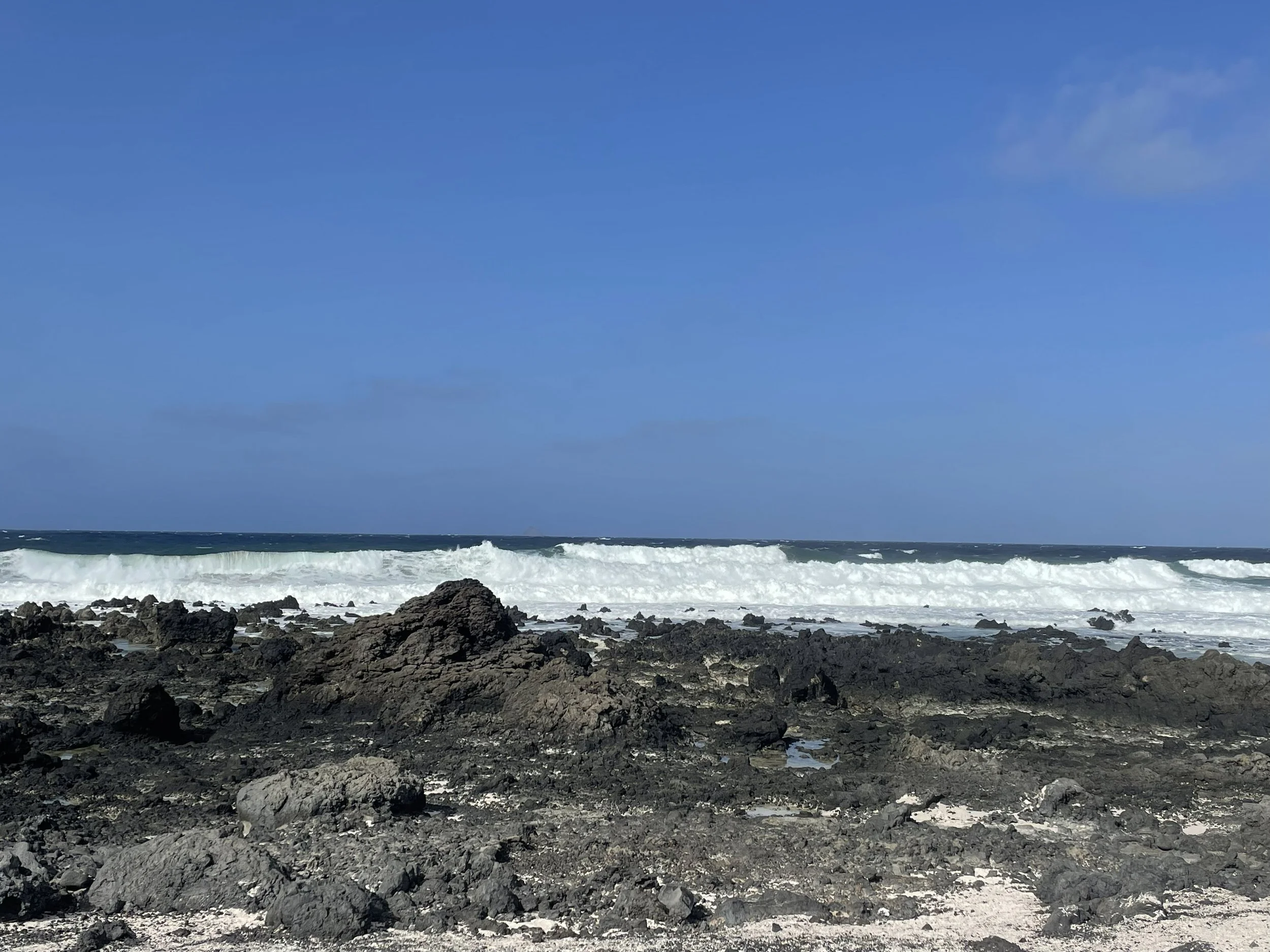
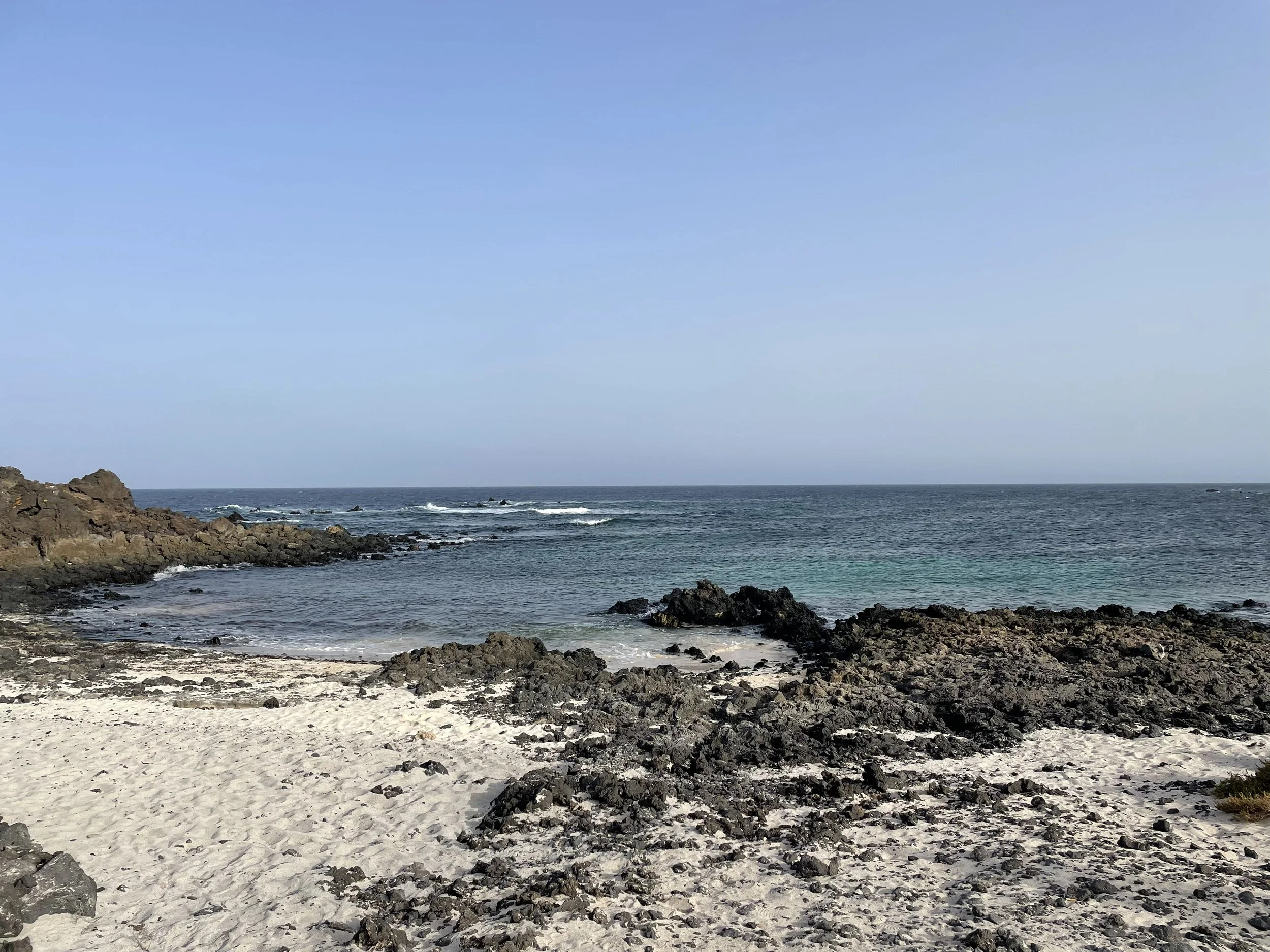
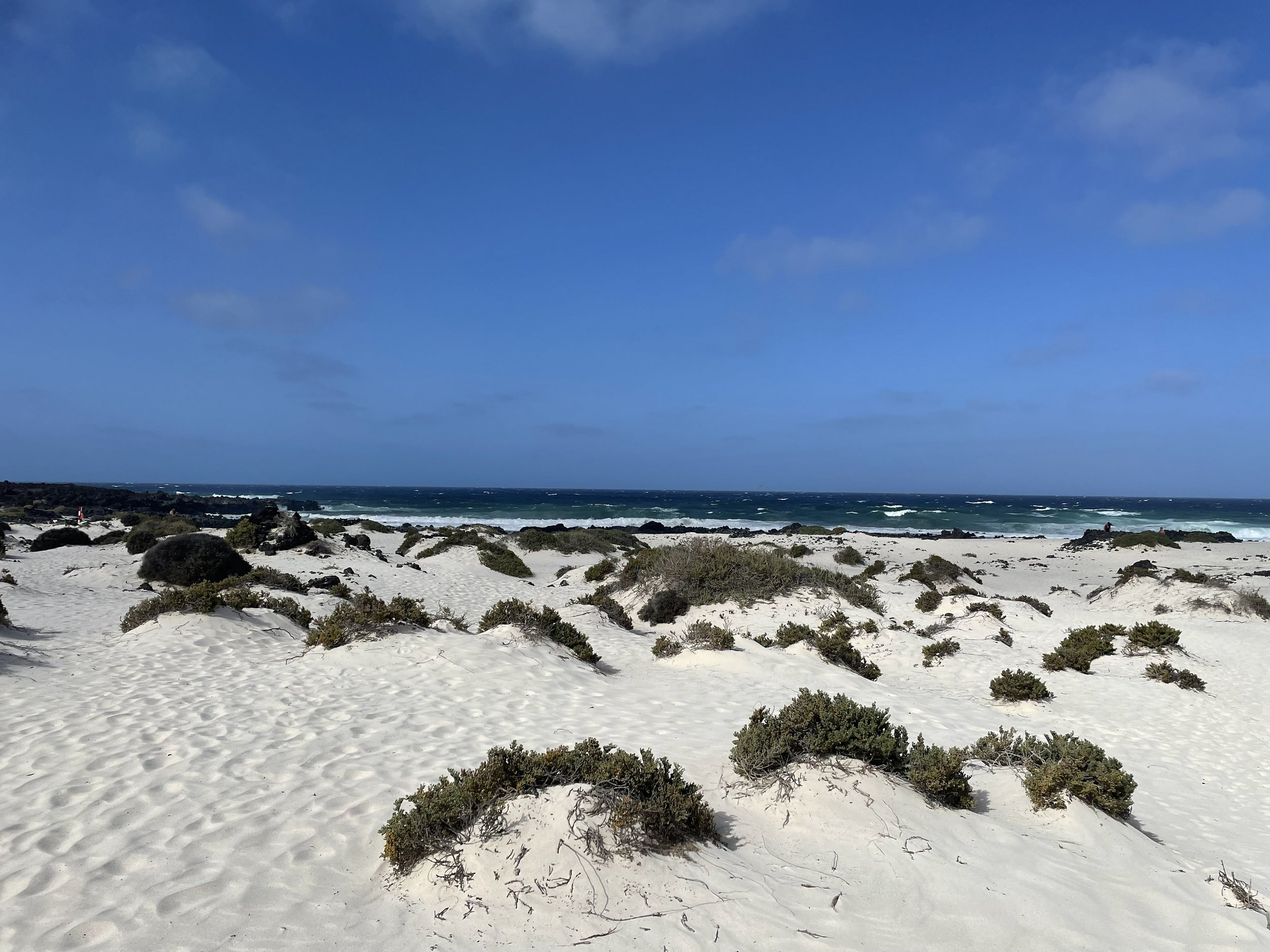
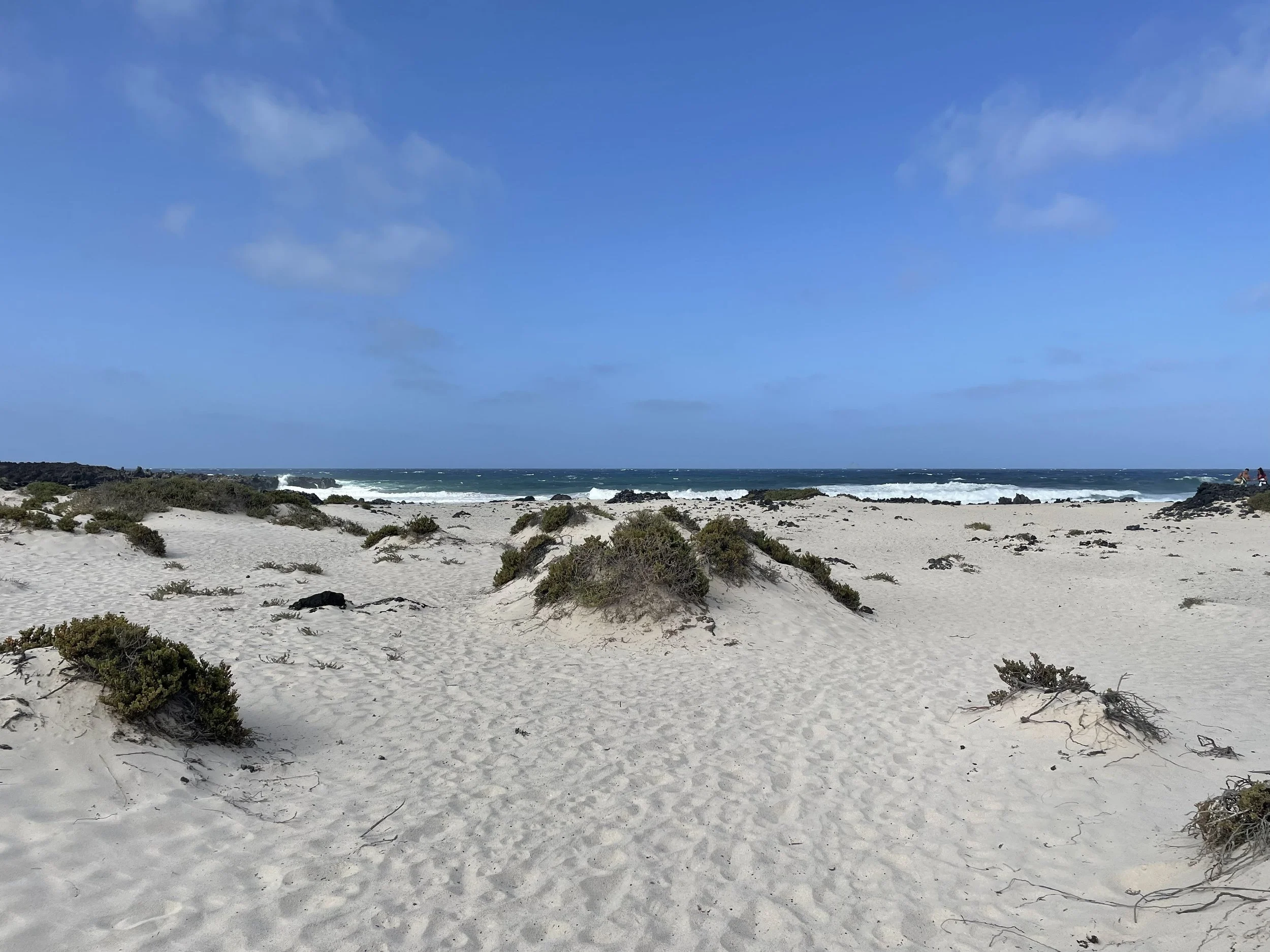
There's no need to organise an elaborate beach day. Sometimes it's enough to stop, take off your shoes and wander between the pools of water and volcanic rock.
The experience changes with the tides. At low tide, the landscape reveals different patterns of sand, rock and shallow water. At other times, the pools and shoreline look completely different.
Do pay attention to sea conditions. Sheltered-looking water isn't necessarily safe in every weather situation.
And if you enjoy photography, this is a place where Lanzarote's colours seem almost unreal.
7. Órzola & Playa de la Cantería — The Wild Edge of the Island
Órzola is best known as the departure point for ferries to La Graciosa.
But we'd encourage you not to think of it simply as somewhere to catch a boat.
This little fishing village sits near the northern tip of Lanzarote, surrounded by a landscape that feels increasingly remote.
Just beyond it lies Playa de la Cantería.
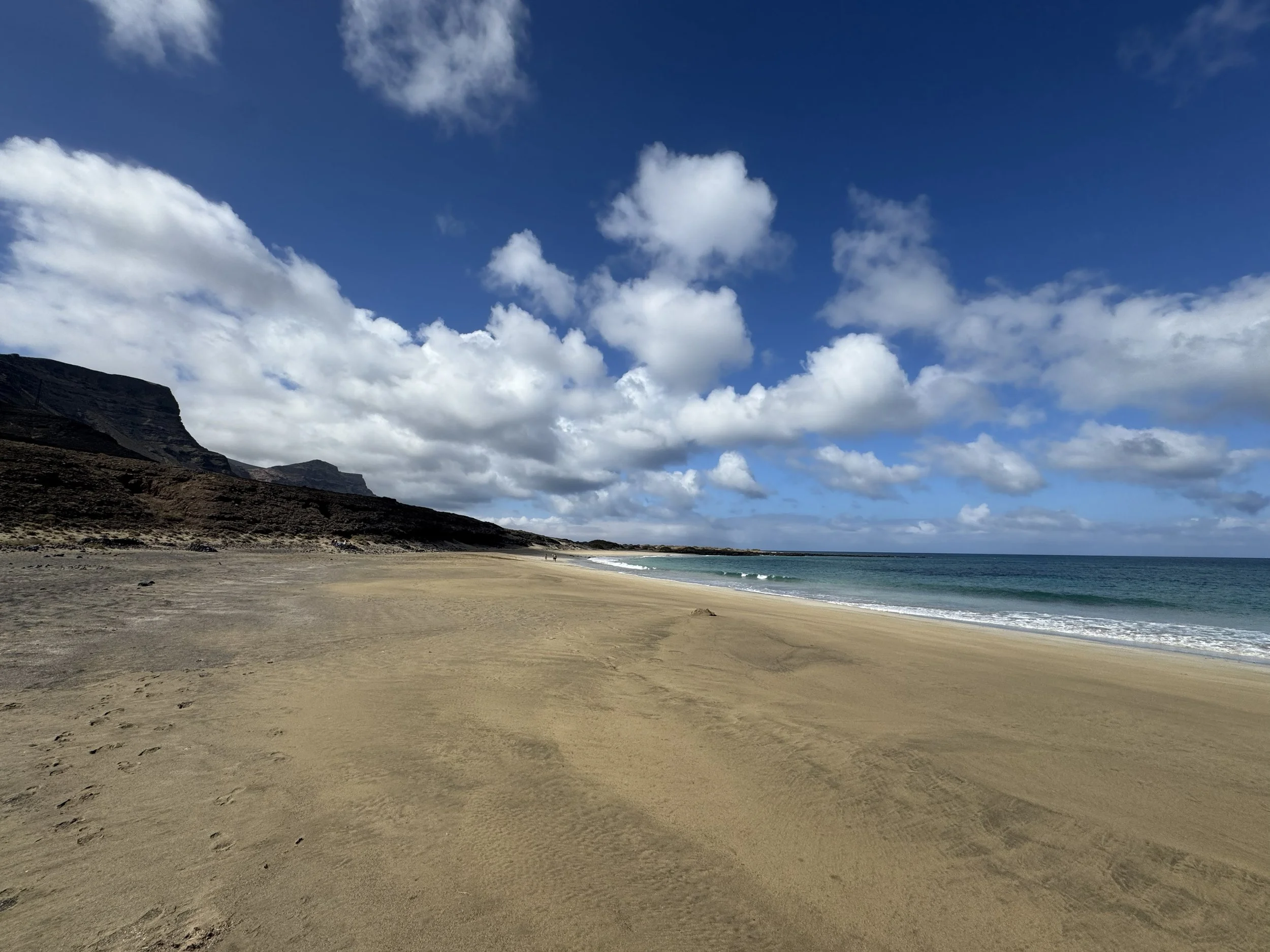
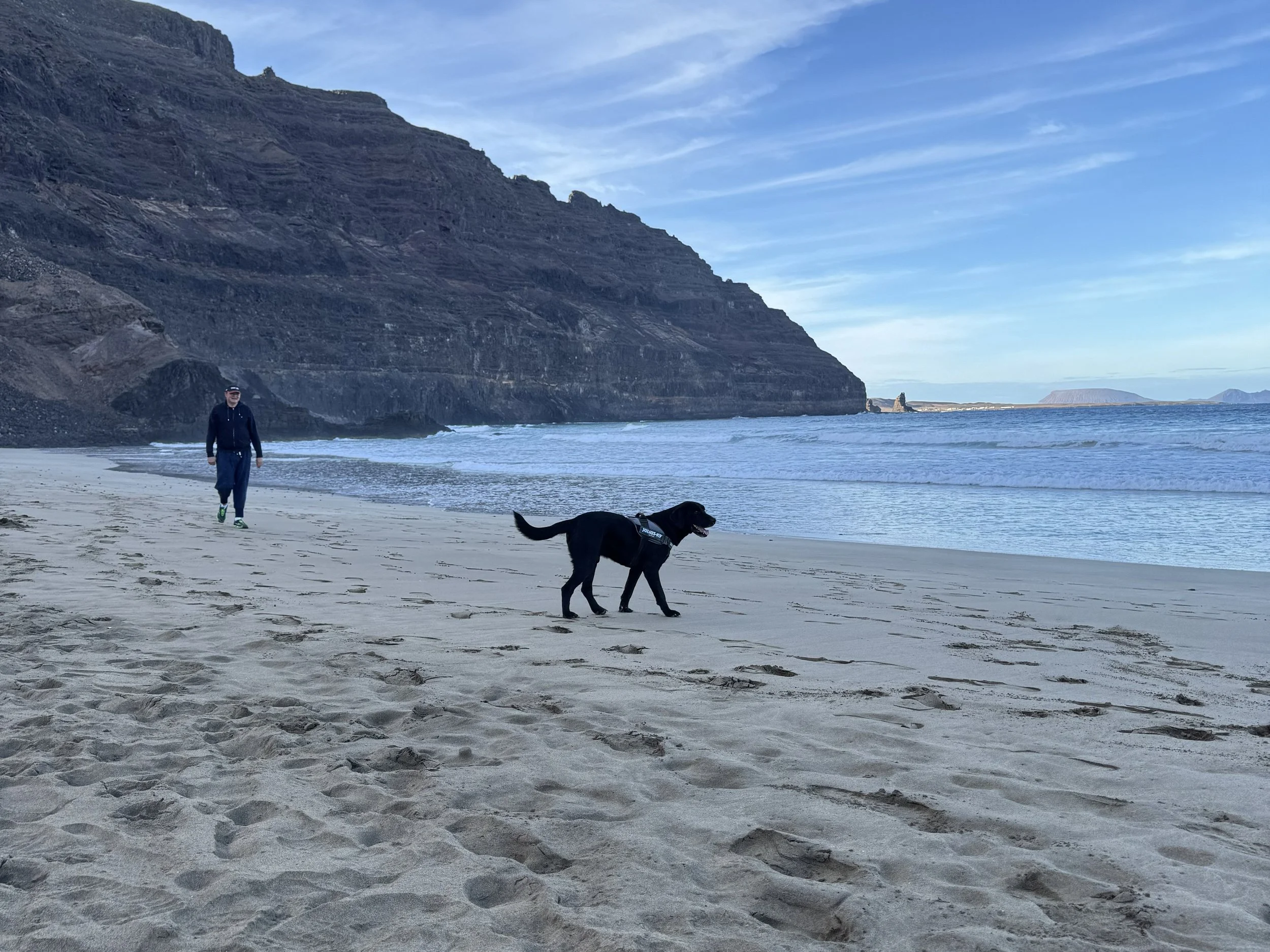
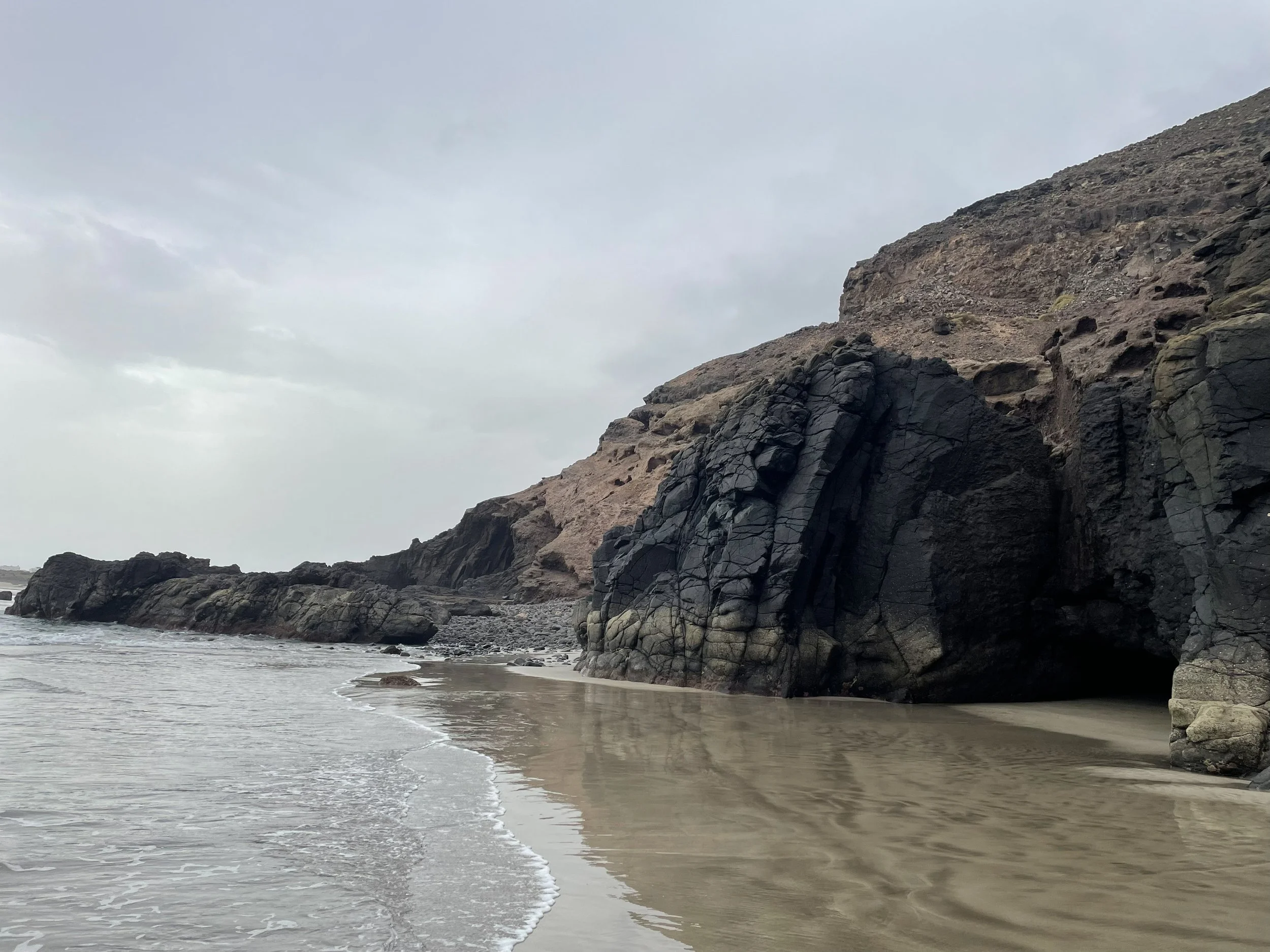
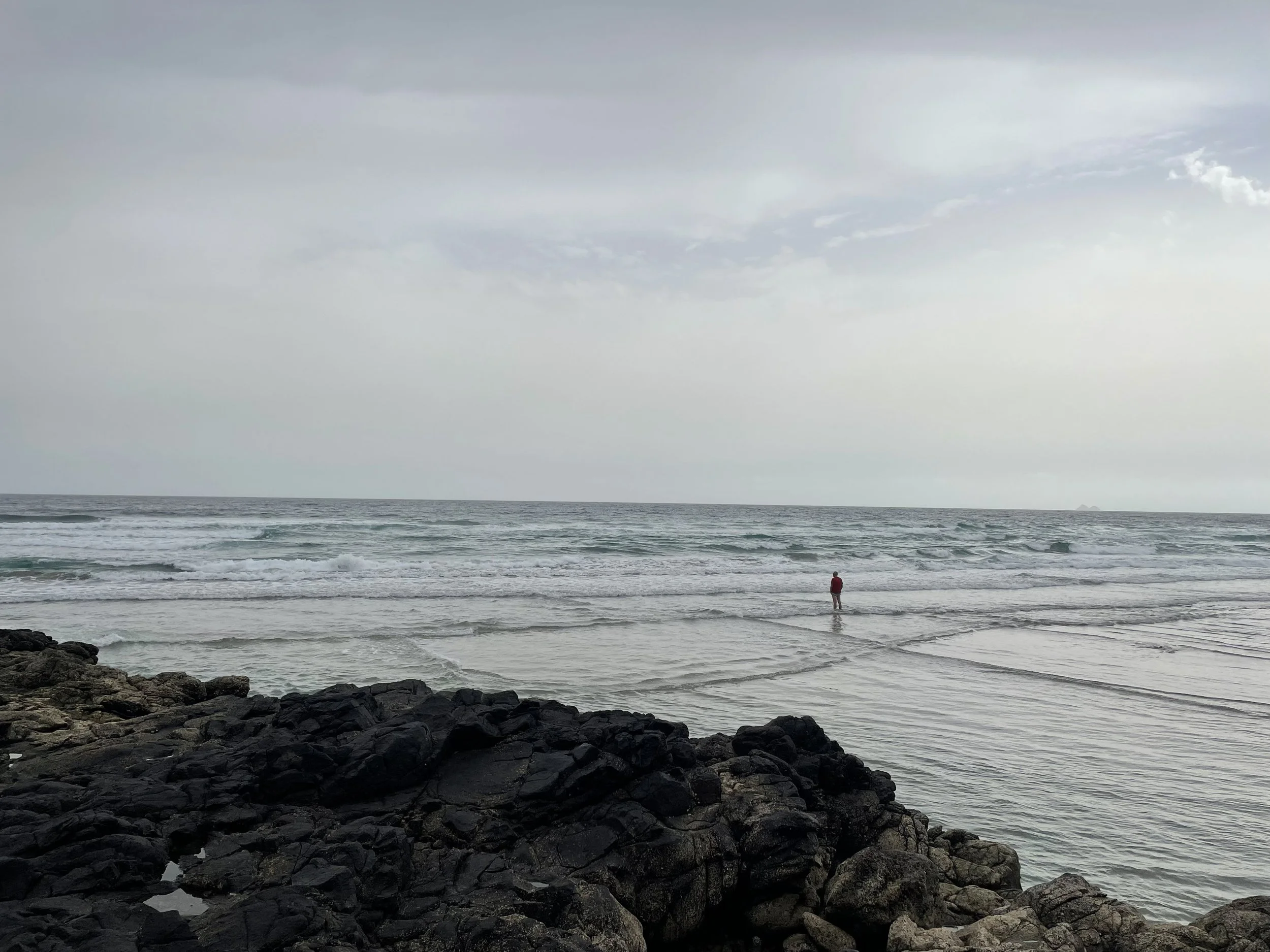
And what a contrast to Caletón Blanco.
Here the Atlantic is powerful, the beach is exposed and the cliffs create a dramatic backdrop. It's the sort of place where you immediately understand why the north of Lanzarote has such a different personality from the south.
We love coming here to walk, watch the waves and simply take in the scenery.
It's not a beach we'd recommend for casual swimming. Strong currents, surf and changing sea conditions deserve respect.
But for atmosphere? It's magnificent.
8. Mirador del Río — Beyond the Famous Viewpoint
From the northern coast, the road climbs towards one of Lanzarote's most celebrated viewpoints.
Mirador del Río is another of César Manrique's remarkable creations, almost hidden within the cliffs high above the narrow stretch of ocean separating Lanzarote from La Graciosa.
The views are spectacular.
But here's our personal suggestion.
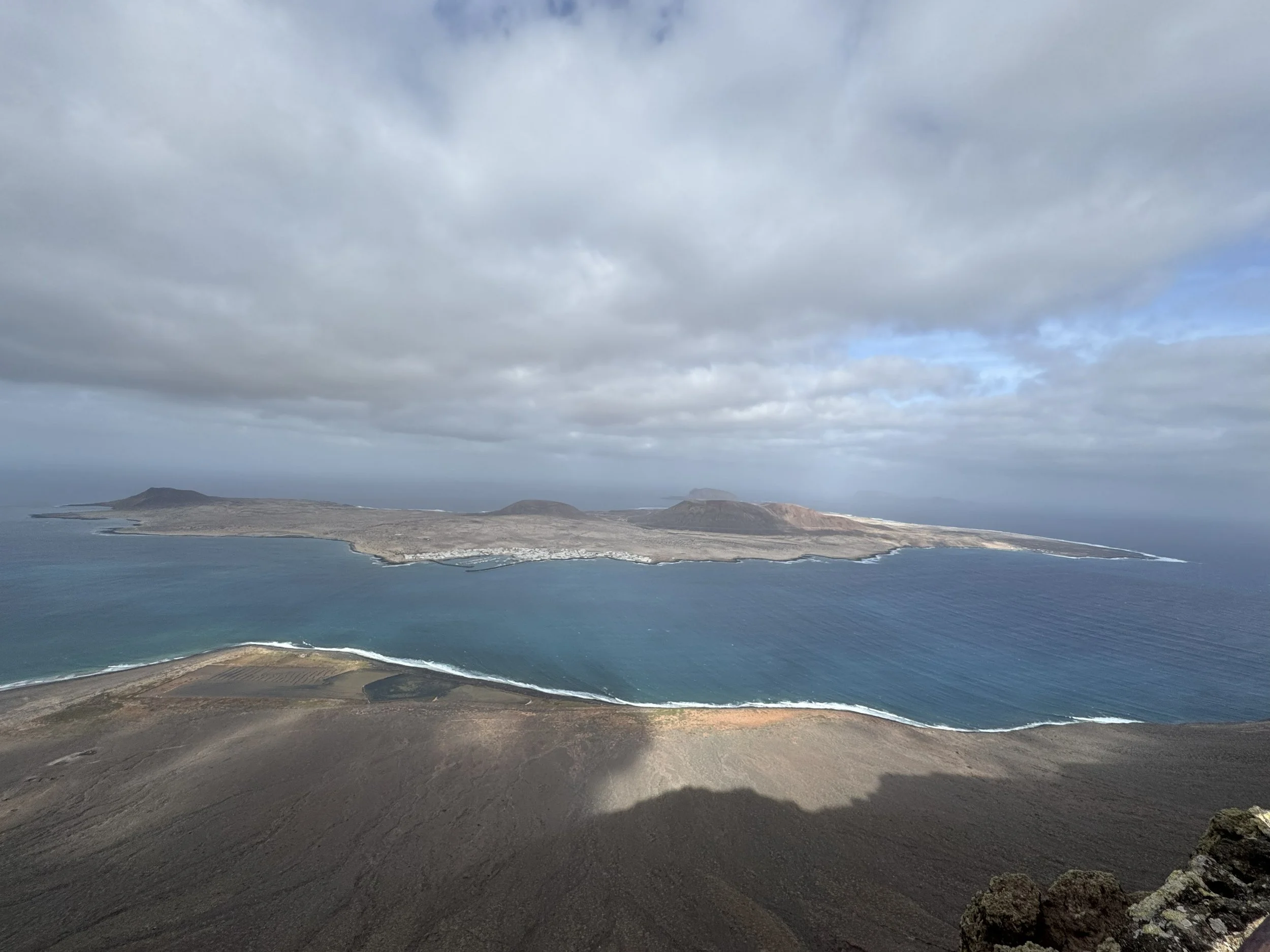
Rather than automatically entering the official viewpoint, we often prefer walking along the path to the left of the entrance.
After approximately 500–600 metres, there are places where you can enjoy extraordinary views of the cliffs, La Graciosa and the Atlantic without the architecture or crowds of the main attraction.
For us, there's something special about experiencing this landscape in its natural setting.
That's not a criticism of Manrique's work. Quite the opposite. His great achievement was understanding how extraordinary these surroundings already were.
Take care near the cliff edges, especially in strong winds, and stay on safe, established paths.
9. Haría & Mirador Rincón de Haría — The Valley of a Thousand Palms
Leaving the northern cliffs behind, head towards Haría.
The change of scenery is striking.
Instead of exposed volcanic plains, you'll find a green valley dotted with palm trees, traditional houses and small cultivated plots.
Haría is often called the Valley of a Thousand Palms, and it's easy to see why.
It's one of those villages where we enjoy doing very little. Walking through the streets, sitting in a café, noticing the details of the old buildings.
If you're visiting on a Saturday morning, the local craft market is worth considering.
We also recommend exploring the scenery around Mirador Rincón de Haría.
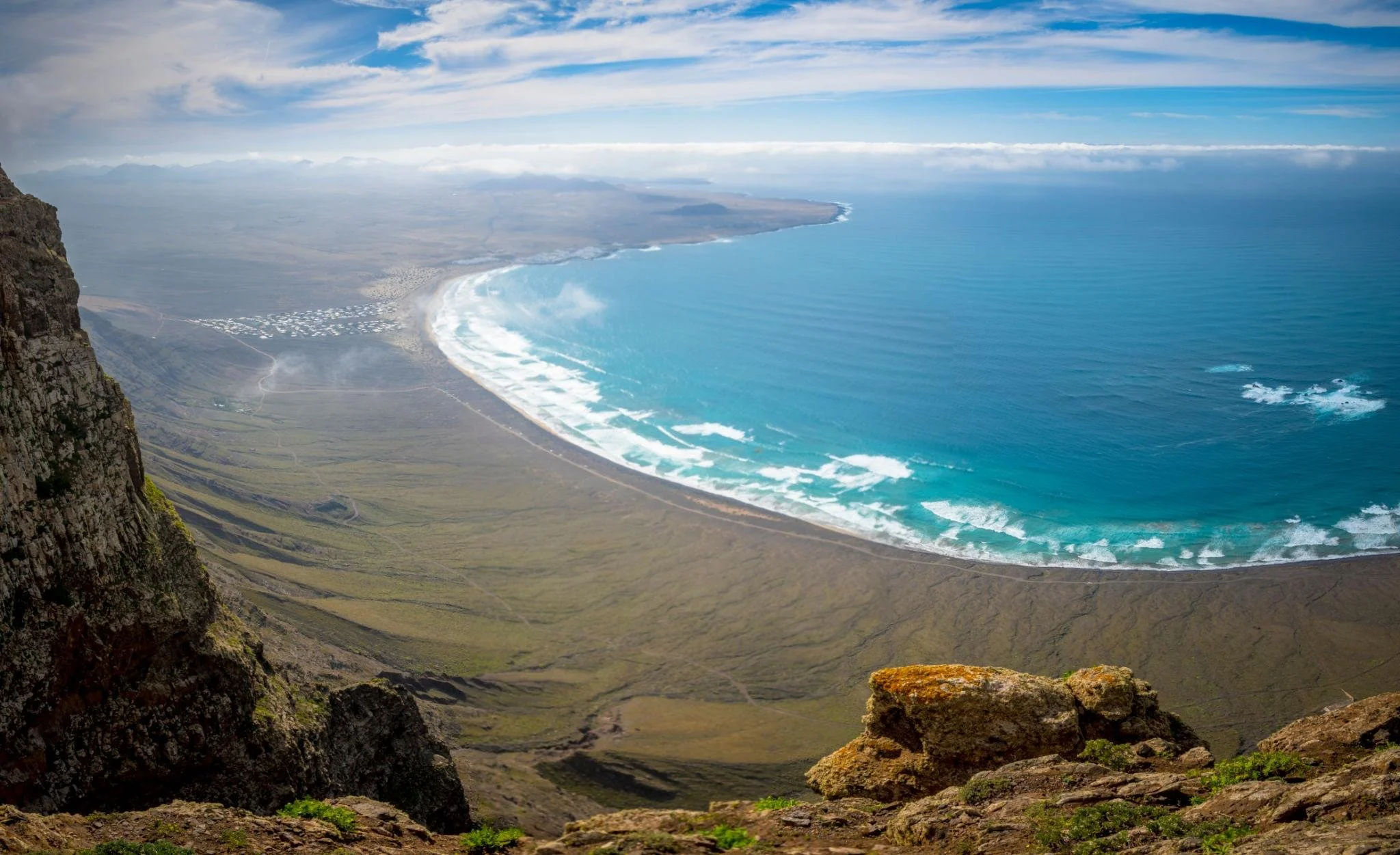
The landscape opens towards the north-western cliffs, revealing another side of Lanzarote's extraordinary volcanic geography.
Haría is also closely associated with César Manrique, who spent his later years here.
His former home can be visited, but we have to admit something: when it comes to Manrique, we often find his influence on the island's wider landscape more compelling than visiting every museum connected with his life.
That's simply our preference.
10. Famara — Where the Atlantic Takes Centre Stage
If there's one place that captures the untamed spirit of Lanzarote, Famara must be a strong contender.
The beach stretches beneath immense cliffs, with waves rolling in from the Atlantic and surfers scattered across the water.
It's vast, exposed and wonderfully atmospheric.
We love Famara for the feeling of space.
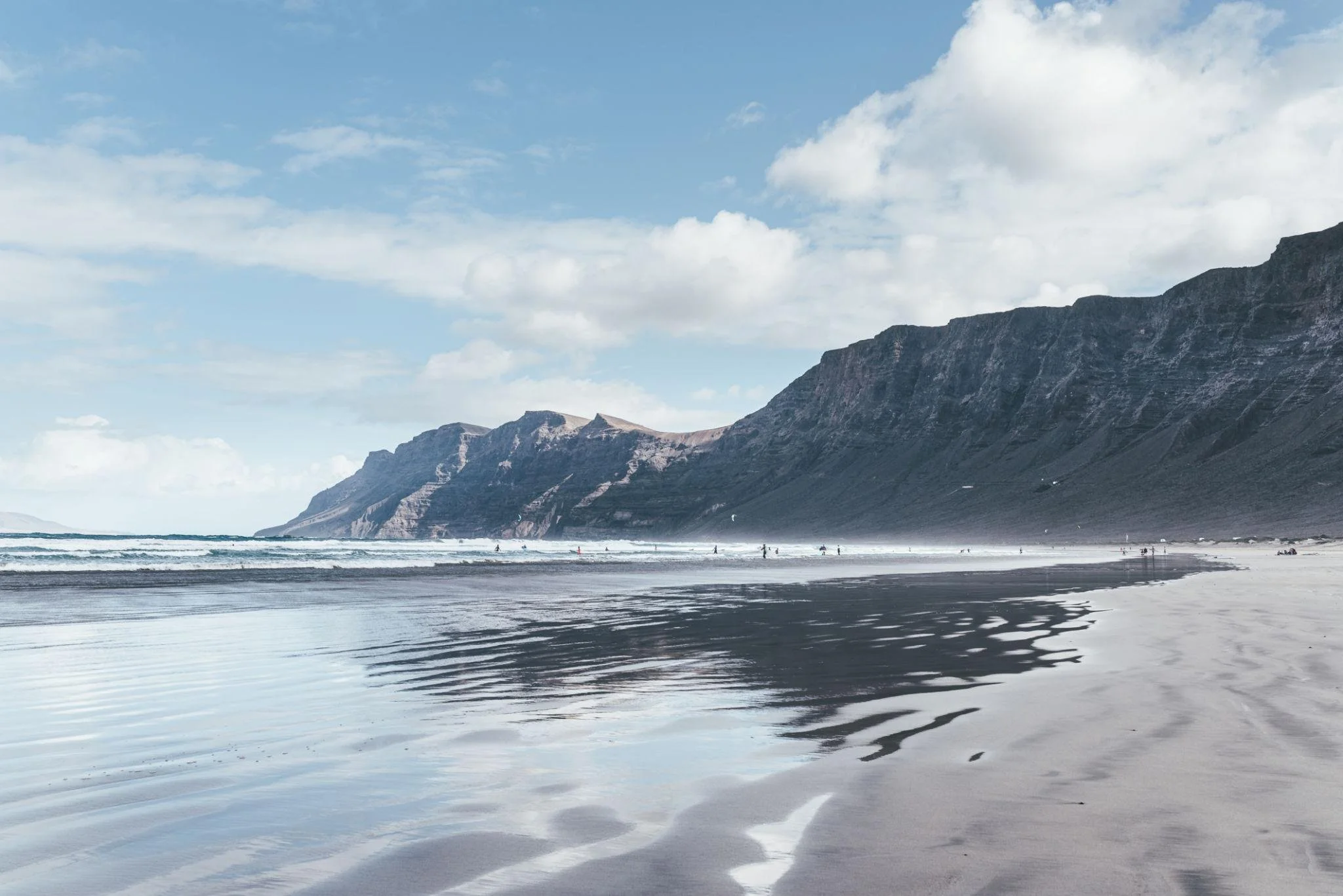
You can walk for ages, with the cliffs on one side and the ocean on the other, and feel as though the landscape is doing all the talking.
The village of Caleta de Famara has its own relaxed personality, shaped by surfing, local life and the Atlantic.
It's not polished or pretentious, and we wouldn't want it to be.
Famara is also a place where the weather makes a difference. Wind is part of its character, and the sea can be powerful.
We come here primarily for walking, watching the surfers and enjoying the extraordinary scenery rather than for a conventional day of swimming.
11. Teguise — An Evening in the Old Capital
Teguise is one of the most beautiful historic towns on Lanzarote.
Many visitors know it for its busy Sunday market, when the streets fill with stalls, tourists and activity.
We prefer a different Teguise.
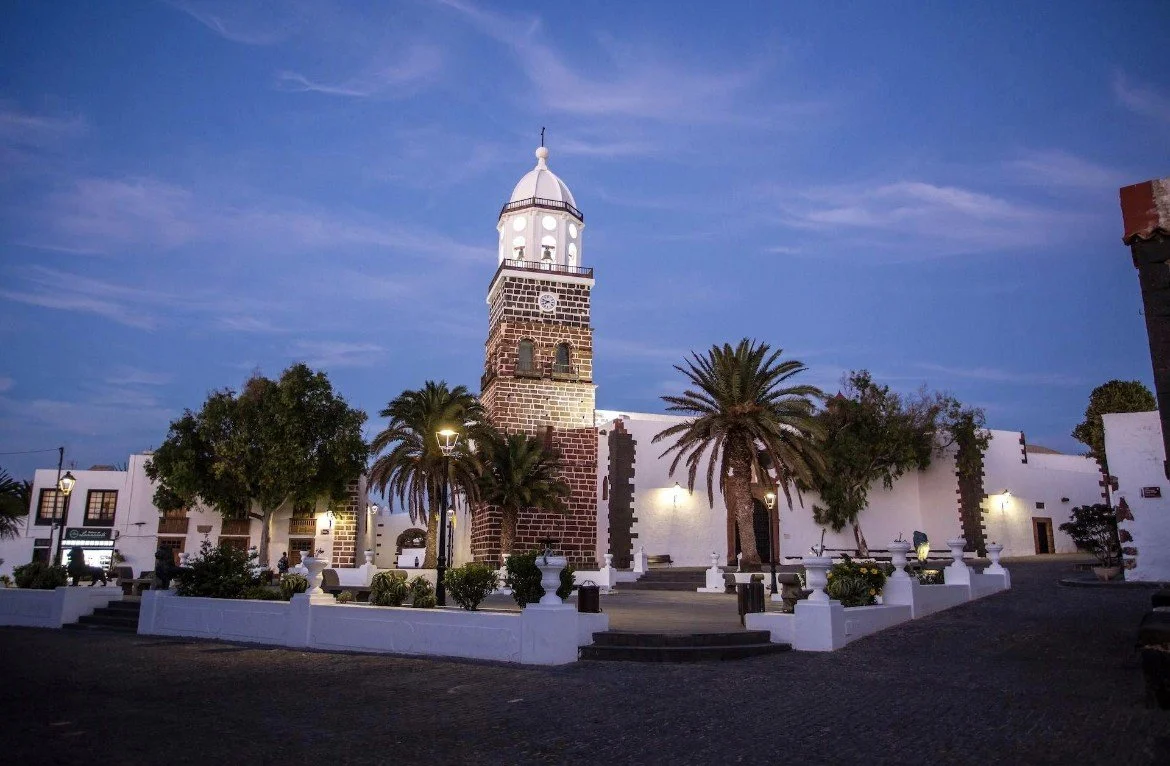
The one you discover later in the day, when the market crowds have disappeared and the old town begins to feel like itself again.
Wander through its narrow streets, admire the traditional architecture and take your time around the historic centre.
There's no need for a strict itinerary.
If you're staying for dinner, Ikarus is one of our recommendations.
For us, an evening in Teguise is a lovely way to finish a day exploring the northern part of the island.
12. LagOmar — Architecture Inside the Volcano
Not far from Teguise, in the village of Nazaret, is LagOmar.
It's one of Lanzarote's most unusual architectural settings, with rooms, terraces, stairways and passageways woven into volcanic rock.
The result feels almost theatrical.
There's a strong sense of the landscape shaping the architecture rather than the other way around.
It's certainly worth considering if you enjoy unusual buildings and places where art, design and nature meet.
We wouldn't suggest rushing through it simply to tick another attraction off your list. Allow yourself time to explore the different spaces and appreciate the details.
And from here, it's an easy return towards Guatiza.
Back to Guatiza — The North We Keep Returning To
There's something about northern Lanzarote that stays with you.
Perhaps it's the contrast between the black volcanic landscapes and the white villages. Perhaps it's the sound of the Atlantic, the palm-filled valley of Haría or the extraordinary light along the cliffs.
Or perhaps it's simply that life here still moves at a pace we recognise and appreciate.
When we first came to Lanzarote, we were visitors discovering an unfamiliar island. Today, after making Guatiza our home, we still find ourselves returning to the same beaches, villages, walks and viewpoints.
Not because we've run out of places to explore.
But because some places become more meaningful the better you know them.
How we'd spend 2–3 days exploring the north
We wouldn't recommend trying to visit every place in this guide in a single day. If you're spending five or six days on Lanzarote, allow two or three of them for the north, leaving the rest for the south and whatever else catches your imagination.
Day 1 — The Eastern Coast
Guatiza, Jardín de Cactus, Arrieta, Punta Mujeres, Cueva de los Verdes and Jameos del Agua. Save the latter for a Friday evening if the programme suits your dates.
Day 2 — The Wild North
Caleta Blanco, Caletón Blanco, Órzola, Playa de la Cantería, Mirador del Río and Haría. Make time for the viewpoints and don't rush the beaches.
Day 3 — The Western Cliffs & Old Villages
Mirador Rincón de Haría, Famara, Teguise and LagOmar. Enjoy a long walk on the beach, explore the old capital and return to Guatiza at your own pace.
These aren't rigid itineraries. They're simply a way to organise the places we love without turning your holiday into a race.
And if you decide to spend an entire afternoon on one beach instead of visiting three attractions?
We'd say that's a very good way to experience Lanzarote.
Because, in the end, the island isn't about how much you manage to see.
It's about how much you allow yourself to feel.