

The Quieter Side of Lanzarote
The beaches appear in every guidebook. The resorts fill the postcards. The viewpoints are marked on every map.
And then there are places that remain almost invisible.
Not because they are hidden, but because most people never slow down enough to notice them.
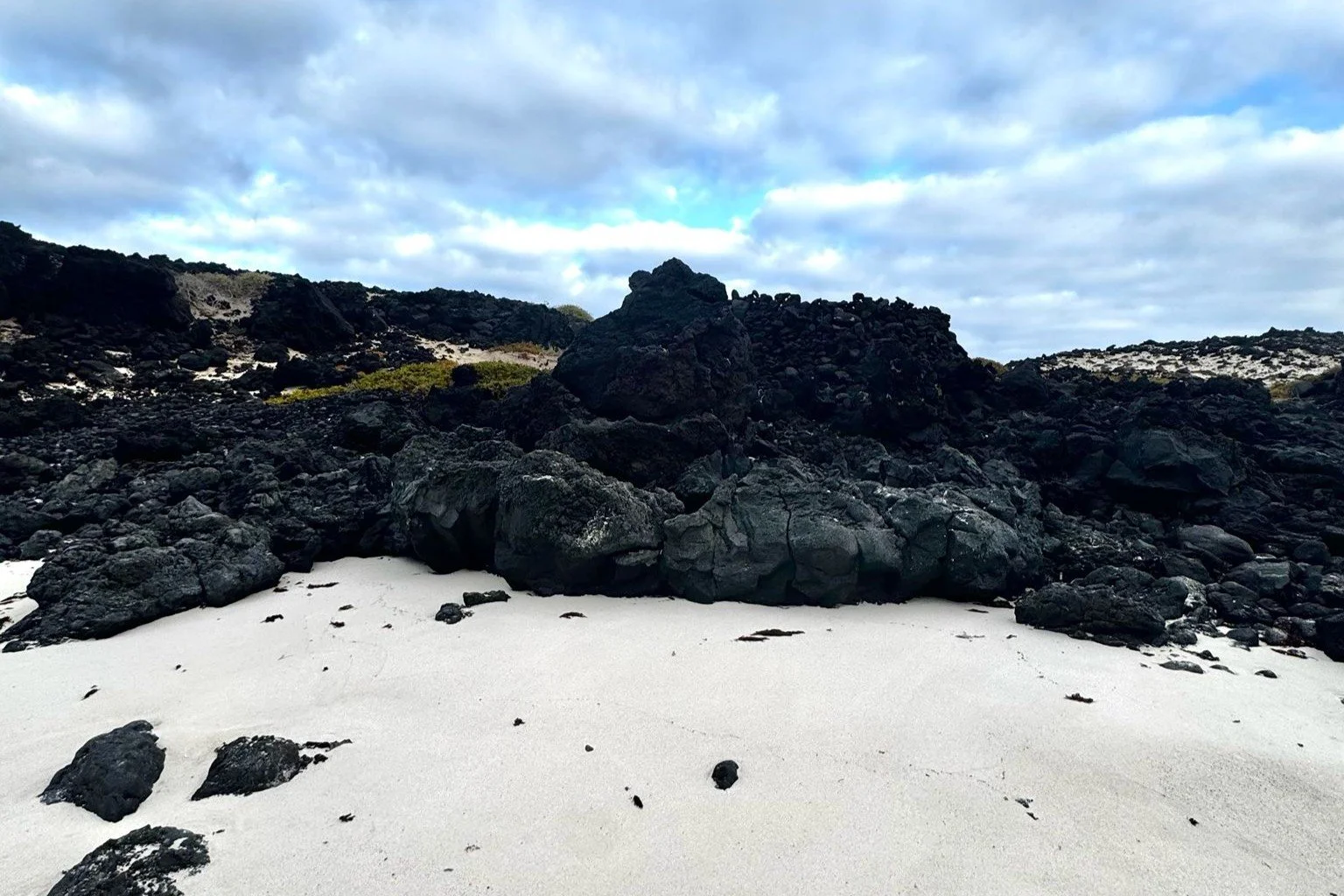
A quiet volcanic cove in northern Lanzarote, where black lava meets pale sand.
When we first came to Lanzarote, we were looking for roads to cycle.
We found something else.
Long stretches of coast where we could walk for an hour without meeting anyone. Black lava disappearing into the Atlantic. Small coves without names we knew. Paths that seemed to lead nowhere.
And silence.
Not complete silence.
The wind was there.
The ocean was there.
Occasionally a bird, a distant car, perhaps a fisherman somewhere along the coast.
But compared with the world we had come from, it felt like silence.
Lanzarote is not conventionally beautiful.
It does not seduce with lush forests or tropical vegetation. There are no endless green landscapes to soften the horizon.
Its palette is simpler.
Stone.
Sea.
Sky.
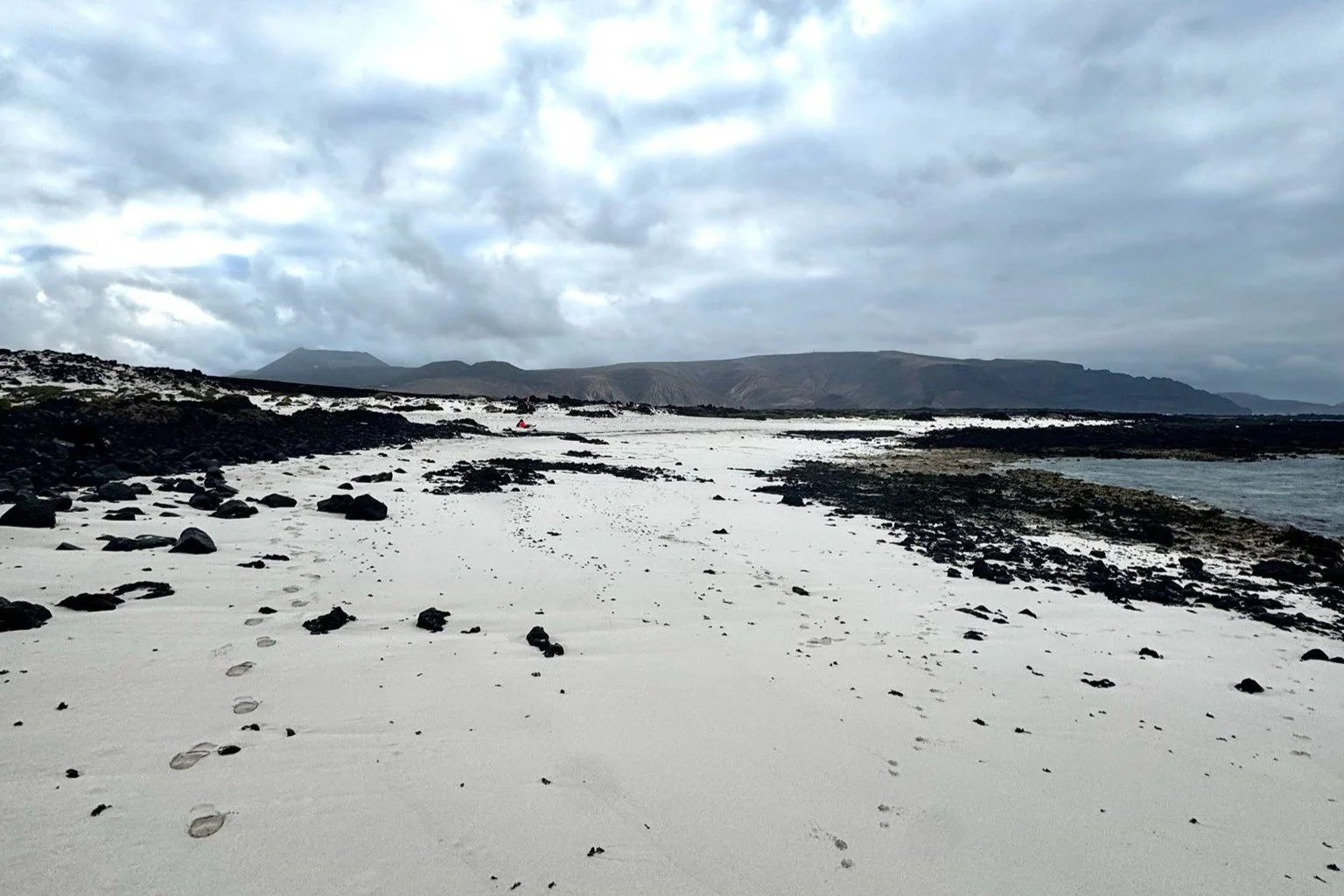
White sand, black lava and almost no one around — another side of northern Lanzarote.
For a long time, perhaps that was what fascinated us without us understanding why.
Nothing seemed to demand our attention.
You had to give it willingly.
The black lava fields, shaped by eruptions centuries ago, stretched towards the Atlantic. Sometimes they were interrupted by a strip of pale sand. Sometimes by a path. Sometimes by nothing at all.
At first, we drove past these places.
Later, we began stopping.
Then we started looking for them.
A turn off the main road because we wondered where it went.
A path along the coast because there was no sign telling us what was at the end.
A beach where there was nobody else.
We slowly discovered that Lanzarote rewards curiosity more than speed.
And that some of the places we remembered most clearly were the ones where almost nothing had happened.
No monument.
No restaurant.
No ticket.
No photograph we needed to take.
Just a place and enough time to notice it.
Perhaps this is why we gradually found ourselves returning more and more often to the north of the island.
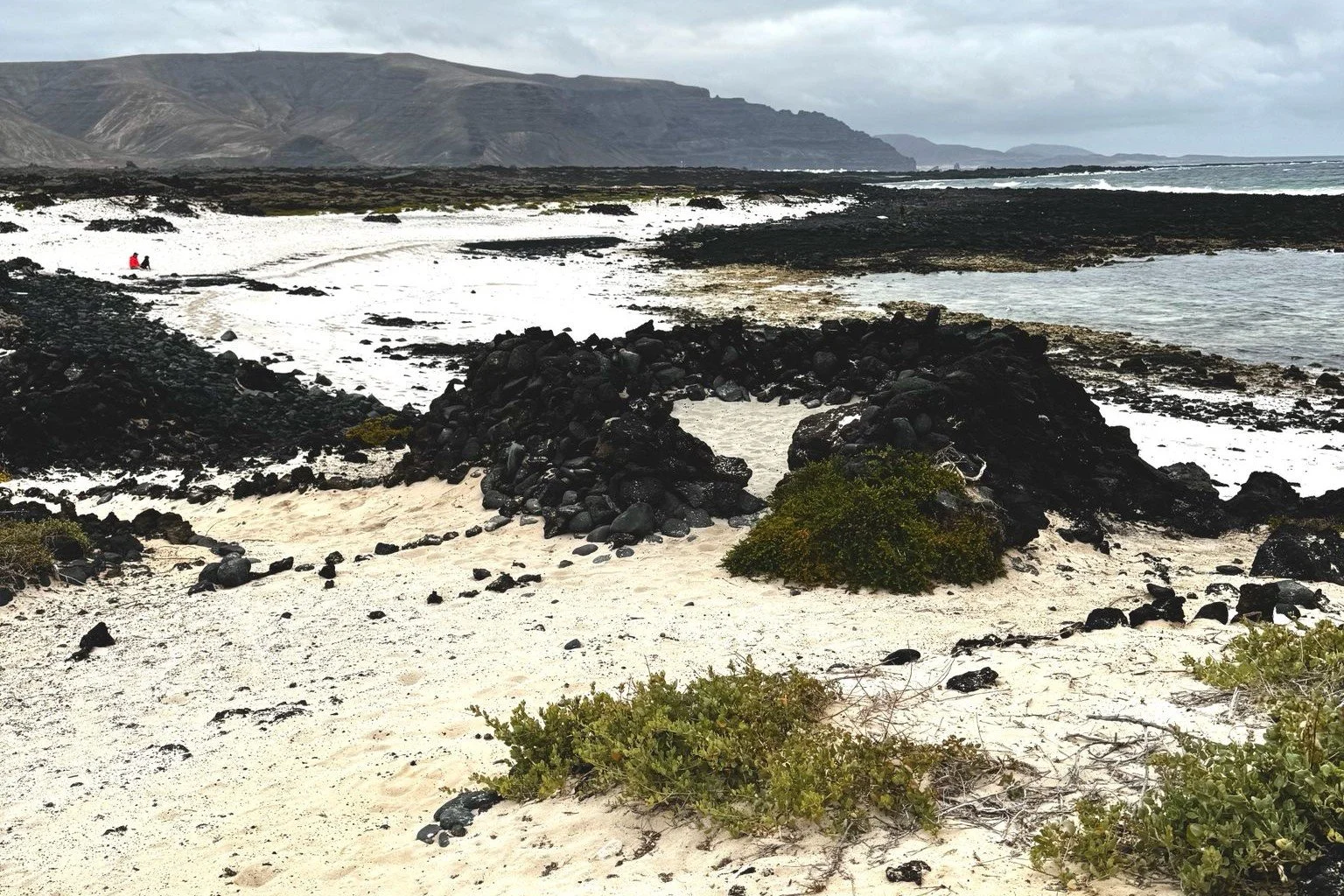
A landscape of lava, pale sand and Atlantic Ocean — the quieter, wilder side of northern Lanzarote.
It was less about what was there than about what was absent.
There were fewer distractions.
More empty spaces.
More opportunities to stop without knowing exactly why.
The landscape did not try to entertain us.
And slowly, that changed the way we travelled.
We stopped asking what there was to see.
We started asking where a road might lead.
We stopped worrying whether a place was worth visiting.
We simply went.
Some discoveries were beautiful.
Some were strange.
Some turned out to be nothing more than a piece of volcanic coast and a strong wind.
But even those became part of our Lanzarote.
Over the years, the north became the part of the island where we felt most at home.
Not because it is better than the south.
Not because it is somehow more “authentic”.
Simply because its rhythm suited ours.
It taught us to slow down.
To look longer.
To become comfortable with emptiness.
And eventually to understand something we had missed when we first arrived:
Some places do not need to be discovered.
They need to be noticed.
Perhaps the quieter side of Lanzarote was never hidden at all.
We simply had to learn how to see it.
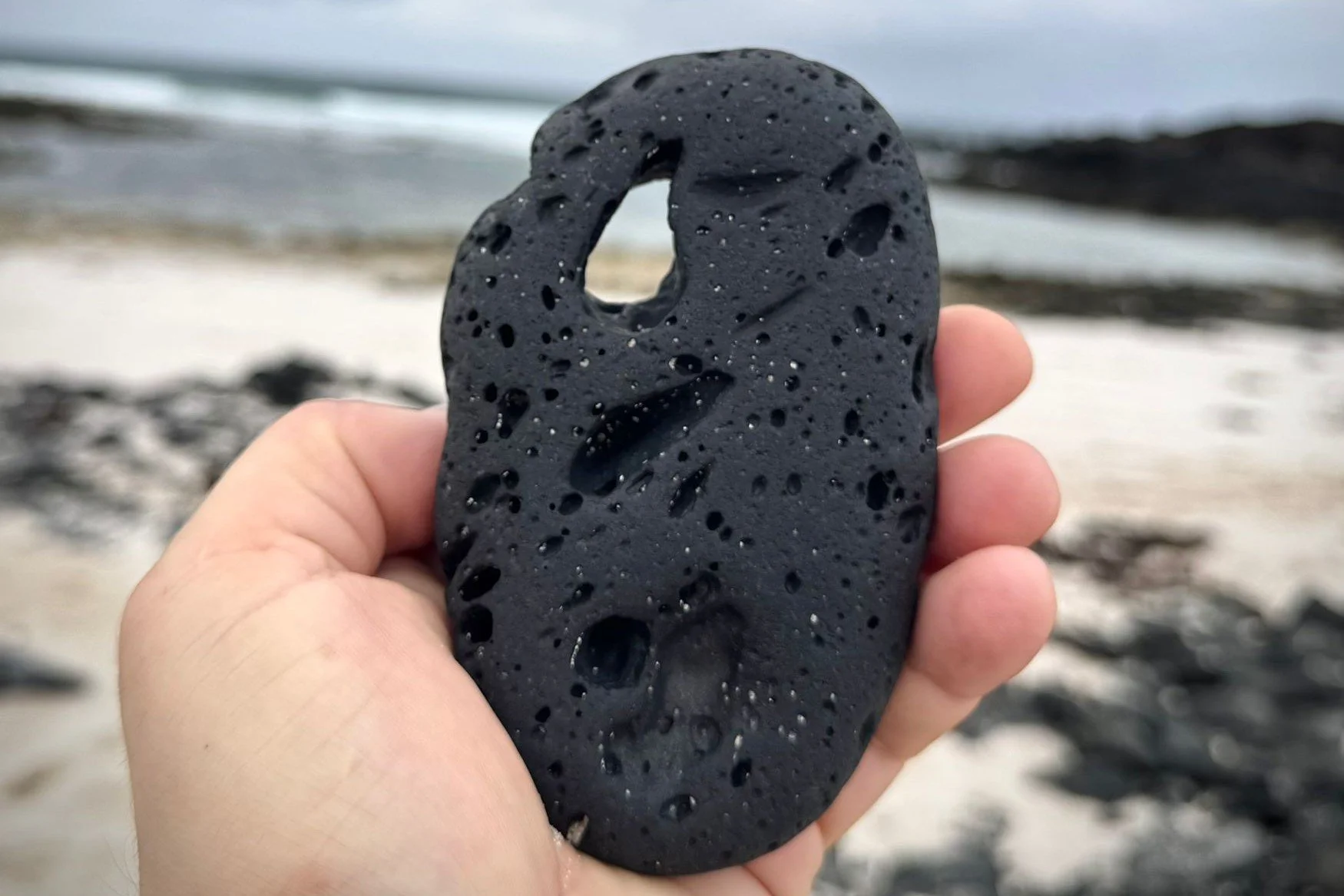
A fragment of volcanic rock shaped by fire, wind and the Atlantic — Lanzarote’s landscape in miniature.