

What NOT to do in Lanzarote
Lanzarote is an easy island to enjoy.
But it is also surprisingly easy to experience it in a way that makes it feel more crowded, more commercial and less interesting than it really is.
Most mistakes are not dramatic. You will still have a good holiday.
They simply mean missing some of what makes Lanzarote different.
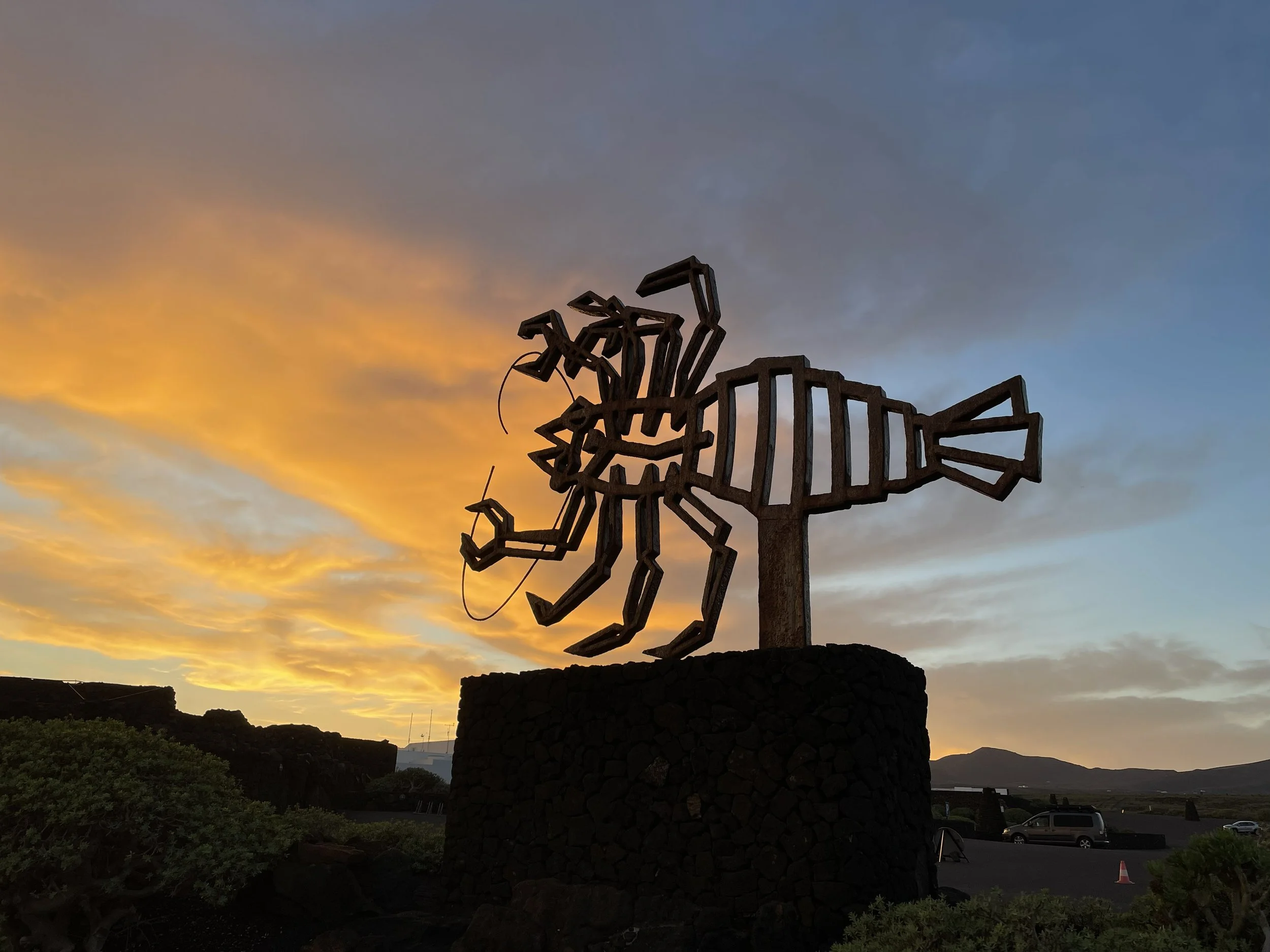
Sunset in Jameos del Agua in Lanzarote
DON’T TRY TO SEE THE WHOLE ISLAND IN THREE DAYS
Lanzarote looks small on a map.
That encourages people to create ambitious itineraries: Timanfaya in the morning, Jameos del Agua after lunch, Mirador del Río before sunset and perhaps another village or beach somewhere in between.
Technically, you can do it.
But travelling this way turns Lanzarote into a checklist.
The island becomes much more interesting when you leave enough space between the famous places to notice the landscape, stop in a village or follow a road simply because you want to know where it goes.
Seeing fewer places can mean experiencing considerably more.
DON’T ASSUME THE SOUTH IS THE WHOLE ISLAND
Playa Blanca and Puerto del Carmen are popular for good reasons: beaches, restaurants, sunshine and convenience.
But they represent only one version of Lanzarote.
Drive north or inland and the atmosphere changes quickly.
You find agricultural villages, volcanic fields, small local restaurants, dramatic coastlines and places where everyday island life is much more visible.
If you never leave the resort areas, you haven't seen a bad version of Lanzarote.
You have simply seen a very small part of it.
DON’T VISIT EVERY FAMOUS PLACE AT THE BUSIEST TIME
Timing changes Lanzarote enormously.
Teguise during the Sunday market and Teguise on a quiet evening can feel like two completely different places.
The same principle applies elsewhere.
Popular attractions become crowded because thousands of visitors are following broadly similar schedules.
Sometimes arriving early helps. Sometimes arriving later helps. And sometimes the best decision is simply to come back another day.
The place has not changed.
Your experience of it has.
DON’T UNDERESTIMATE THE WIND
Lanzarote is famous for sunshine, but wind is one of the forces that shapes life on the island.
A beach that looks perfect in a photograph may feel completely different on a windy afternoon. The same applies to terraces, walks and cycling routes.
This does not mean avoiding windy days.
It means planning around them.
One side of the island can feel surprisingly different from another, and sheltered places can transform a day that initially looked disappointing.
On Lanzarote, checking the wind can sometimes be more useful than checking the temperature.
DON’T TREAT THE VOLCANIC LANDSCAPE AS EMPTY LAND
At first sight, parts of Lanzarote can appear barren.
They are not.
The volcanic landscape is fragile, and traces left by people can remain visible for a very long time.
Stay on marked paths where required. Do not drive onto lava fields simply because another vehicle appears to have done it. Avoid moving stones or creating new piles and symbols in the landscape.
The apparent emptiness is part of what makes these places extraordinary.
Leaving them as you found them is part of experiencing them properly.
DON’T EXPECT EVERY BEACH TO BE A SWIMMING BEACH
Lanzarote has beautiful beaches, but the Atlantic deserves respect.
Conditions vary enormously.
Some beaches are naturally sheltered and easy for swimming. Others can have strong currents, waves or changing conditions even when the water looks inviting.
Famara is perhaps the clearest example: spectacular, enormous and one of Lanzarote’s great landscapes — but not a place where you should automatically assume that swimming conditions are safe.
Pay attention to flags, local warnings and the conditions in front of you.
A beautiful beach does not necessarily mean a gentle sea.
DON’T EAT ONLY WHERE THE TOURIST MENUS ARE
There is nothing wrong with eating in the resorts.
Some excellent restaurants are there.
But if every meal happens on the same tourist strip, you miss another part of Lanzarote.
Look for village restaurants, teleclubs, small places serving local fish and restaurants where the menu reflects where you actually are.
You do not need to hunt for supposedly “secret” places.
Often you simply need to move a little away from the most obvious ones.
DON’T EXPECT LANZAROTE TO BE TENERIFE OR GRAN CANARIA
The Canary Islands are not interchangeable.
Lanzarote is relatively low, dry, volcanic and visually restrained. Much of its appeal comes from the relationship between black lava, white buildings, agriculture, ocean and enormous open skies.
There are fewer forests, fewer large cities and less of the lush landscape some visitors associate with the Canary Islands.
That is not something Lanzarote lacks.
It is what Lanzarote is.
DON’T PLAN EVERY HOUR BEFORE YOU ARRIVE
This may be the most important one.
Have a list of places you want to see, certainly.
But leave some empty space.
Weather changes. The wind changes. You discover a restaurant. You pass a road you want to explore. You find a beach where you suddenly want to stay for three hours.
A rigid itinerary makes all of those things inconvenient.
A good Lanzarote itinerary should contain room for Lanzarote itself.
DON’T SPEND THE ENTIRE HOLIDAY CHASING ATTRACTIONS
There is a strange point at which sightseeing becomes work.
Lanzarote has enough major attractions to fill several days, but some of the island’s best moments require almost nothing.
A coffee in Haría.
Walking through Teguise after the crowds have disappeared.
Watching waves somewhere on the north coast.
Driving through La Geria without needing to stop at every bodega.
Sitting outside in the evening when the wind finally drops.
These moments rarely appear on a list of the “Top 10 Things to Do in Lanzarote”.
They may be the ones you remember.
THE BIGGEST MISTAKE? EXPERIENCING SOMEONE ELSE’S LANZAROTE
There is no single correct way to visit the island.
Some people want beaches. Others want hiking, cycling, food, architecture, surfing or simply a quiet week in the sun.
Problems begin when you follow an itinerary designed for somebody else's holiday.
Use guides as tools, not instructions.
Choose where you stay carefully. Decide what actually matters to you. Then leave enough space for the island to surprise you.
That is usually when Lanzarote becomes much more interesting.
OME note: If you're still deciding what kind of Lanzarote suits you, read Where to Stay in Lanzarote: Which Area Is Right for You? It is designed to help you choose the island from the experience backwards — rather than choosing a hotel first and discovering your surroundings later.