

Lanzarote: Iceland, Only Warmer
Black beaches, volcanoes and Atlantic geysers — without the thermal underwear.
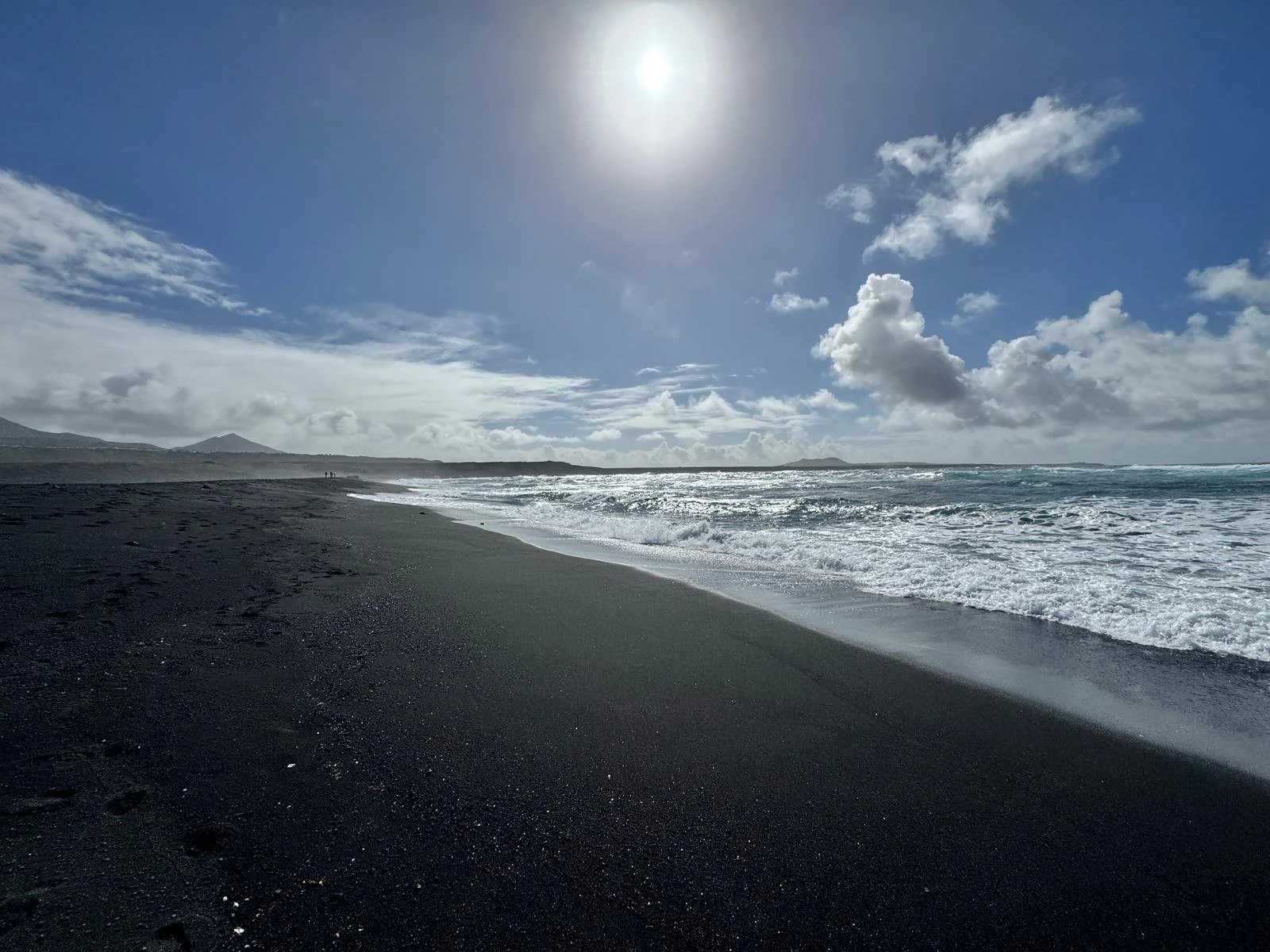
Lanzarote does black rather well too.
Iceland is having a moment.
Black beaches. Volcanoes. Geysers. Lava fields stretching towards the horizon. Waves crashing against landscapes that look as if somebody forgot to finish colouring them in.
We understand the attraction.
There is something irresistible about a place where the elements still seem to be in charge. Where the ground is black, the ocean is loud and the landscape reminds you that the planet beneath your feet is very much alive.
But there is another island in the Atlantic that speaks much the same geological language.
And here, you can usually leave the thermal underwear at home.
Welcome to Lanzarote.
Black beaches
Search for a black beach and Iceland will appear almost immediately.
Reynisfjara, near Vík, has become one of the country's defining images: black volcanic sand, white Atlantic surf and dark cliffs rising behind it.
Lanzarote does black rather well too.
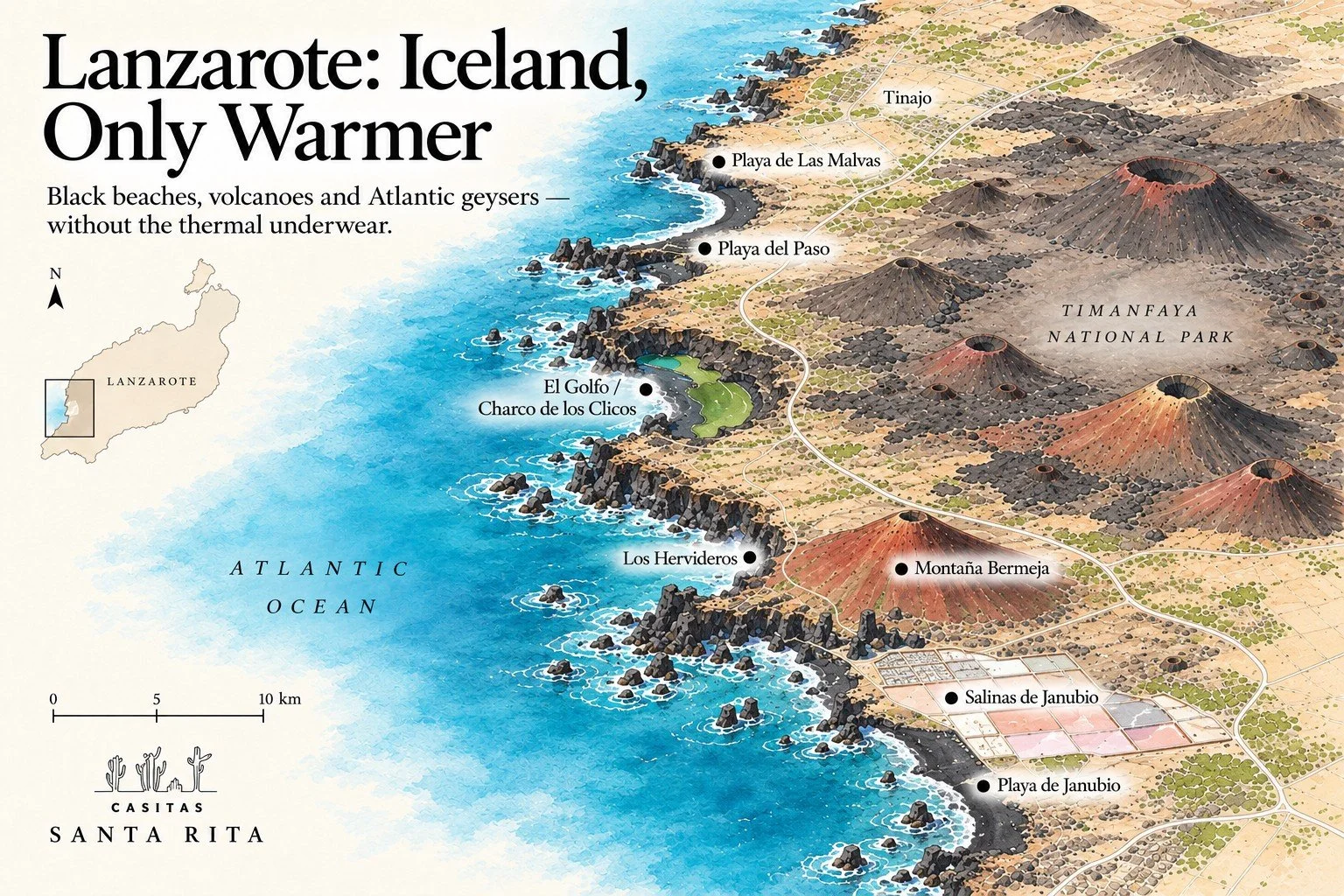
On the island's wild western coast, Playa de Janubio stretches beneath the salt pans in a sweep of dark volcanic sand. There are no rows of sun loungers here and very little reason to bring a parasol.
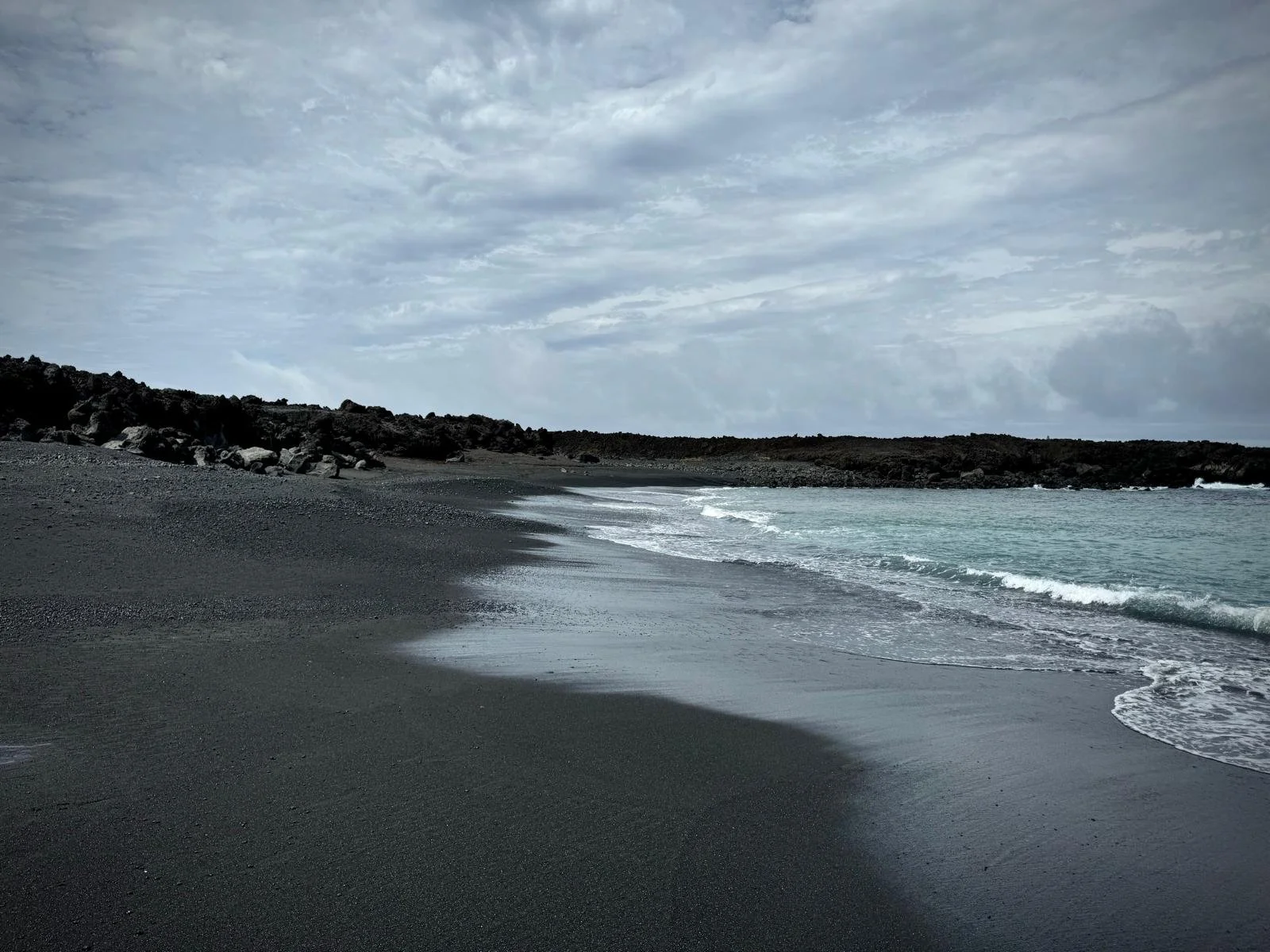
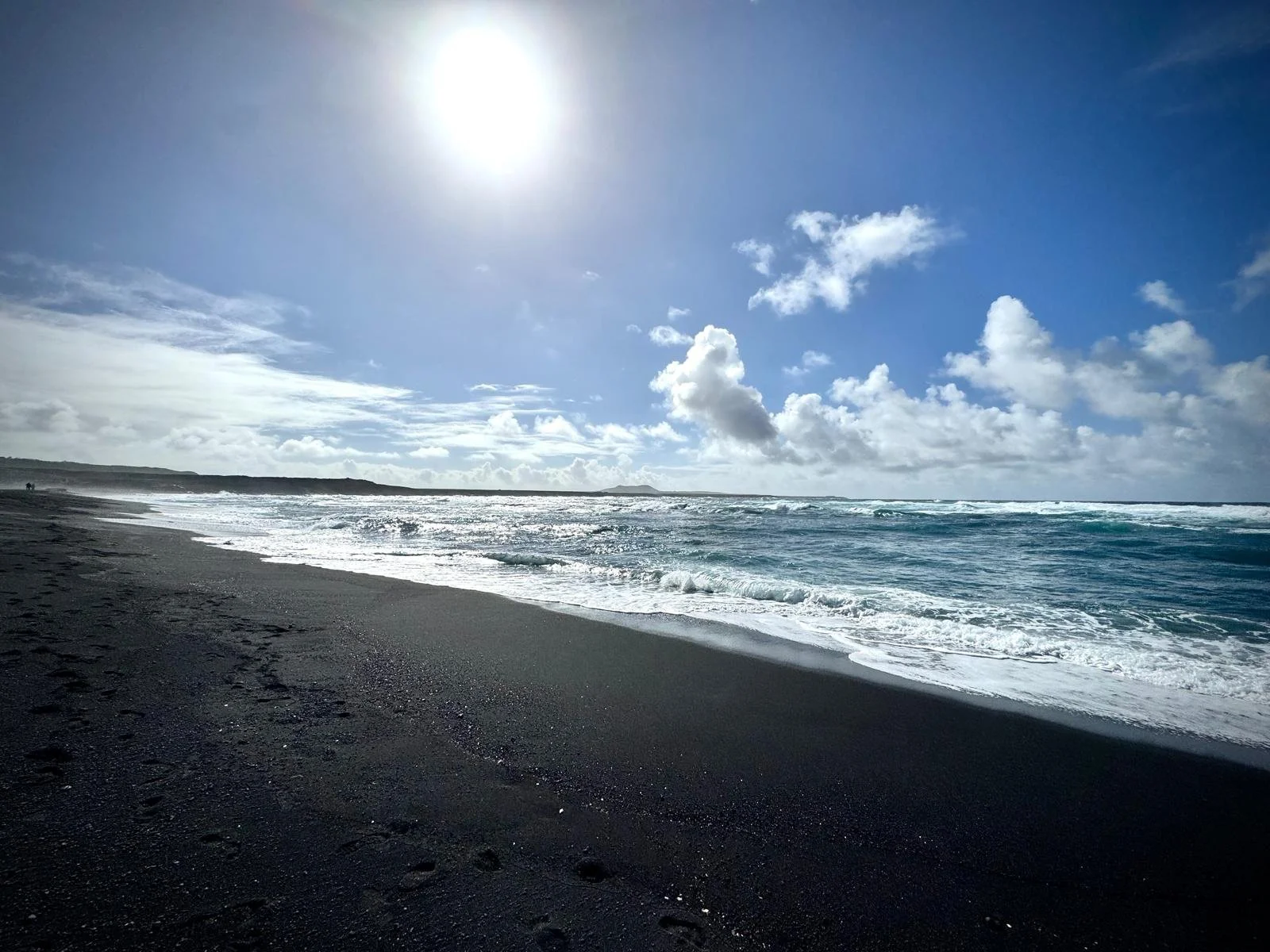
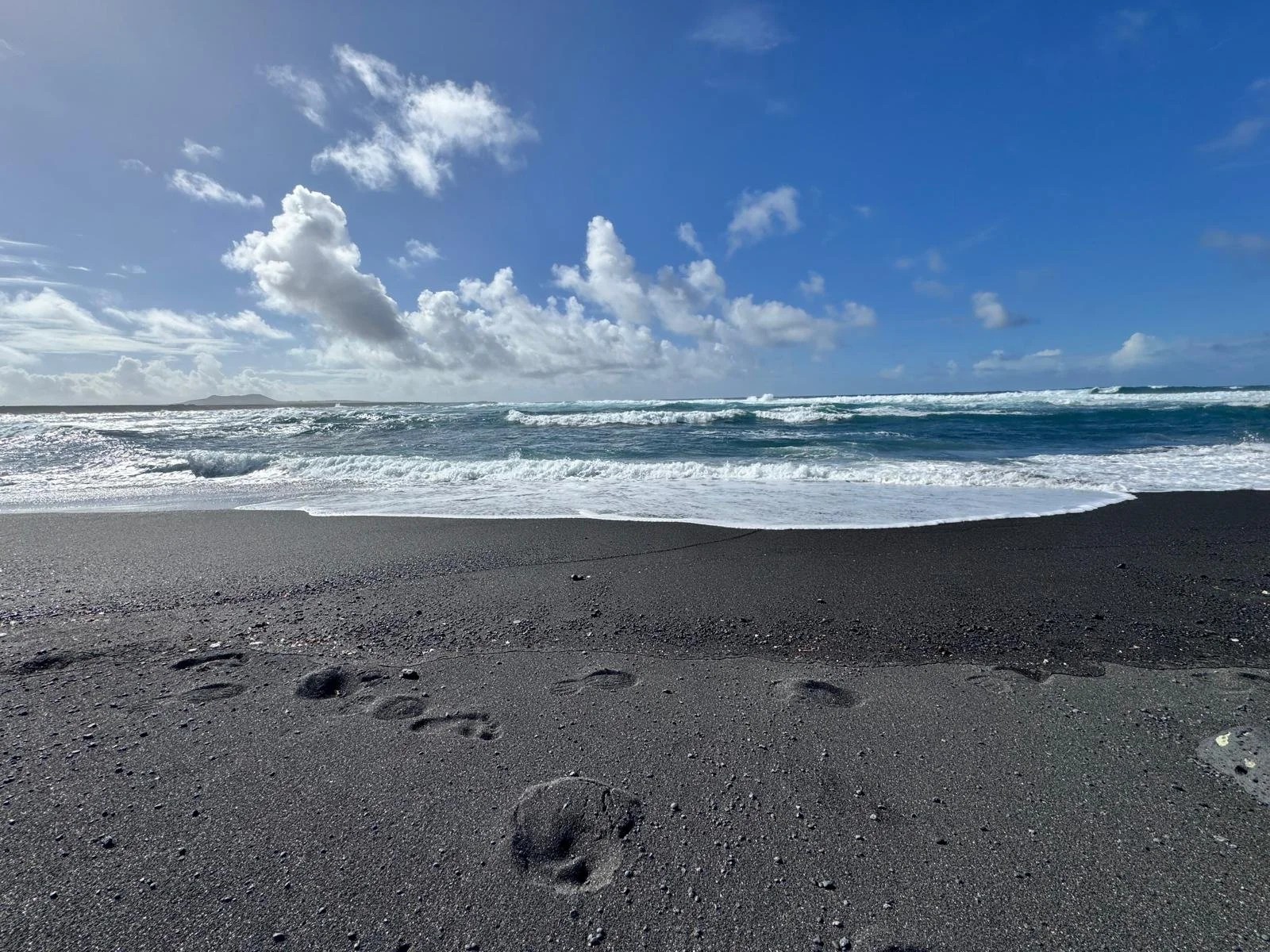
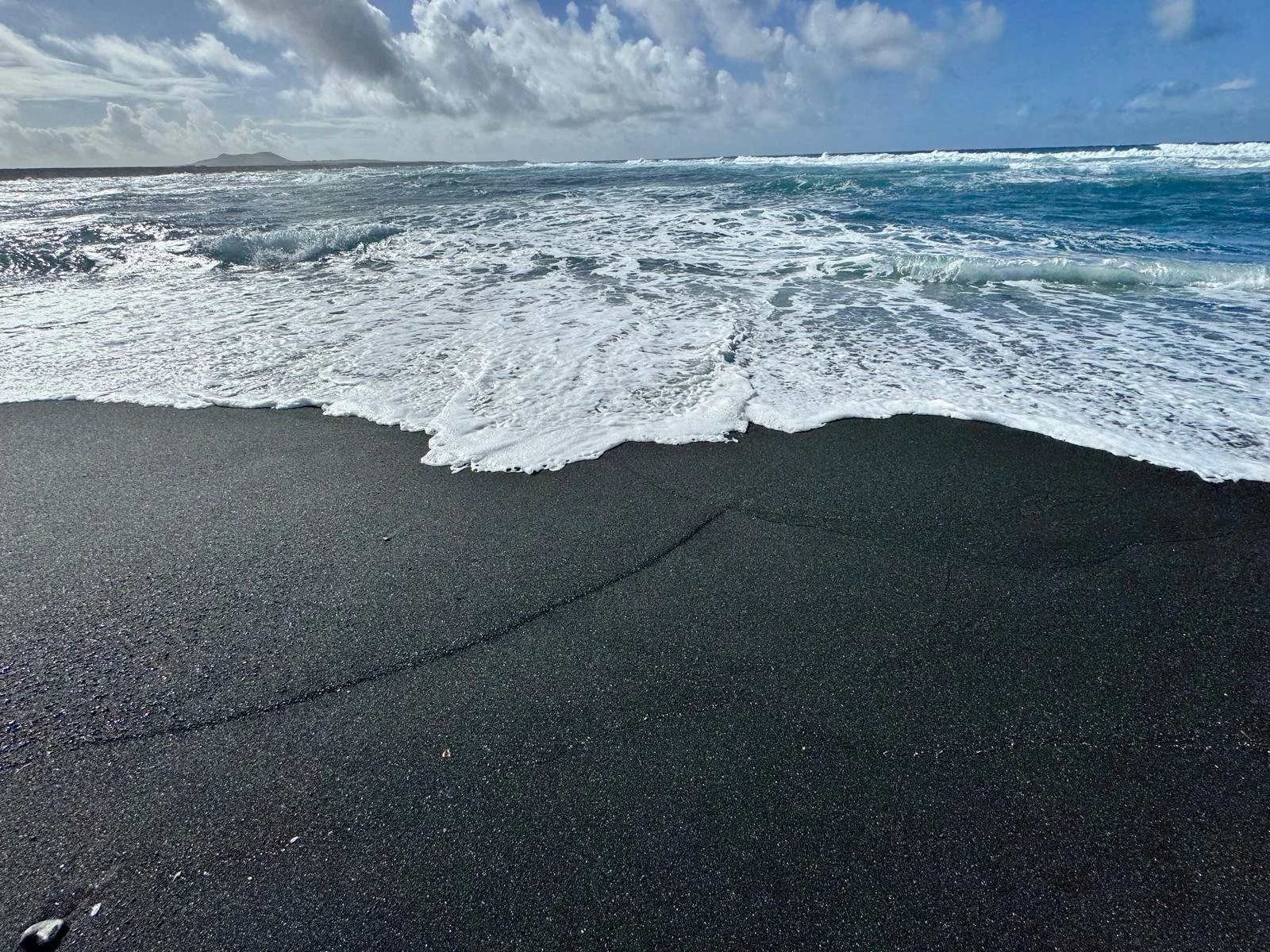
This is a beach for walking, watching and listening.
The Atlantic arrives with considerable enthusiasm.
Farther north, Playa de las Malvas asks for a little more commitment.
From Tinajo, the road seems to keep going long after you expect to reach the coast, crossing an increasingly empty volcanic landscape.
Then the Atlantic appears.
Wow.
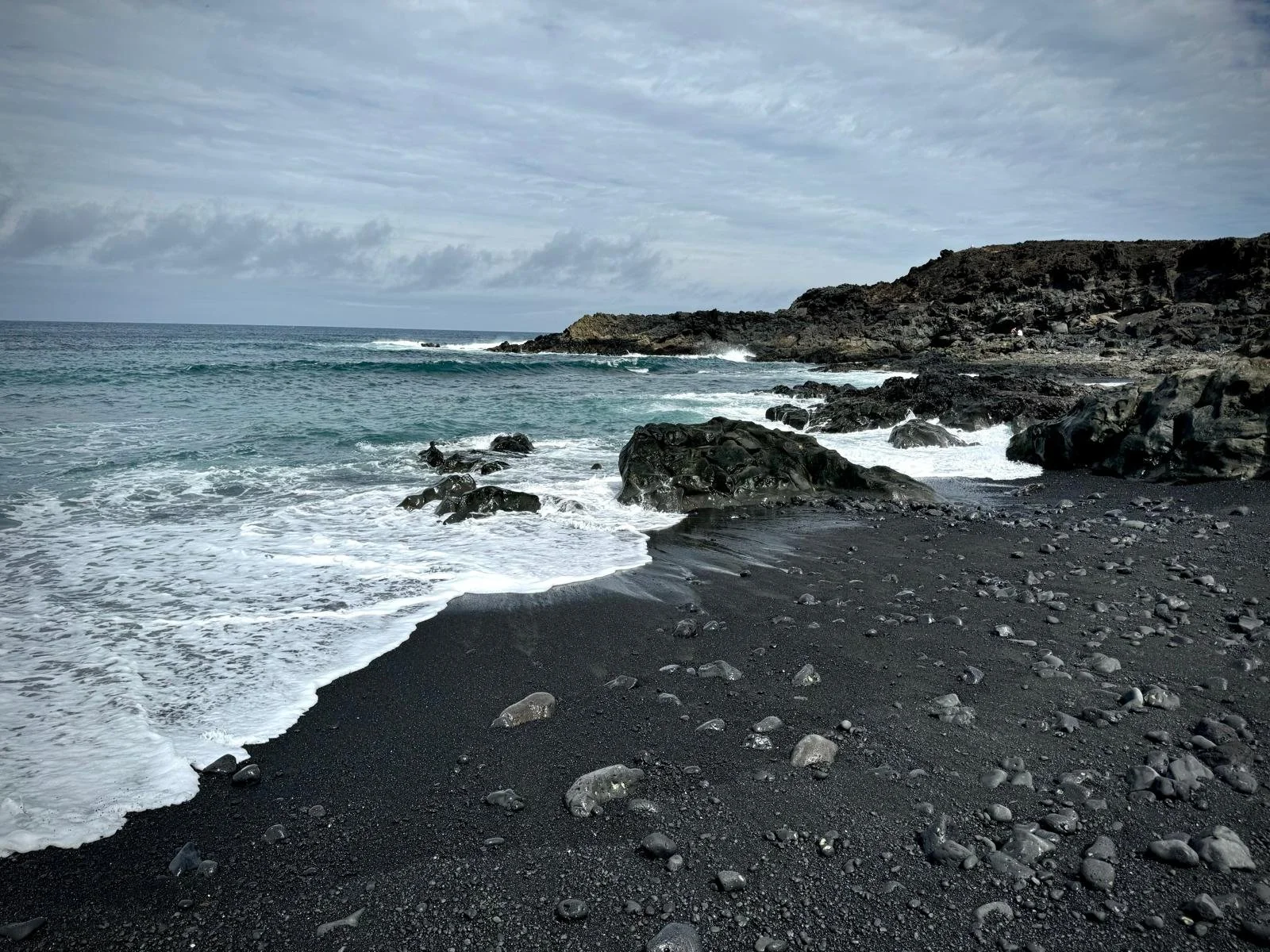
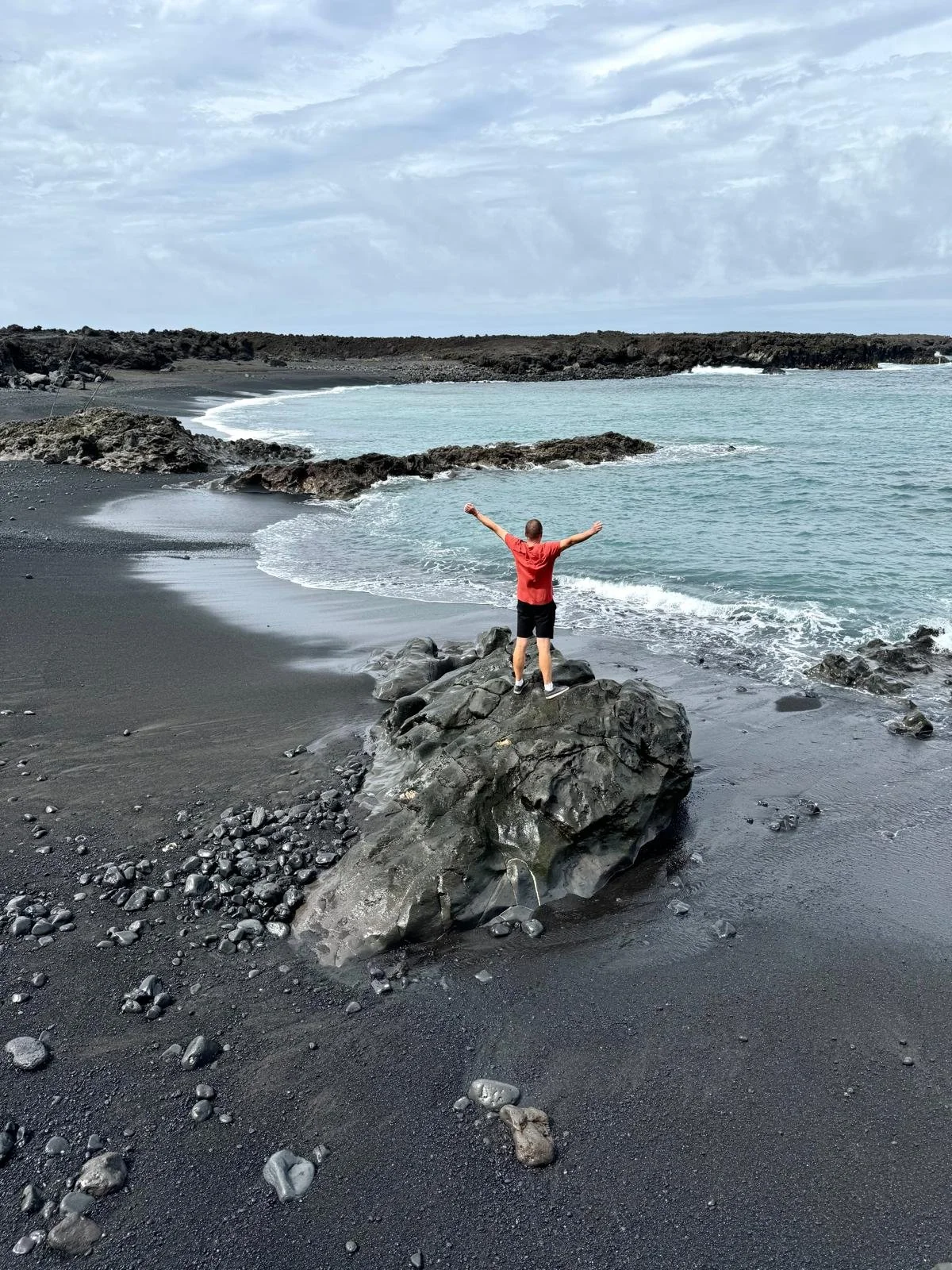
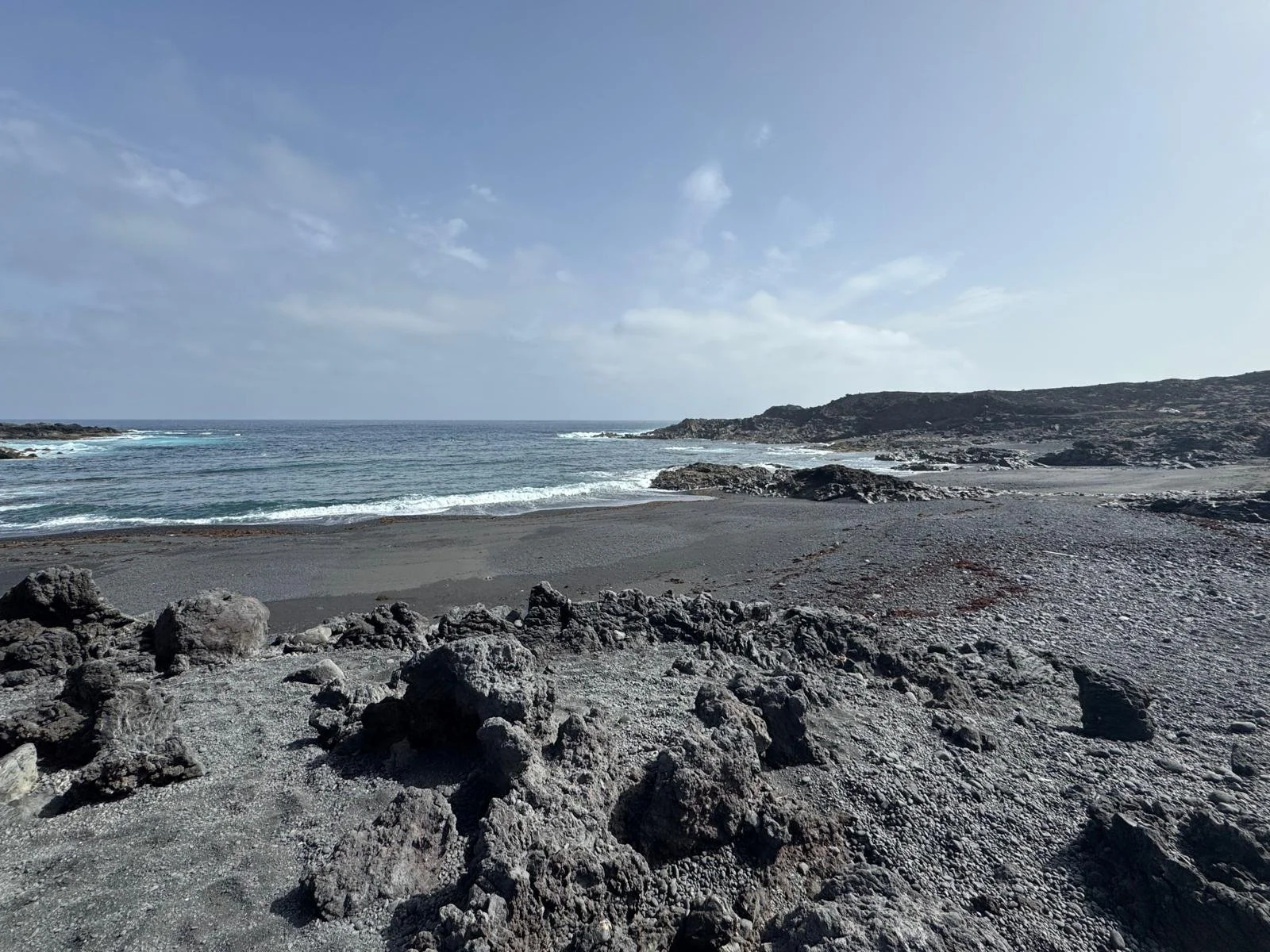
Las Malvas is small, wild and almost brutally simple: black volcanic sand, dark lava and white surf. No resort, no promenade, no distractions.
The drive is part of the experience.
And then there is Playa del Paso.
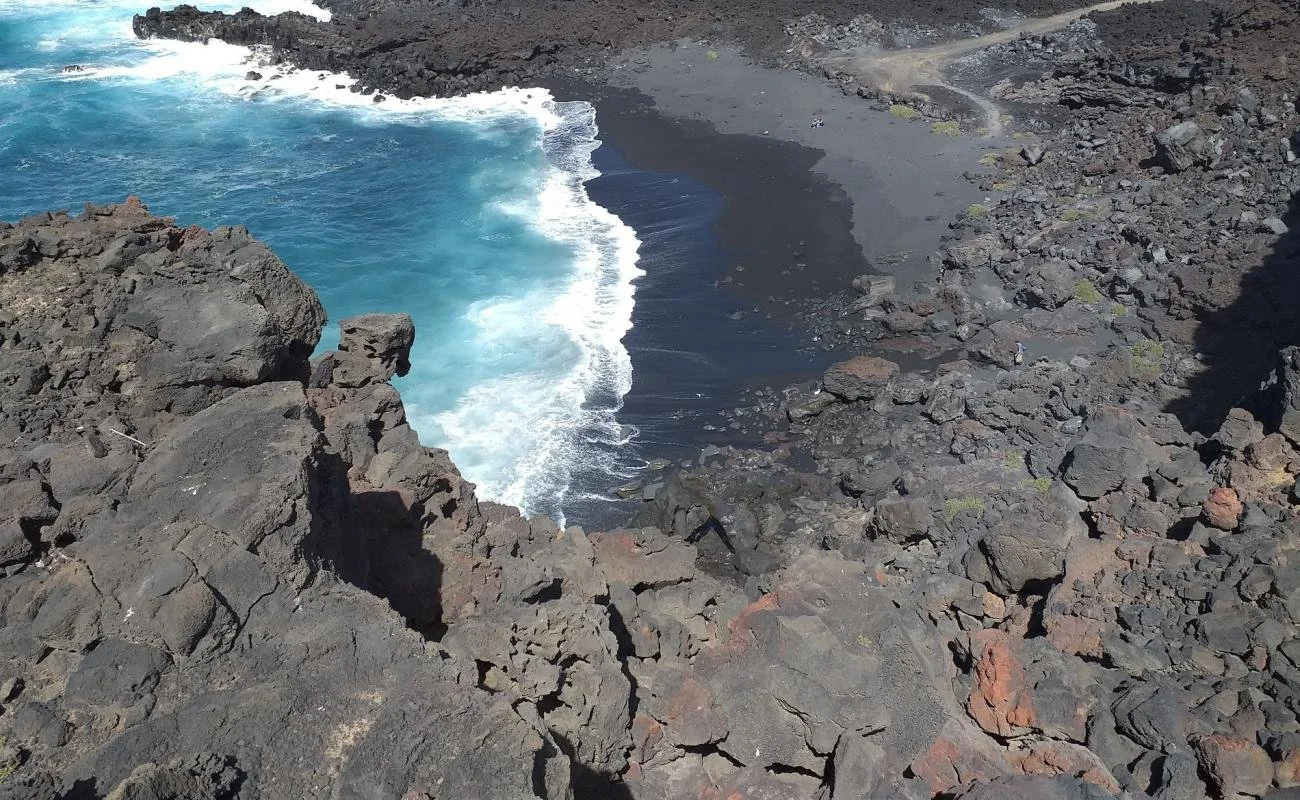
Getting there is half the experience.
Most visitors to El Golfo stop at the famous green lagoon and turn back. Keep going to the end of the village, leave the car behind and follow the rough coastal trail north.
The reward is extraordinary: black lava, an empty Atlantic and, eventually, Playa del Paso — a small black beach on the edge of Timanfaya.
Getting there is half the experience.
None of these are beaches trying particularly hard to be pretty.
That's precisely why we like them.
They are places to see what happens when volcanoes meet the Atlantic.
And a word of caution: the resemblance to Iceland extends to the ocean. Lanzarote's west coast can be powerful, with strong waves and currents. Come for the landscape rather than assuming every black beach is a swimming beach.
Geysers. Sort of.
Iceland has Strokkur.
Every few minutes, pressure beneath the earth sends a column of hot water spectacularly into the air. It's one of those natural phenomena that seems faintly ridiculous until you stand beside it and watch it happen.
Lanzarote has something different.
First, we have the Atlantic making its own geysers.
At Los Hervideros, waves enter cavities and channels created where lava met the sea. On the right day, water and spray are forced upwards through the black rock with extraordinary violence.
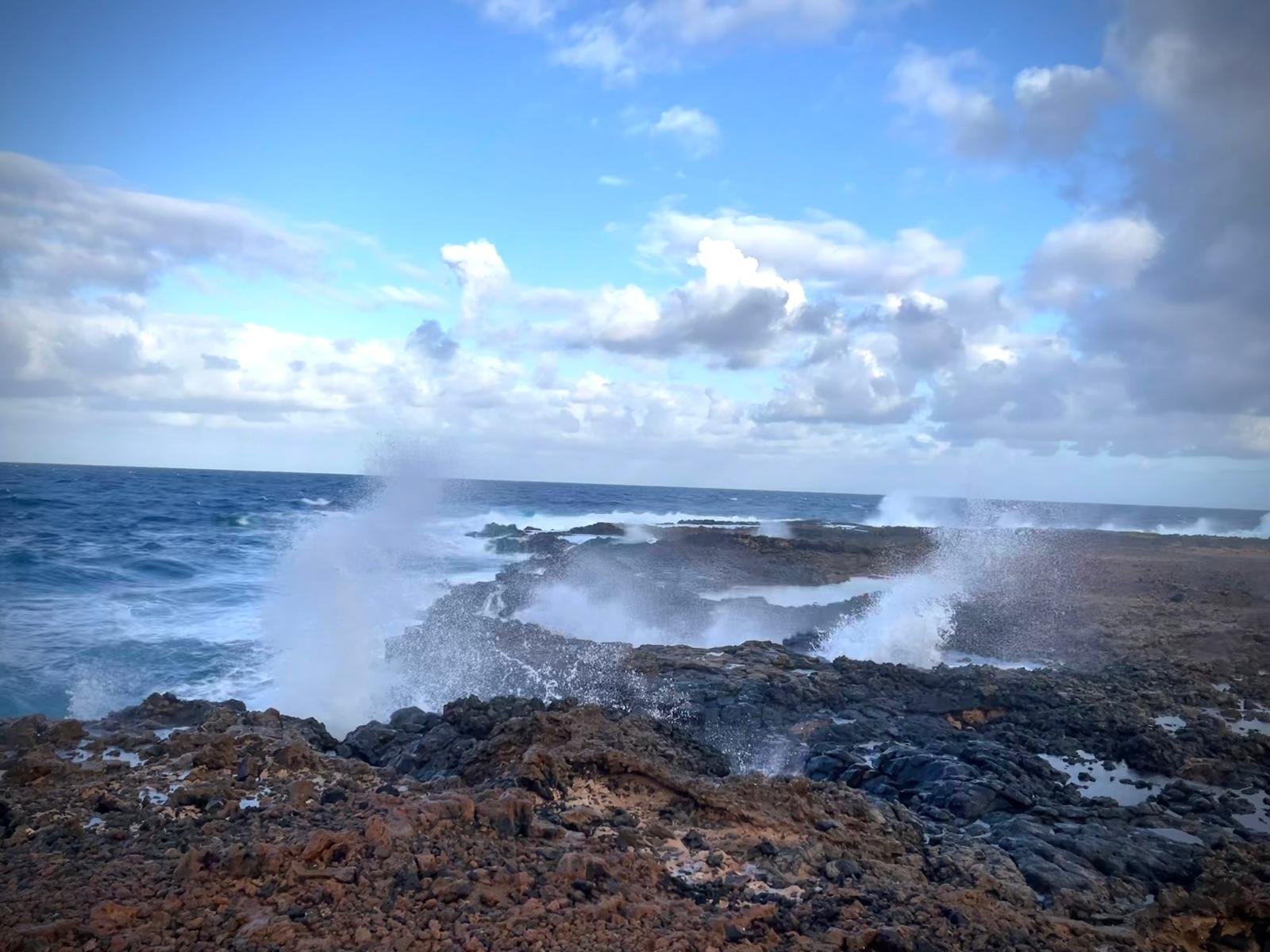
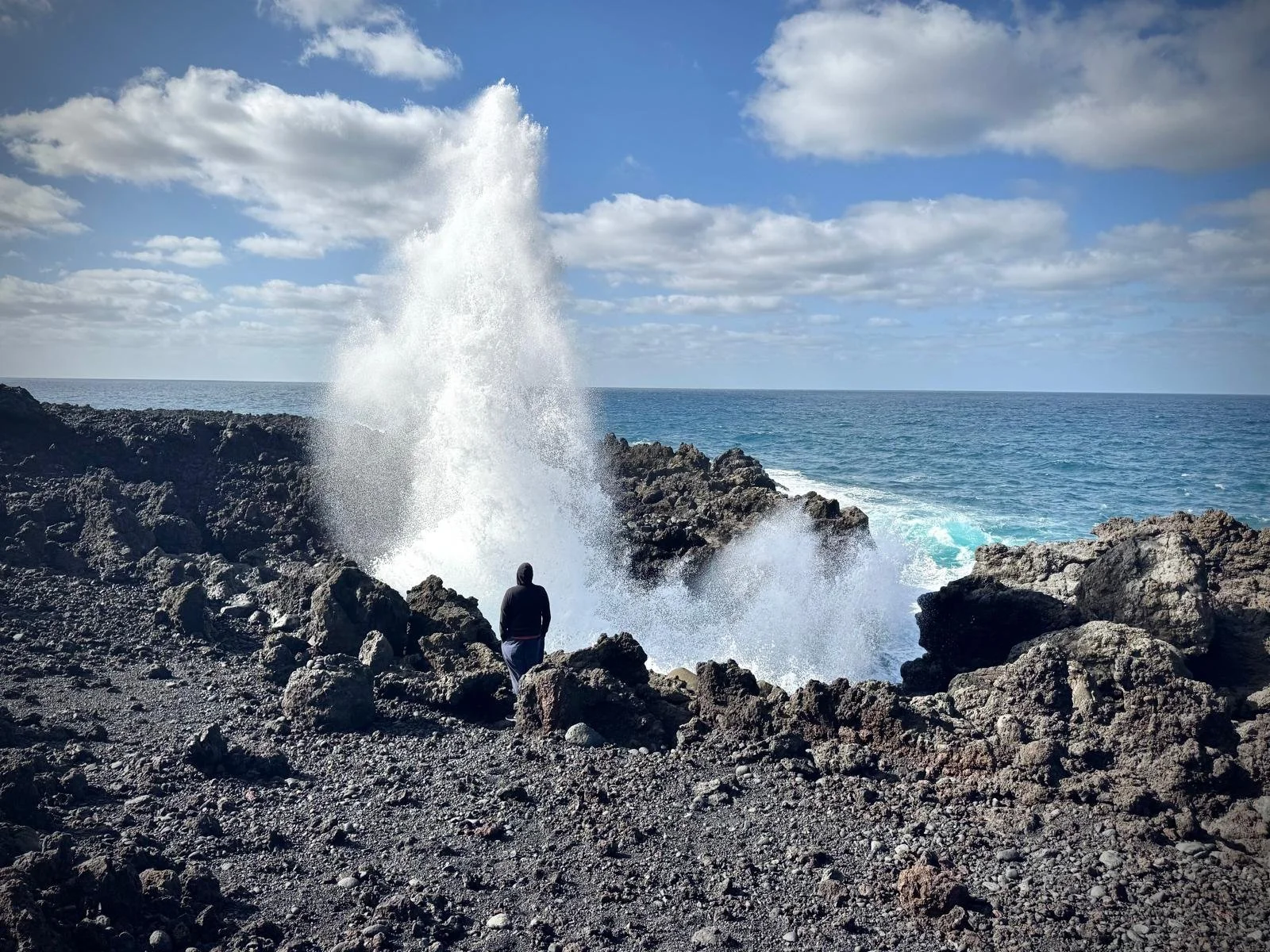
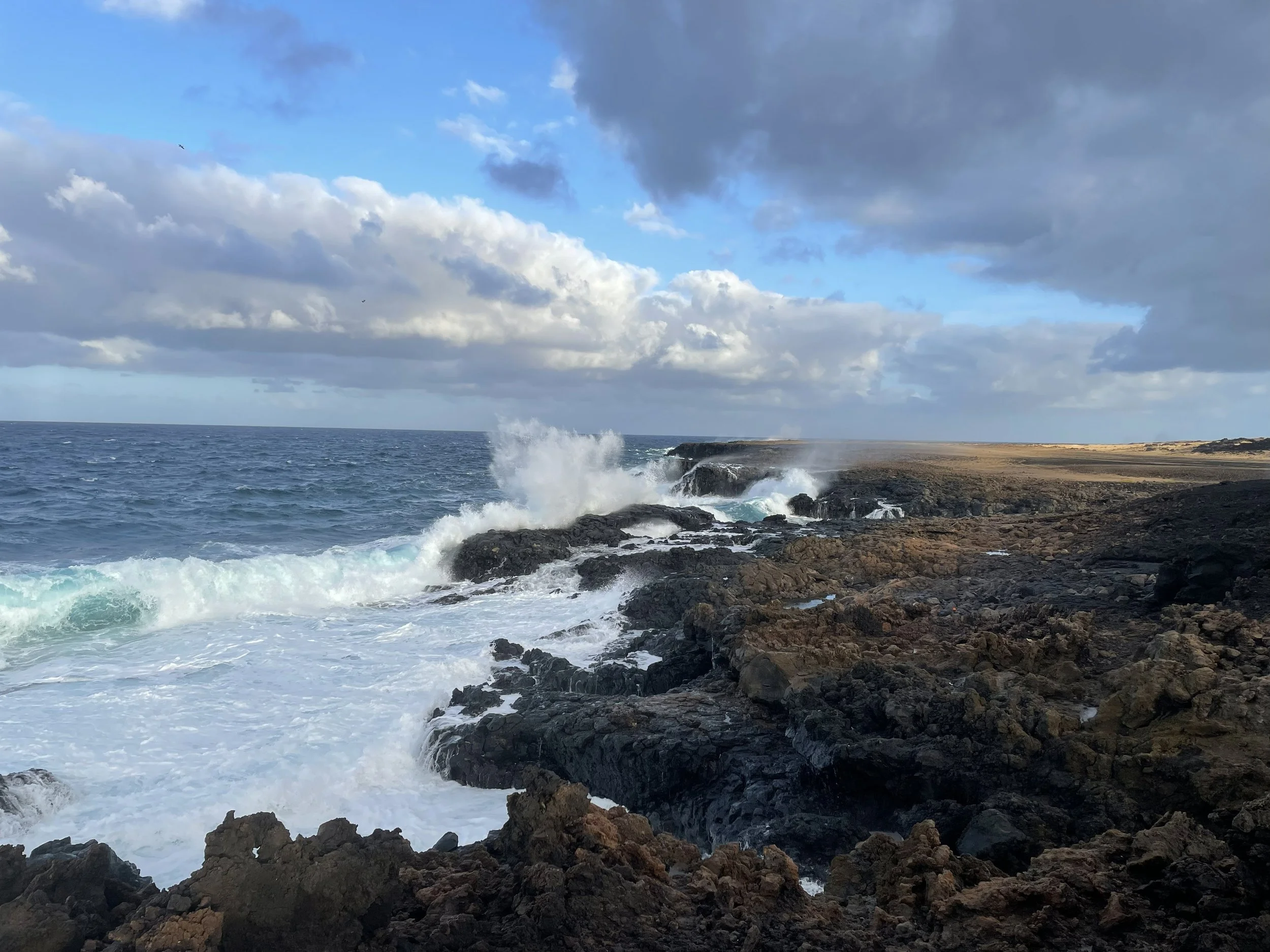
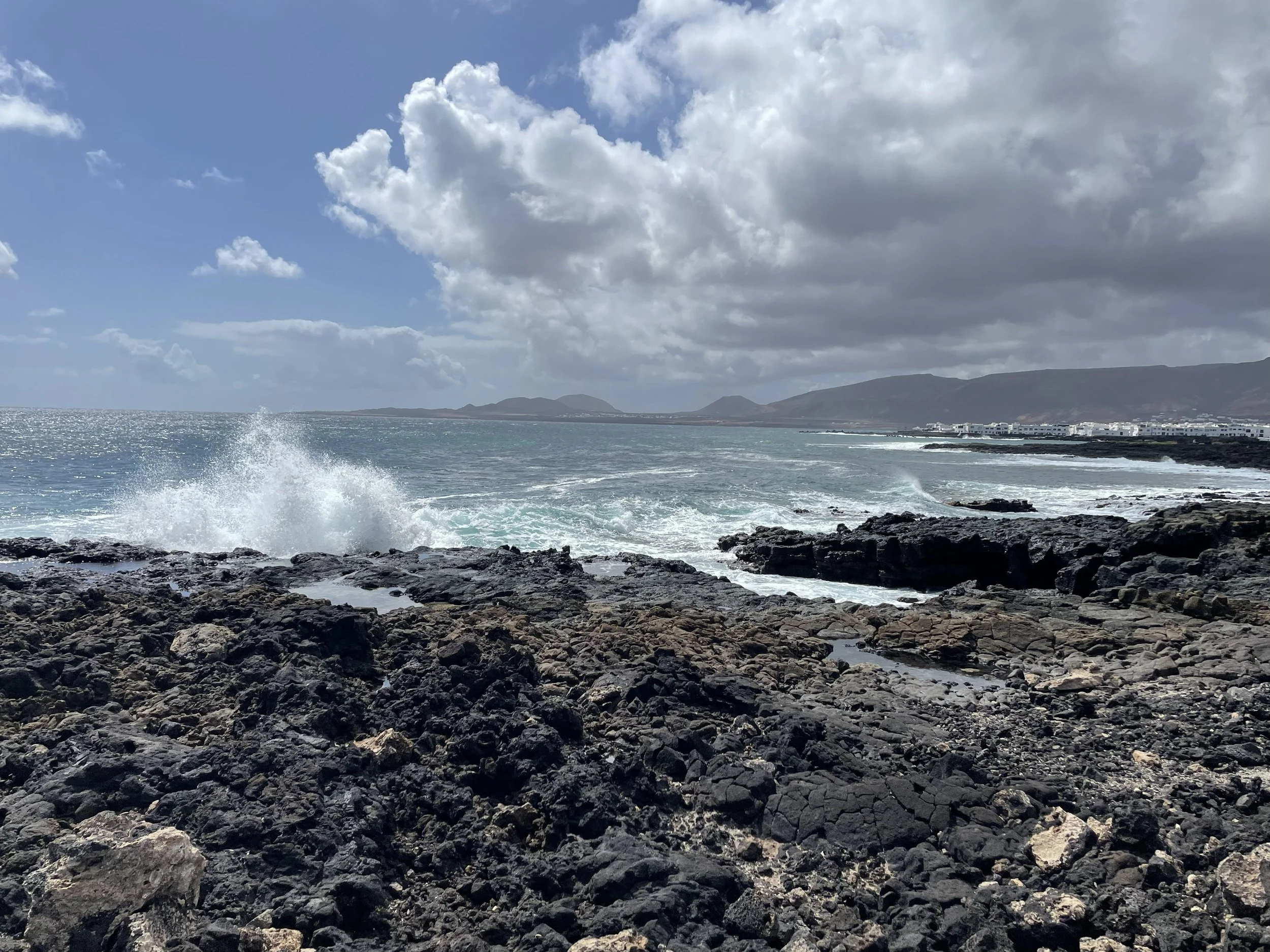
No geothermal plumbing required.
Just lava, holes and a very large ocean.
But if that feels like cheating, drive inland to Montañas del Fuego in Timanfaya.
Here the trick becomes genuinely geothermal.
At Islote de Hilario, water poured into pipes in the ground erupts seconds later as a column of steam and hot water.
They're often called the geysers of Timanfaya, although technically they're not natural geysers at all. They're demonstrations — human-triggered evidence of the extraordinary heat that still remains beneath this apparently dormant landscape.
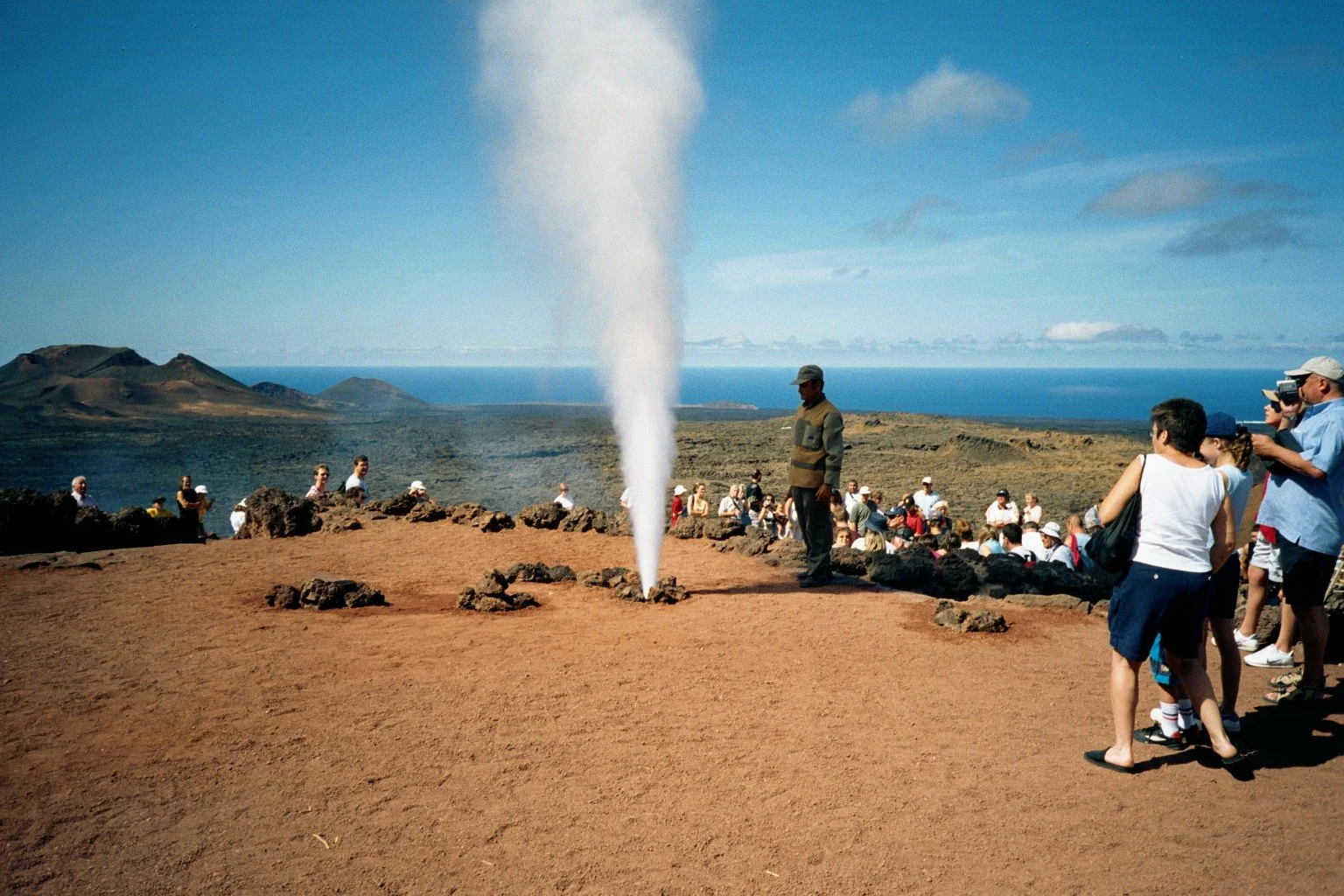
Here the trick becomes genuinely geothermal.
And somehow, that makes them even more interesting.
The eruptions that transformed this part of Lanzarote began in 1730 and continued for almost six years.
Nearly three centuries later, their legacy is still right beneath your feet.
Iceland may have the real geysers.
Lanzarote has an island that still hasn't completely cooled down.
Tierra del Fuego
This is where the Iceland joke stops being a joke.
Drive into Timanfaya and Lanzarote changes.
Villages disappear. Fields disappear. Eventually almost everything familiar disappears.
In their place come cones, craters, ash, twisted lava and immense dark plains stretching towards the horizon.
There are reds and rusts, ochres and browns.
But black dominates everything.
The Spanish name could hardly be more appropriate:
Montañas del Fuego. Mountains of Fire.
Between 1730 and 1736, a sequence of eruptions transformed a vast part of western Lanzarote. Lava buried villages and agricultural land and created much of the landscape we see today.
It is one of those places where distances become difficult to judge. A volcanic cone that looks five minutes away may be kilometres distant. There are so few trees, buildings or other familiar objects that the landscape seems to have lost its scale.
And suddenly the comparison with Iceland makes sense again.
These islands are separated by thousands of kilometres and dramatically different climates, but both were written by the same forces.
Fire underneath.
Atlantic water alongside.
Wind above.
And a landscape that hasn't bothered to hide any of it.
Same volcanoes. Very different temperatures.
There is, however, one fairly significant difference.
The wardrobe.
While Iceland moves through a genuinely northern climate, Lanzarote's temperature curve barely seems interested in winter.
Which means you can spend the morning walking across a black volcanic beach, watch water exploding between lava cliffs in the afternoon and stand among the Montañas del Fuego before sunset...
without dressing for an Arctic expedition.
We consider this a feature.
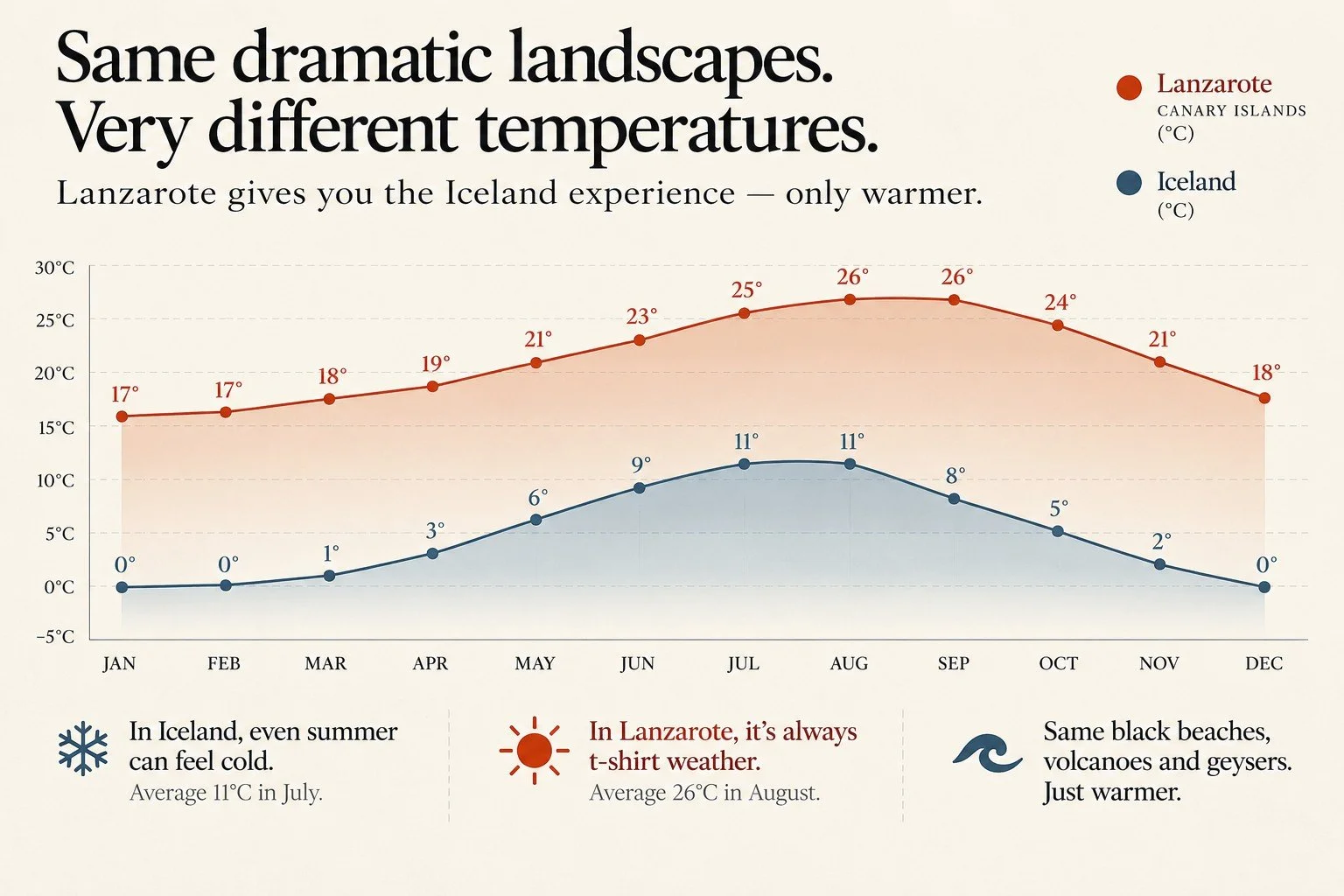
…without dressing for an Arctic expedition.
So, is Lanzarote really Iceland, only warmer?
Of course not.
Iceland is Iceland. Lanzarote is Lanzarote.
Reducing either of them to a warmer or colder version of the other would miss what makes both extraordinary.
But they share something.
Both are islands where geology hasn't retreated politely into the background.
You see it everywhere.
In the colour of the beaches. In the shape of the mountains. In the cliffs. In the lava. In the way water behaves when it encounters rock created by fire.
Iceland has glaciers and natural geysers.
Lanzarote has Timanfaya, black beaches and an Atlantic capable of making geysers of its own.
Iceland has hot springs. Lanzarote has the Atlantic.
And, theoretically at least, you can swim in it all year round.
We'll take that.
Same planet. Same elements. Considerably less thermal underwear.
Iceland is Iceland. Lanzarote is Lanzarote.