Camino de los Gracioseros
Part II
The questions came home with us.
For several days, they stayed with us.
Like almost everyone today, we started with an internet search.
One article led to another. One reference led to the next. We wanted to understand the Camino de los Gracioseros better—its history, the journeys between La Graciosa and Lanzarote, and the people who had walked this remarkable path long before hikers like us ever existed.
Then we found an old photograph.
A few minutes later, another.
Then another.
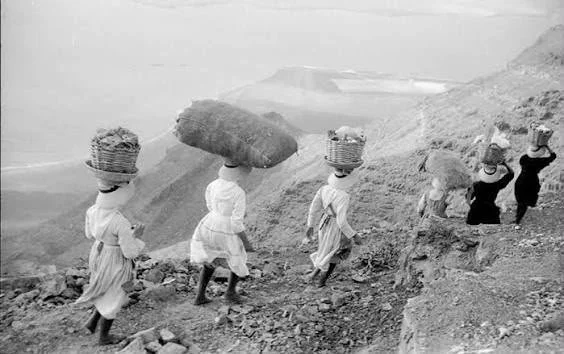
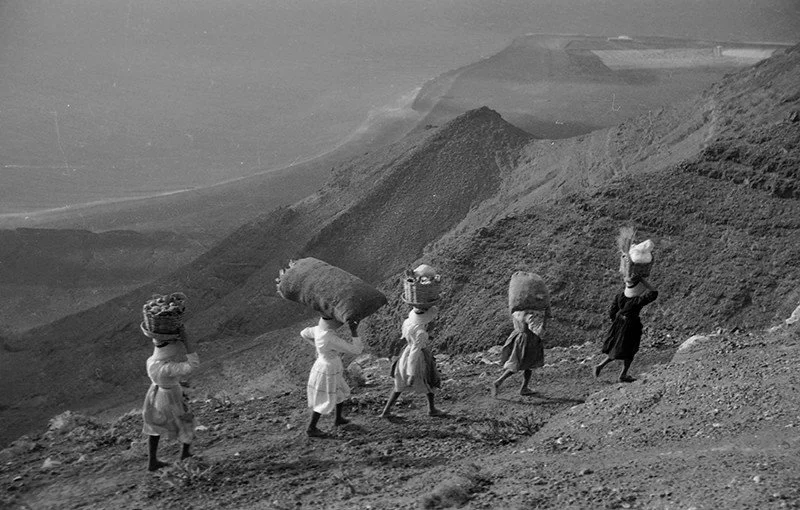
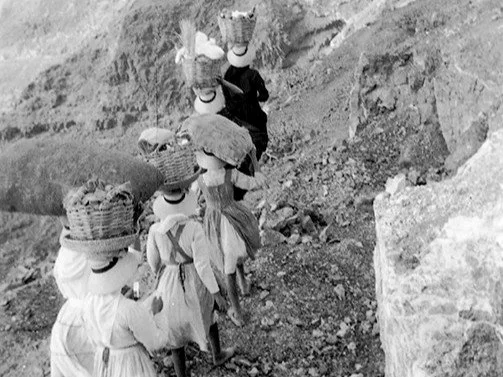
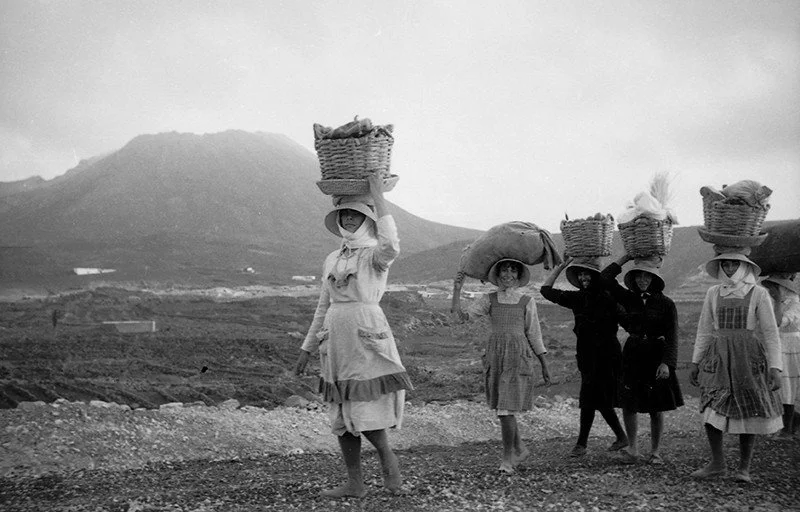
Each one seemed to tell the same story.
A group of women.
Long skirts.
Wide straw hats.
Shawls wrapped tightly around their shoulders.
Baskets.
Bundles.
Always walking.
Always carrying something.
At first, we were simply fascinated.
But with every new photograph, they became more unsettling.
Not because they showed hardship.
Because they demanded answers.
Only a few days earlier, we had climbed that very same path ourselves.
We carried light backpacks.
Plastic bottles filled with water.
Comfortable hiking shoes.
We stopped more than once to catch our breath.
For them, it wasn't a hike.
It was simply another day.
Who were they?
Where were they going?
What filled those baskets?
The more we searched, the clearer the picture became.
For generations, the women of La Graciosa crossed El Río before sunrise, climbed the Camino de los Gracioseros and walked to the villages of northern Lanzarote.
They carried what their small island could offer.
Fish.
Salt.
Sometimes other goods gathered from a place that offered very little.
They returned with what it could not.
Flour.
Oil.
Soap.
Cloth.
Needles.
Medicine.
Almost everything needed for another week of life.
Today, visitors arrive on La Graciosa in less than half an hour.
There are cafés.
Restaurants.
Electricity.
Fresh bread every morning.
It is easy to believe it has always been this way.
It hasn't.
Back then, La Graciosa was a world of wind.
Wind that drove sand into your face.
Wind that explained the wide straw hats—not as tradition, but as protection.
A world of volcanic stone, sea and salt.
Fresh water was scarce.
The island could offer beauty.
It could not offer much else.
Suddenly, those journeys no longer seemed extraordinary.
They seemed inevitable.
Then something changed.
The more we learned about the Camino...
the less we thought about the Camino.
The more we learned about the women...
the less we saw a group of women.
We looked again at the photographs.
There was no anonymous crowd.
There never had been.
Every basket belonged to someone.
Every journey ended at a different home.
Every woman carried different worries.
Different hopes.
Different reasons to make the same journey again tomorrow.
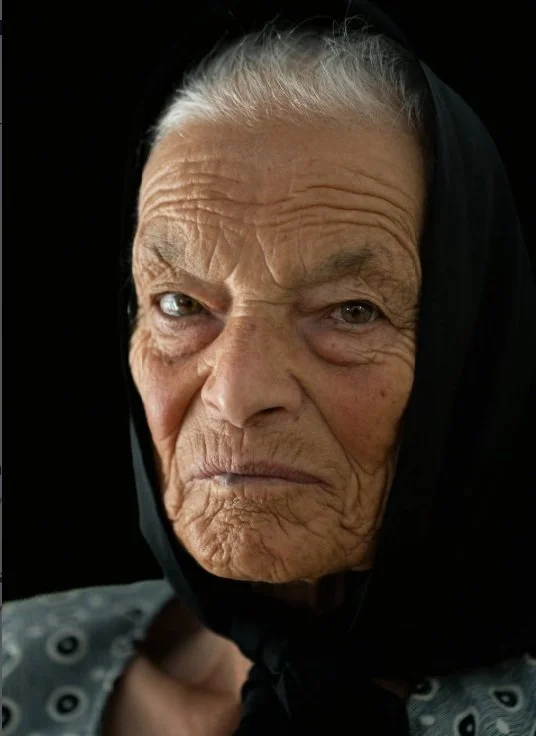
Without even realising it, our eyes stopped on one woman.
Not because she looked different.
Quite the opposite.
Because she didn't.
She could have been any of them.
And that is precisely why we wanted to spend one ordinary day walking beside her.
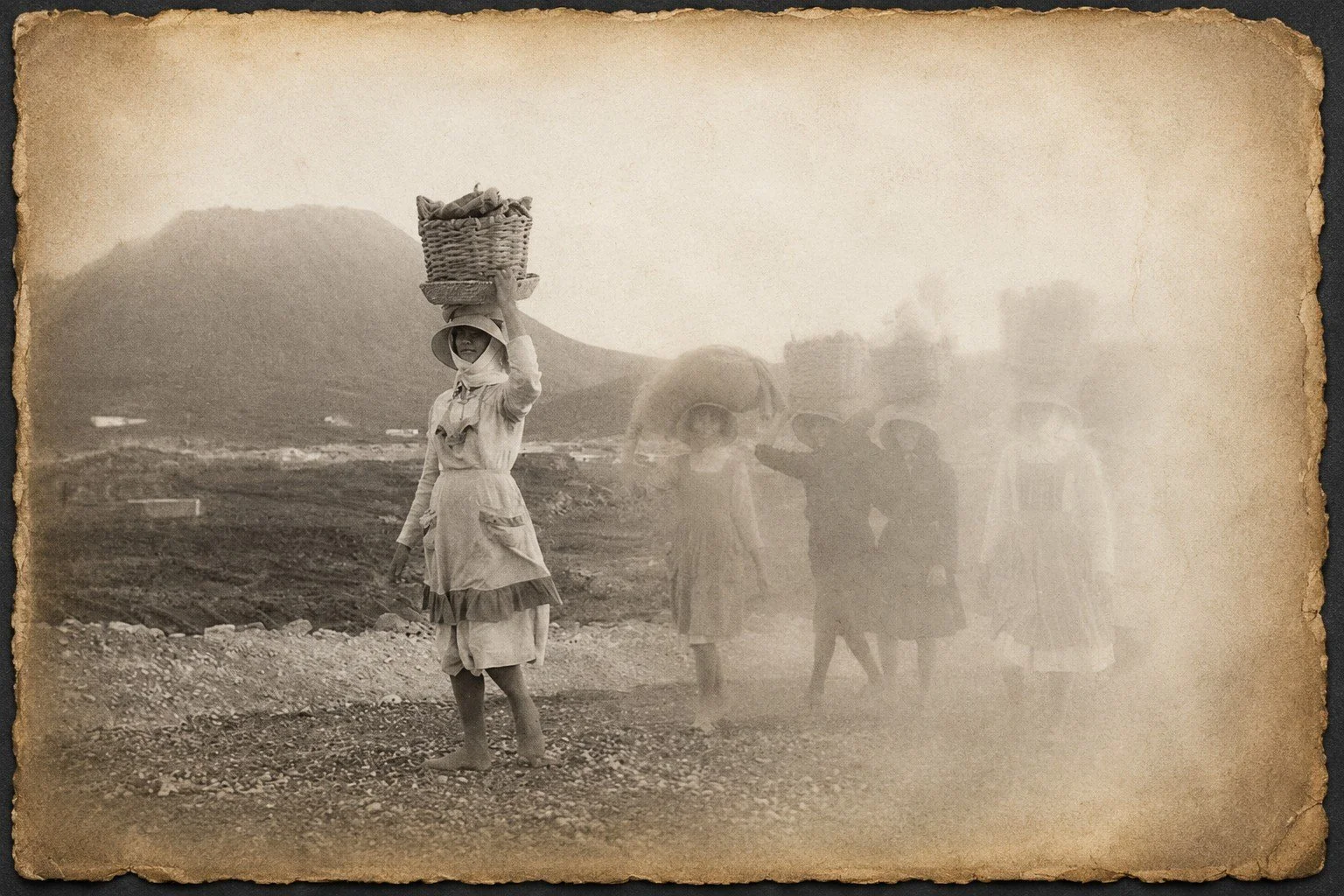
Before sunrise, she was already awake.
The basket was waiting.
She lifted it.
Not yet.
Too heavy.
She set it down again.
One more fish.
No.
She took it back.
Lifted the basket once more.
This time, she nodded to herself.
Outside, the wind was already waiting.
The crossing across El Río was never entirely predictable.
Some mornings the sea was calm.
Others reminded everyone who was in charge.
By the time she stepped ashore on Lanzarote, the hem of her dress clung heavily to her legs.
The hardest part still lay ahead.
Only a few days earlier, we had climbed the same path ourselves.
We carried water.
She carried tomorrow.
The first steps were always the easiest.
Then the Camino began to rise.
Stone after stone.
Step after step.
The basket slowly grew heavier.
Or perhaps she simply grew more tired.
Halfway up the slope she looked down.
One shoe was soaked.
Water had found its way through the leather.
Her lips parted, as if she were about to say...
something.
She didn't.
Whatever she wanted to cry out dissolved into one long, wordless exhale.
She adjusted the basket.
And kept walking.
The market was already awake when she arrived.
She knew what she had brought.
She knew what she hoped to take home.
But between those two things stood a handful of coins.
Enough for flour?
Enough for oil?
Enough for a piece of cloth?
Enough for medicine if someone fell ill?
Every choice meant leaving something behind.
When the basket was filled once more, it looked different.
It did not feel lighter.
The road home was waiting.
The Camino once again.
The descent.
The crossing.
The wind.
By the time she reached home, the journey was over.
The day wasn't.
The basket had to be unpacked.
A meal prepared.
Tomorrow's bread already depended on today's flour.
Clothes needed mending.
Water still had to be carried.
The basket was placed against the wall.
Not because its work was finished.
Only because morning would come soon enough.
Looking back, it is tempting to admire these women for their resilience.
Perhaps that is too simple.
They were not trying to become symbols of strength.
They were simply living.
Doing what the day required.
Then doing it again tomorrow.
For a long time, we believed that these women had left behind nothing more than a few fading photographs.
We were wrong.
There are still people on Lanzarote who remember.
Not because someone told them these stories.
Because they lived them.
They walked these paths.
They knew this island before roads, airports and tourism transformed it.
They remember a Lanzarote that is almost impossible to imagine today.
They probably have more to tell us than we realise.
But the voices that carry these memories are growing quieter now.
Time has made them softer.
Their stories deserve the opposite.
Not a whisper.
A full mezzoforte.